In this article, Zaynib Khan, Project Director at Benoy, who leads the practice's hospitality design thinking, explores how changing human behaviours are reshaping hospitality and what that means for the places we design. Drawing on insights from a survey of more than 500 people, the article explores how our expectations of luxury, flexibility, wellbeing and belonging are evolving—and why the most successful places won't simply attract people; they'll become part of their everyday lives.
Return to Future ThinkingThe hotel is no longer the destination. It’s the connector.

Contact Zaynib Khan, Project Director, Architecture
zaynib.khan@benoy.com
Hospitality escaped hotels years ago.
Today, people expect hospitality almost everywhere — not only in hotels, but in the places where they live, work, shop, learn and gather. Yet hospitality continues to be treated as a sector rather than a way of shaping human experience.
Perhaps designers have been asking the wrong questions.
For years, the hospitality industry has asked how hotels should evolve to meet changing guest expectations. We believe the more interesting question is this: how are people’s lives changing, and what does that mean for the places we design? Because people’s lives no longer fit neatly into the categories our buildings were designed around.
Whether at home or abroad, people continue to balance different identities and priorities every day, from being a partner or parent to meeting deadlines and socialising, maintaining physical and spiritual wellbeing, and nurturing hobbies and habits. Work and leisure overlap. Wellness is no longer confined to the spa. Retail is entertainment. Home is a workplace. Visitors want to feel like locals. Community happens as readily in a hotel lobby as it does in a town square.
As the boundaries between these worlds dissolve, our buildings should evolve accordingly. Hospitality therefore becomes something much bigger than accommodation. It becomes a design philosophy – one that prioritises belonging, flexibility and emotional experience, regardless of building type. As architects, this shifts our role from simply designing hotels to understanding how hospitality thinking can better support the complexity of contemporary life.
To better understand where hospitality is heading, we conducted a survey with over 500 people. The questions covered a range of topics including interior design preferences, sensory experiences, guestroom and public space design, and reasons for travel.
Our intention wasn’t simply to identify emerging trends. It was to understand the changing human behaviours that will inform the next generation of hospitality design.
What our survey revealed
Several findings challenged some of the industry’s longest-held assumptions. For example, rather than seeking excitement first, 34% of respondents placed security as their highest priority, almost three times more than fulfilment or curiosity. This suggests that people seek environments that make them feel safe, comfortable and in control ahead of places with novelty or excitement.
Traditional ideas of luxury were challenged – 35% associated luxury most strongly with minimalism and peace, contrary to the typical understanding of high-end materials and visual opulence. Likewise, 40% wanted hotel arrival spaces to feel calm and welcoming rather than grand and impressive. Luxury is becoming felt not seen.
The survey also revealed a preference for adaptability over separation. More respondents chose fluid spaces that support both work and leisure (31.5%) than hotels designed around distinct trip purposes, while 76% said flexibility within hotel environments was important or essential. Together, these findings suggest that adaptability — not additional space — may become one of hospitality’s defining design qualities.
Hospitality is becoming a layer, not a sector
The findings reveal that the hospitality industry isn’t simply evolving. Its role within society is being fundamentally redefined. No longer confined to one building type or one industry, hospitality is becoming a layer, rather than a sector. People are not simply seeking better hotels but better experiences and environments to support their holistic wellbeing – and this isn’t confined to what we know as the traditional hospitality sector.
While the survey tells us what people are thinking and doing, the opportunity from a design perspective is to understand why these behaviours are emerging and what that means for the physical spaces that we create. We’ve identified five shifts that explain why hospitality is evolving from a building typology to a layer that influences all places where people spend their time.
Shift 1: Hospitality is becoming communal infrastructure.
Hotels used to be exclusively for guests, but they have underutilised potential to serve locals as well through ancillary functions. Many hotels are already doing this with conference facilities, wedding venues, day spas and restaurants, but we’re more interested in how hotels can play a part in everyday life – not just for special occasions and one-off events.
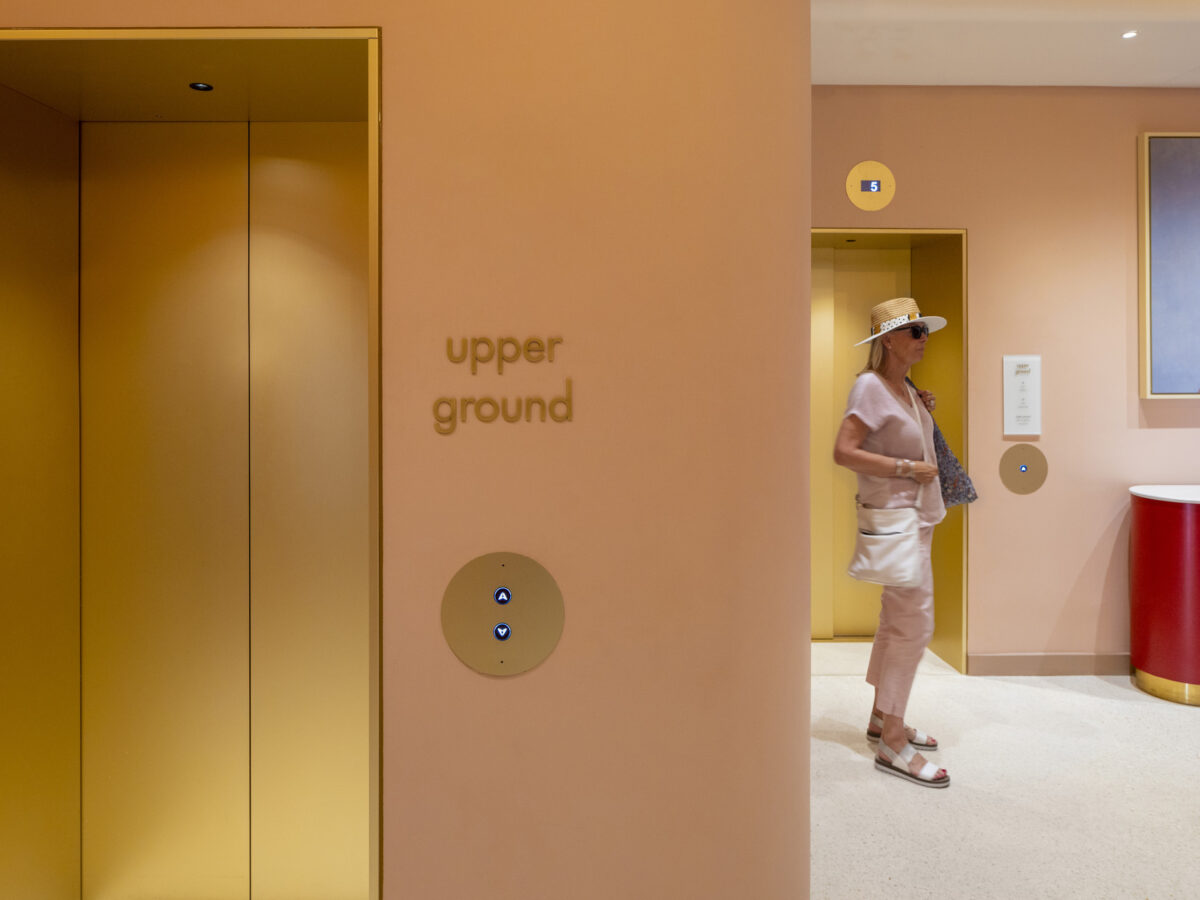
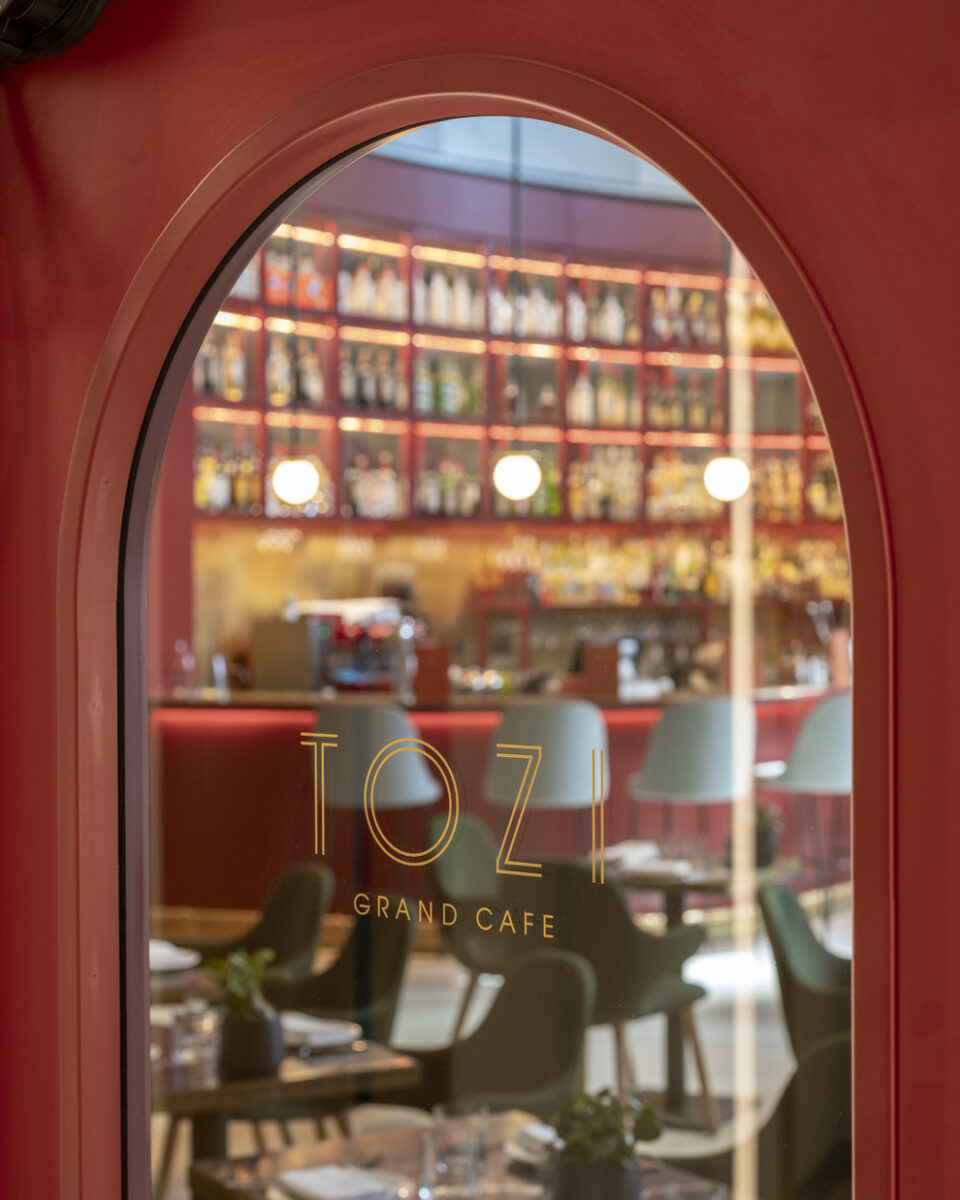
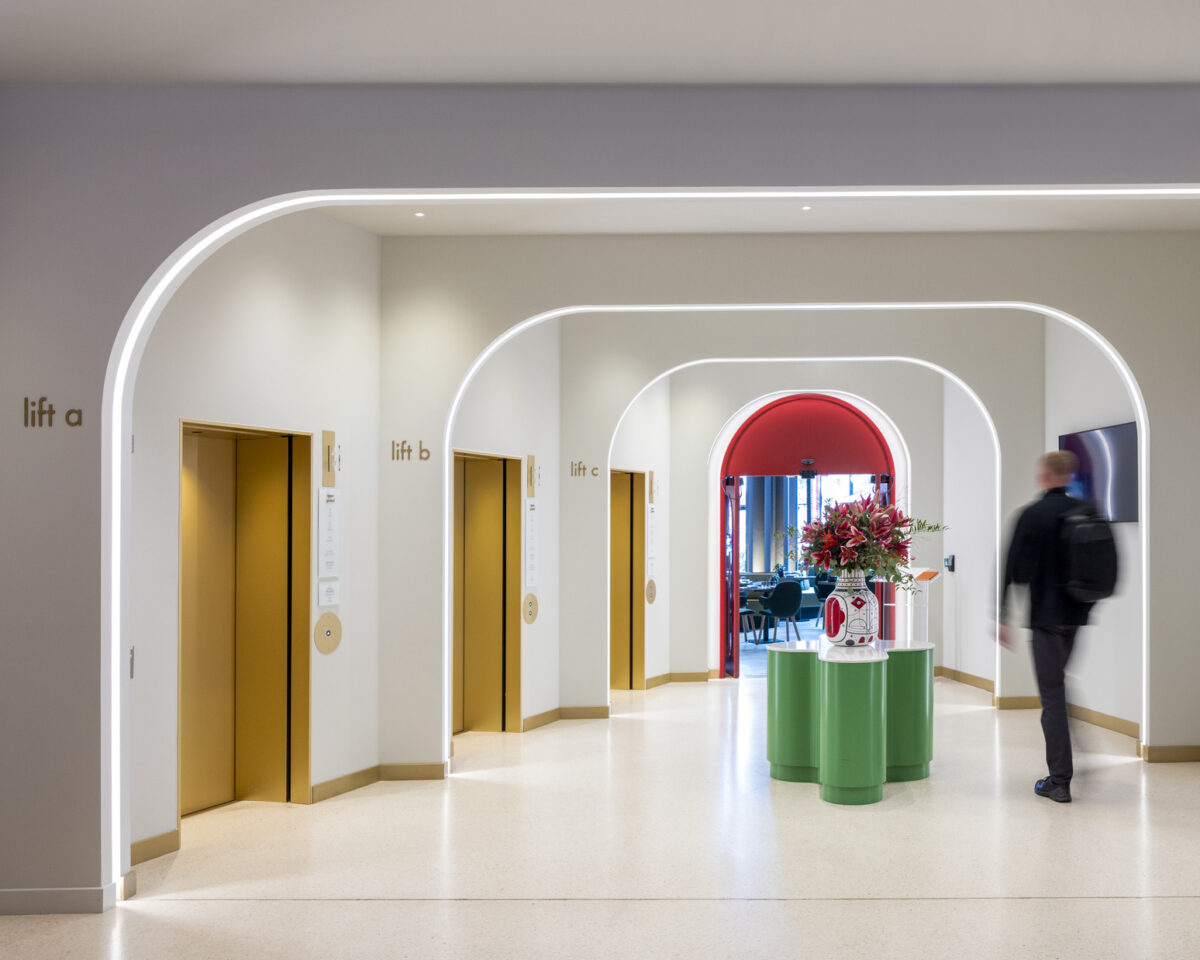
Successful hotels integrate with and strengthen their surrounding neighbourhoods, allowing guests to immerse in their destination and for locals to feel a sense of community. Ground floors are particularly important here, providing informal spaces for people to meet for a coffee or work remotely, alongside the established, formal spaces where people can celebrate with friends and family. By thinking of the ground floor as a complementary extension to existing streetscapes, hotels can evolve into an important layer of social and urban infrastructure.
Shift 2: Guests don’t want more space. They want more modes.
Guests don’t want more floor space in their room; they want different modes of space across the hotel environment. 76% of those surveyed rated flexibility as ‘important’ or ‘essential’ in hotel design. Modern life is fluid, and the boundaries between home, work, leisure and social life are becoming increasingly blurry. The rise of third space clubs, mixed-use developments and BTR housing are testament to this. Hotels need to reflect modern life by design and cater to changing needs and behaviours across the day.
Flexibility and adaptability are what will set hotels apart in the coming years and create value. This doesn’t mean additional floor area, it means using space more intelligently and flexibly to allow guests to work, relax, dine, socialise and stay in a single space.
Shift 3: Luxury is becoming felt, not seen.
Perhaps the greatest luxury today is the freedom to feel unhurried. For decades, luxury in hospitality was expressed through scale, spectacle and material richness: grand lobbies, exotic finishes, lavish decoration and ever-larger guestrooms. Those qualities still have their place, but our survey suggests they are no longer what people value most. Instead, respondents consistently prioritised calm, minimalism, natural light, emotional comfort, air quality and spaces designed for relaxation. Guestrooms were overwhelmingly viewed as places for recovery and private unwinding, while arrival spaces were preferred to feel calm and welcoming rather than energetic or theatrical.
Taken together, these findings point towards something much bigger than a change in aesthetic preference. They reflect a broader cultural shift. We live in a world defined by constant connectivity, blurred boundaries between work and personal life, increasing cognitive load and the pressure to be continually productive and available. Against this backdrop, perhaps the true luxury hotel is the one that doesn’t fight for our attention, giving us the time and space (mentally and physically) to decompress and restore.
In essence, luxury is becoming the freedom to feel unhurried. Not because we have more time, but because environments allow us to experience time differently: to arrive without confusion, to move intuitively through a building, to pause, to think clearly, to sleep deeply and to reconnect with the people and experiences that matter most. Architecture cannot create more hours in the day, but it can fundamentally change how those hours are experienced in a space.
Shift 4: The guestroom is becoming a place for restoration.
Alongside hotels, the role of the guestroom is also changing. Like the previous point, people are no longer searching for luxury aesthetics in their room, nor are they using their private space to get work done. Instead, they’re using the guestroom as somewhere to reset and reconnect with their sense of self.
Guestrooms are increasingly a place to support mental wellbeing as well as physical rest. As such, emotional comfort is becoming a design imperative. This includes giving guests control over their environment, including elements such as lighting, privacy and comfort. The survey also reinforced the importance of views and natural light in allowing people to feel connected to the outside world while remaining comfortable and secure in their room.
Shift 5: Future hotels will compete on feeling, not function.
With wellbeing and restoration now the leading differentiators, the next generation of hotels will compete on feeling rather than function. Technology integration, high-quality facilities and service standards will be a baseline expectation, not an add-on or stand-out feature. Guest experiences will become more holistic, encompassing the service they receive combined with the way the building itself nurtures their mind, body and spirit.
Increasingly, specifications and sequential journeys need to be considered in the design process as part of an emotional journey, as well as a physical one. The hotels that go above and beyond to create memorable experiences and genuine emotional connections will be the ones that stand out.
The luxury hotels of tomorrow won’t necessarily be those that ask guests to look up in awe. They’ll be the ones that quietly return something modern life has taken away: time to think, space to breathe and the freedom to feel unhurried.
What this means for:
1. Developers
Hospitality as an industry is becoming more about placemaking than simply an asset class. Hotels contribute to their neighbouring community and can increase the value of surrounding residential, retail and commercial developments with their presence. They should be thought of as part of wider mixed-use districts, as anchor points that bring several elements together.
Successful mixed-use developments are conceived and curated through hospitality thinking – prioritising human experiences and diversity of needs to create destinations where people want to spend time. This is what drives long-term value and attracts return visitors. In this sense, hospitality is becoming the operating system of thriving mixed-use developments.
2. Operators
Hotels are no longer exclusively for guests; they need to serve locals and connect with the streetscape around them. Operators need to enable flexibility and adaptability to support evolving human needs throughout the day. This means programming will become as important as architecture, and orchestrating experiences will outweigh providing service.
Hotels are becoming less about exclusiveness and more about openness, bringing all facets of daily life together to connect people, culture, work and community. If hotels can get this mix right, they’ll enjoy not just transactional loyalty but emotional loyalty too.
3. Architects and interior designers
The starting point of the design process should be an analysis of behaviours and demographics rather than room schedules to ensure the core concept and purpose are clear. Having this as a starting point will enable hotels to measure their success in terms of guest experience alongside profit margins. To make sure hotels remain relevant and integrated with their community while being adaptable for guests, flexibility needs to be baked into every layer of the building.
In terms of aesthetic choices, creating calm is no longer simply an interior design aspiration; it’s an architectural responsibility. Intuitive planning, effortless circulation, generous daylight, excellent acoustics, clean air, seamless transitions between spaces, and moments of quiet refuge are no longer secondary design considerations but the genuine markers of luxury.
Thinking more broadly, these principles of hospitality thinking are applicable beyond hotel design. They apply to mixed-use, residential, workplace, cultural, sports and entertainment developments. We strongly believe that all designs, regardless of sector, should evolve around human needs rather than building types to create places where people actually want to invest their time. The role of the architect is therefore to design places that actively support modern life, not just create a passive vessel for it.
“The role of architecture is no longer simply to shape buildings, but to shape the behaviours and experiences they enable.”
Hospitality is a mindset
The future of hospitality may not be about hotels at all. We see hospitality becoming a mindset of design rather than a sector or building typology. This makes it essential to the design process to create successful destinations.
Not only do these principles result in more elevated and human-centric environments, but they also result in a greater sense of belonging. This is what contributes to the social fabric of our cities, more so than any physical design element. Imagine if schools and hospitals were designed with hospitality thinking, or if offices were designed for how people feel at work, not just how teams operate. The impact on learning, collaboration, mindset and individual wellbeing could be huge.
If we think of hospitality as a guiding philosophy rather than a building type, we have an opportunity to shift the way we design from responsive to proactive, providing people with places that enable changing lifestyles (across the years and within a single day). Thinking this way allows us to measure success in operational terms as well as emotional outcomes.
Hotels once separated life. Tomorrow, they will bring it back together.
The next generation of destinations will be embraced and remembered for how they make people feel, not what they contain. People will return for the memories they created there. And hotels won’t just be a place to stay for the night, but a place to reconnect with what matters.
As the boundaries between living, working, shopping, learning and leisure continue to dissolve, hospitality has the opportunity to become something much bigger than a sector. It becomes a way of thinking about places. One that prioritises human experience, emotional wellbeing and meaningful connection. The future guest isn’t escaping everyday life. They’re looking for somewhere to live it better. For Benoy, that’s the opportunity ahead.
Related articles