Ksenia and Hrishikesh explore how Highest and Best Use (HBU) helps developers and landowners answer the deceptively simple question: what should we actually build here? Drawing on market analysis, user insight and commercial testing, they show how HBU turns a site’s potential into a clear, deliverable brief that creates real value for clients, users and place.
Return to Future ThinkingMaking better development decisions with HBU

Contact Hrishikesh Dave, Analyst
Hrishikesh.Dave@Benoy.com

Contact Ksenia Chernulich, Senior Consultant
Ksenia.Chernulich@benoy.com
For any developer or landowner, there comes a point when a deceptively simple question has to be answered: what should we actually build here?
This question sits at the heart of every development project but answering it is rarely straightforward. A site may have the potential to accommodate significant development, but that does not necessarily mean the market can support it. A commercially attractive scheme on paper may prove difficult to deliver in practice. The challenge is not simply to maximise what can be built, but to understand where the greatest value can be created for the client, future users and the place itself.
This is where Highest and Best Use (HBU) becomes particularly valuable. Our Commercial Strategy and Advisory team uses HBU to help clients move beyond what a site could accommodate and towards what it should become. Through market analysis, user insight, commercial testing and development strategy, we explore the opportunities and constraints surrounding a site and translate these findings into a clear development brief. Crucially, this process happens alongside design rather than in isolation from it.
Seeing the gaps in the market
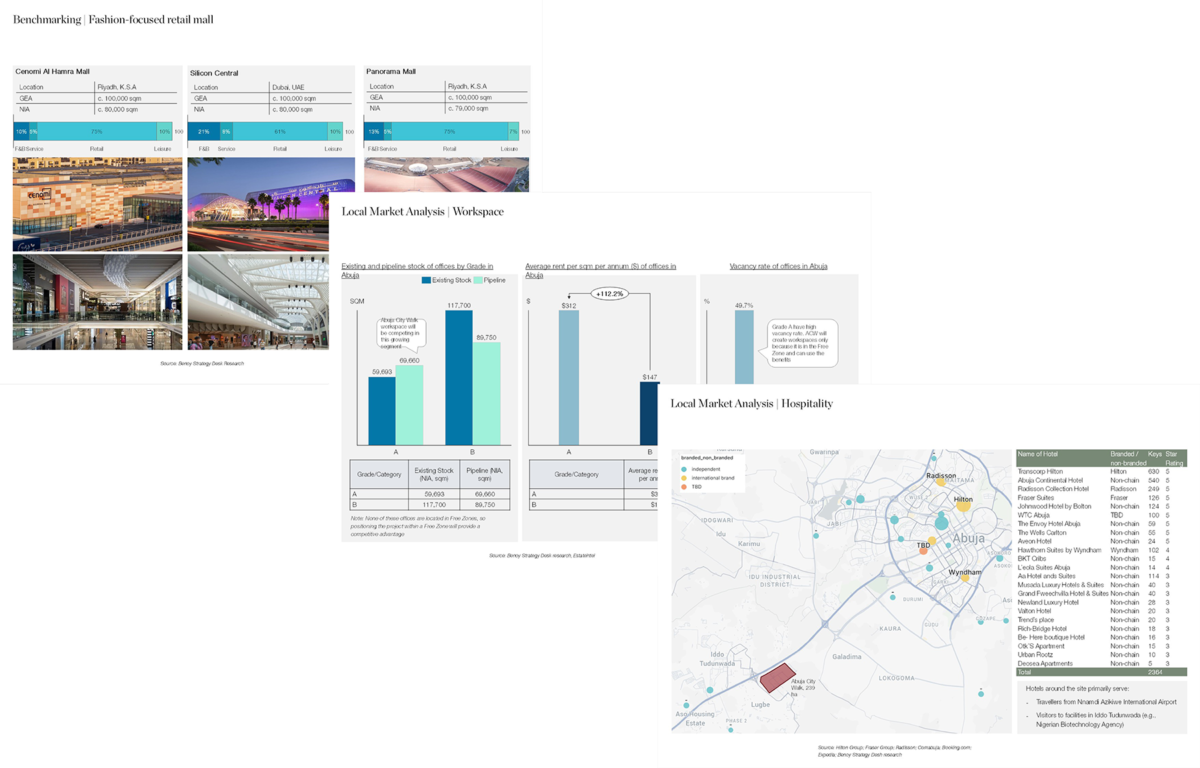
Before considering the development mix, we need to understand what is already there: what is performing well, where there is oversupply, which sectors are growing and who is currently underserved. These questions are particularly important for mixed-use developments. It can be tempting to add commercial, residential, hospitality or retail components simply because they are proven uses but replicating what already exists nearby does not necessarily create value. It can lead to competing assets, weaker leasing performance and a proposition that feels indistinct from its surroundings.
Instead, the opportunity often lies in the gaps. Customer behaviour, competitor performance, planned developments and the wider trajectory of a location can all reveal opportunities that may not be immediately obvious from conventional market data and understanding those gaps is the first step towards creating a development that has a clear reason to exist.
Designing with greater clarity
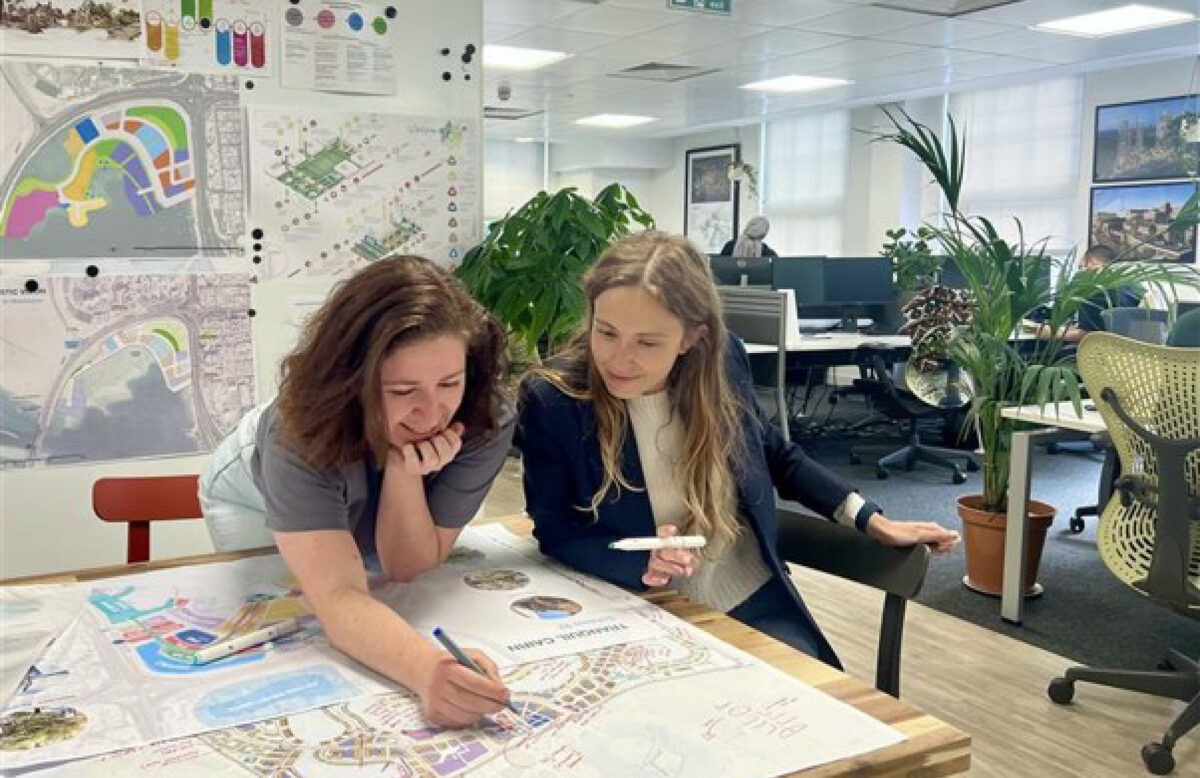
The value of an HBU study is not necessarily the final land-use recommendation; rather, it’s the clarity it gives the design team.
When designers understand who a development is intended to serve, what the market opportunity is and how the scheme needs to perform commercially, they have a stronger foundation from which to develop the design.
Our Commercial Strategy and Advisory team works alongside Masterplanning, Architecture, Landscape and Interiors teams. This allows commercial insight to be tested through design, while design thinking can challenge and refine the assumptions within the commercial strategy. The result is a more integrated process, where strategy and design develop together rather than as a sequence of disconnected studies.
As specialists in mixed-use redevelopment, our portfolio spans Asia, the Middle East, Europe and the Americas. Our exposure to these markets provides a strong view of emerging trends, innovations and best practices that help inform development strategies across different contexts.

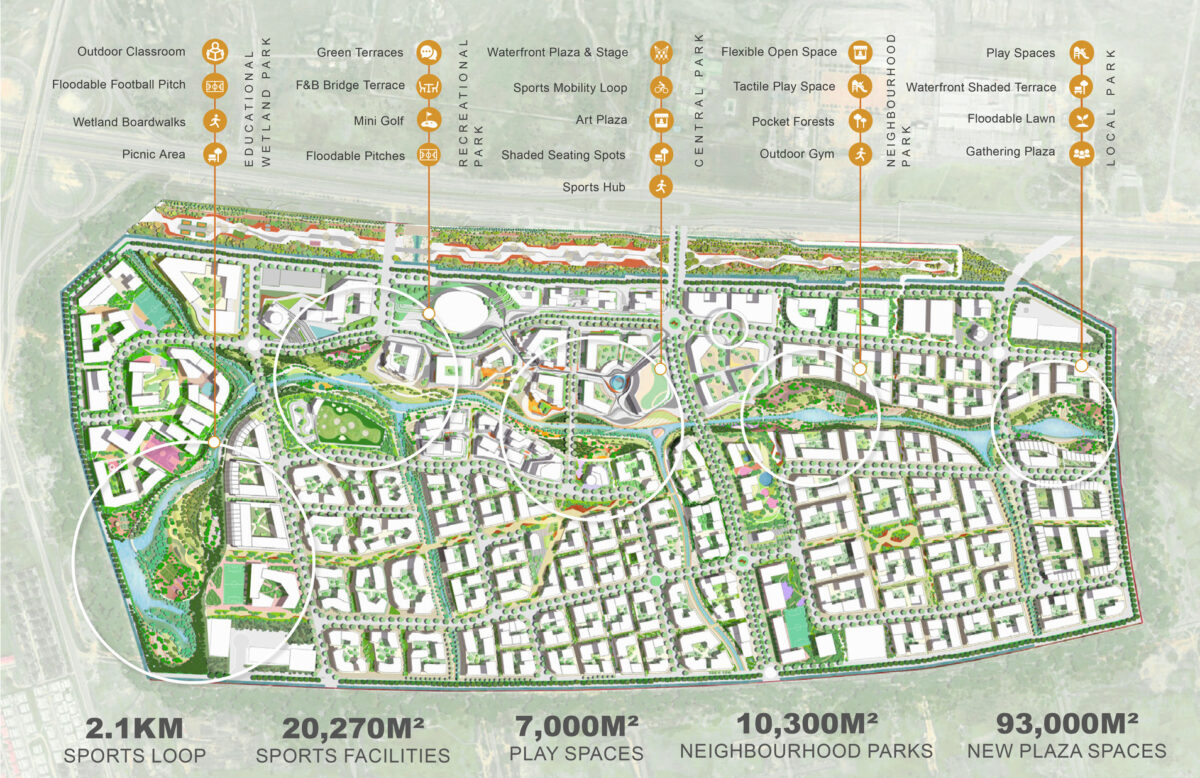
Abuja City Walk: testing the opportunity in a complex market
Abuja City Walk demonstrates how this approach can work in practice.
MAG City Links appointed Benoy to support its vision for the project, with Benoy Strategy involved from the outset. The ambition was to create a differentiated destination for Abuja, requiring a detailed understanding of the local context and market.
The work began with a comprehensive market assessment and site visit. In Abuja, the availability and consistency of market data presented a challenge. The team therefore combined available data with on-the-ground observations and its experience of working in markets where information is less comprehensive.
This helped identify a number of opportunities, including a gap in the education sector. The analysis identified potential for infrastructure supporting international universities and schools, creating a potential long-term driver for the development.
The team also assessed the public infrastructure needed to support the wider district, including schools, mosques and police facilities, considering their scale, location and relationship to the surrounding community.
Working with Benoy’s Masterplanning team, the Strategy team helped develop a district-led structure centred around a central boulevard. The boulevard would act as a connective spine, bringing together different districts, anchors and activity drivers while creating a clearer sense of movement and identity.
The location of these anchors was critical. Rather than simply distributing uses across the site, the team considered where activity could generate footfall, where key destinations should sit and how movement through the development could contribute to its identity.
Making the strategy deliverable
Phasing was another important part of the strategy. For Abuja City Walk, a bespoke approach was developed to align infrastructure investment with anticipated demand and reduce the risk of later phases competing with earlier ones.
The result was not simply a land-use plan, but a development strategy connecting market opportunity with programme, placemaking and delivery.
Ultimately, this is what HBU should achieve. It should provide a clear understanding of why a development should be what it is, who it is for, how it can succeed and how it can be delivered. The highest and best use of a site is not always the one that generates the highest theoretical return. It is the one that finds the right balance between commercial opportunity, market demand, place quality and what can realistically be delivered.
That is where strategy can make the difference: in helping establish what a place needs to become before design brings that vision to life.
Related articles