Warm Tech Aesthetics: Benoy’s design approach for L City, Shanghai
Shanghai’s Zhangjiang Science City is one of China’s principal technology and research districts. Daily rhythms move largely between home and workplace, with little public realm to encourages pause and social exchange. Benoy’s interior design for L City, a 166,000m² mixed-use commercial development, sets out to introduce a different register.
Developed for Lujiazui Group and opened in December 2025, the project is positioned as an Intelligent Lifestyle Exploration Centre. Its design rests on a methodology: warm tech aesthetics. The intent is to soften the district’s technological character through art, natural texture, colour and human-scale proportions, without losing the districts intellectual identity.
The Curiosity Lab concept
The spatial framework, named Curiosity Lab, draws on Zhangjiang’s three core industries: information technology, biomedicine and cultural creativity, alongside its work in AI, aerospace and environmental science. The development spans five plots connected by underground passages and sky bridges, organised around a five-planet theme (Saturn, Venus, Mars, Jupiter and Mercury) that runs through six above-ground floors and a basement level. Each planetary zone carries its own atmosphere, while the wider narrative invites visitors to move between them as if exploring a coherent system rather than an assembly of retail floors.
Within this framework, Benoy designed seven signature themed spaces, each calibrated to a different visitor mode.
Seven spaces, seven atmospheres
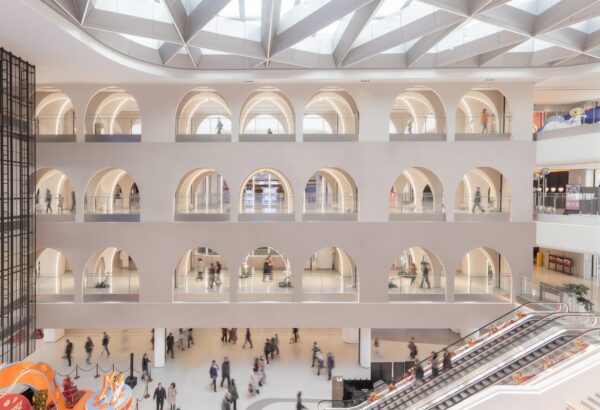
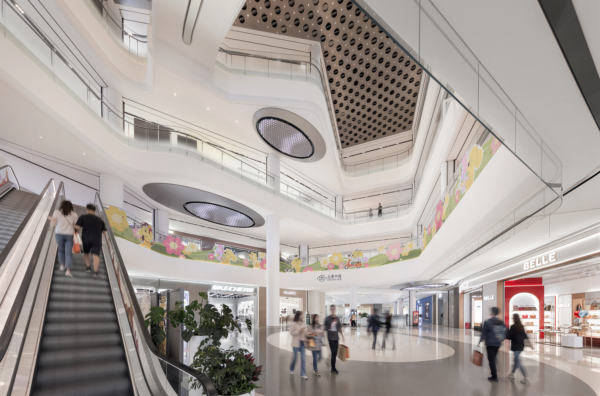
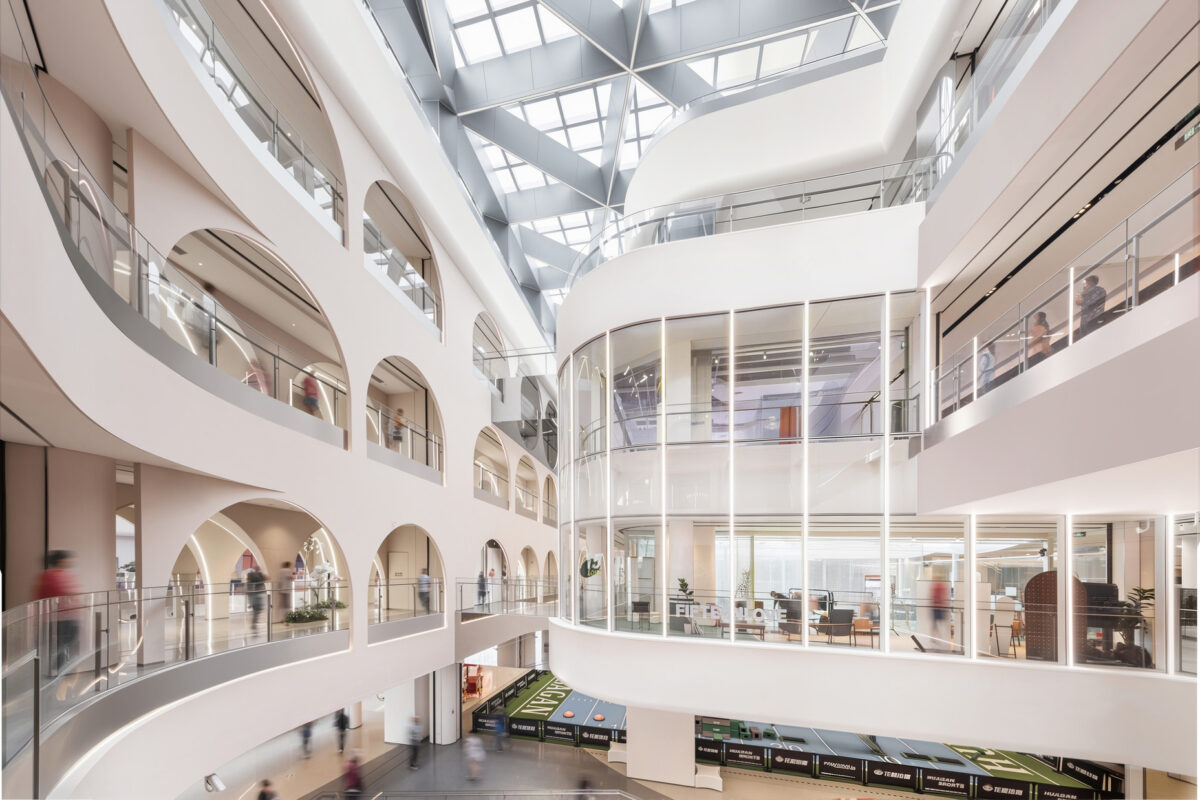
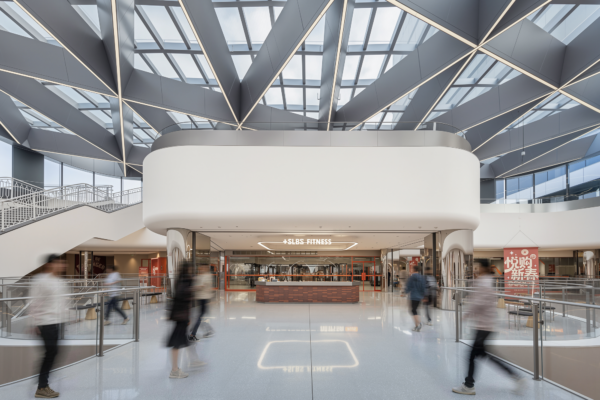
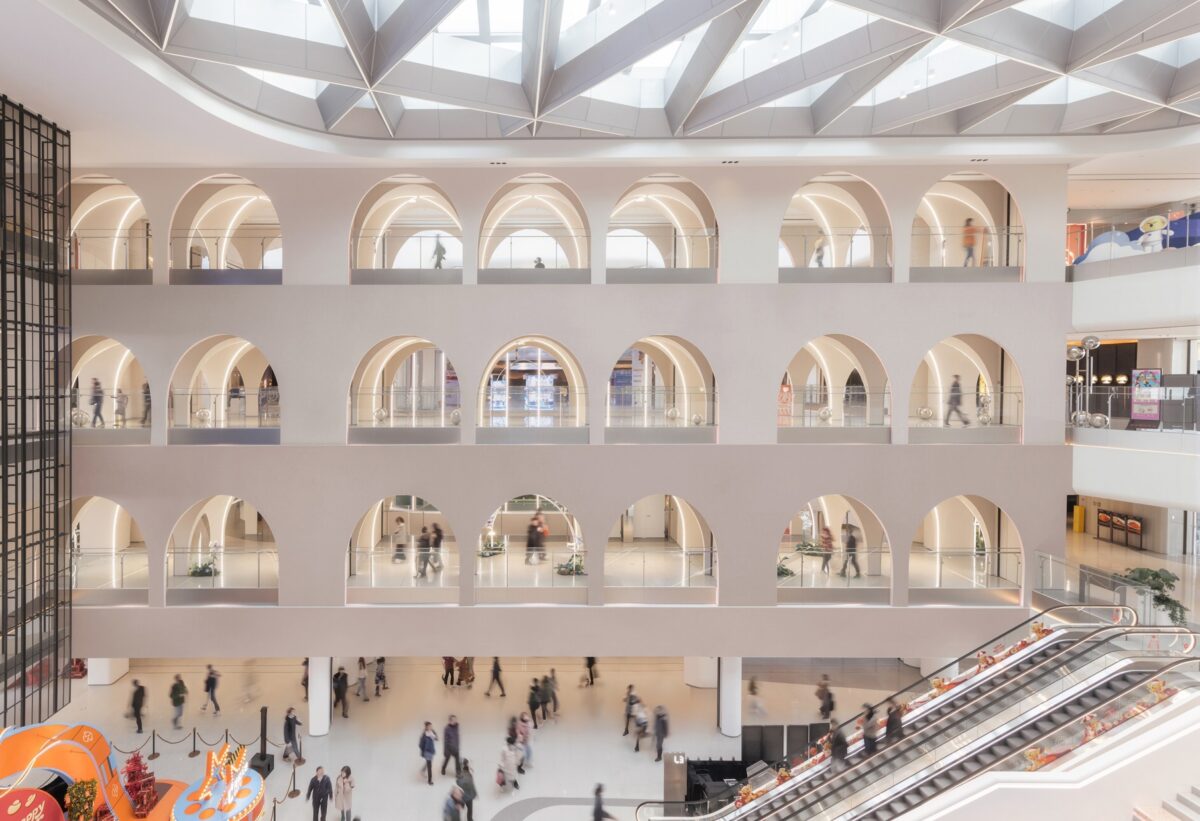
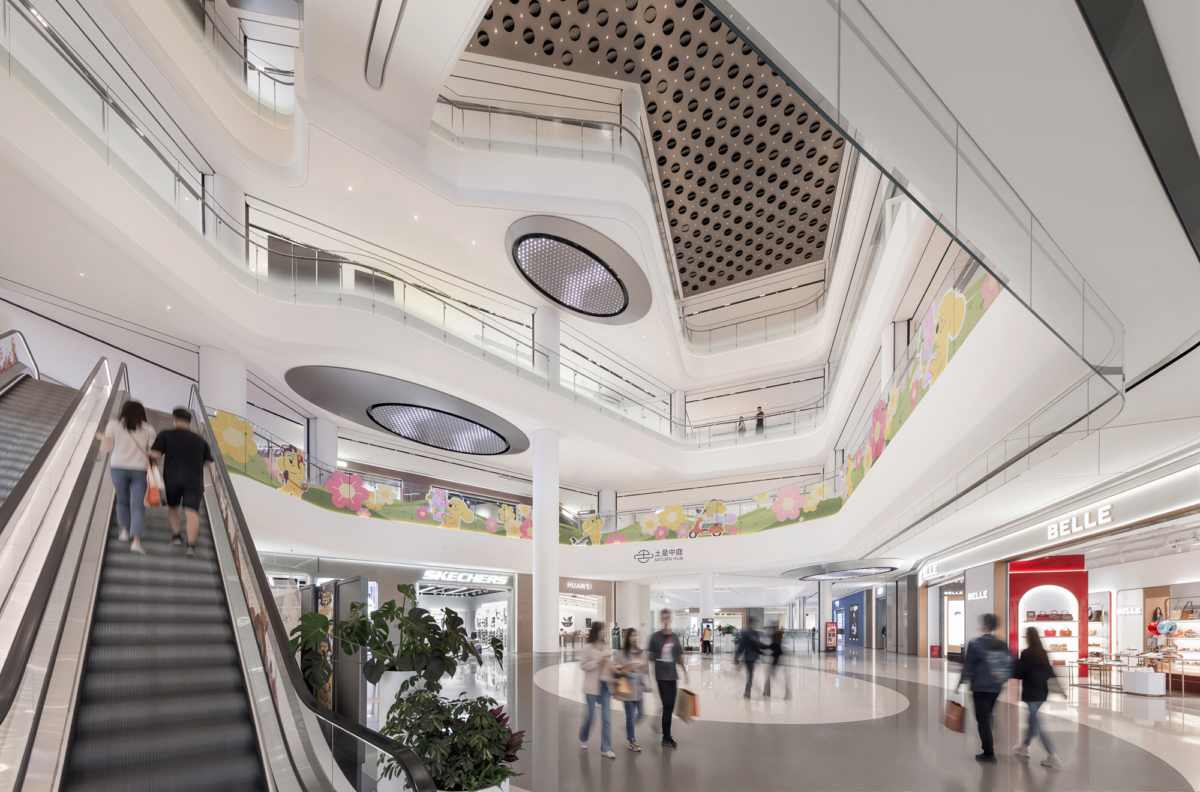
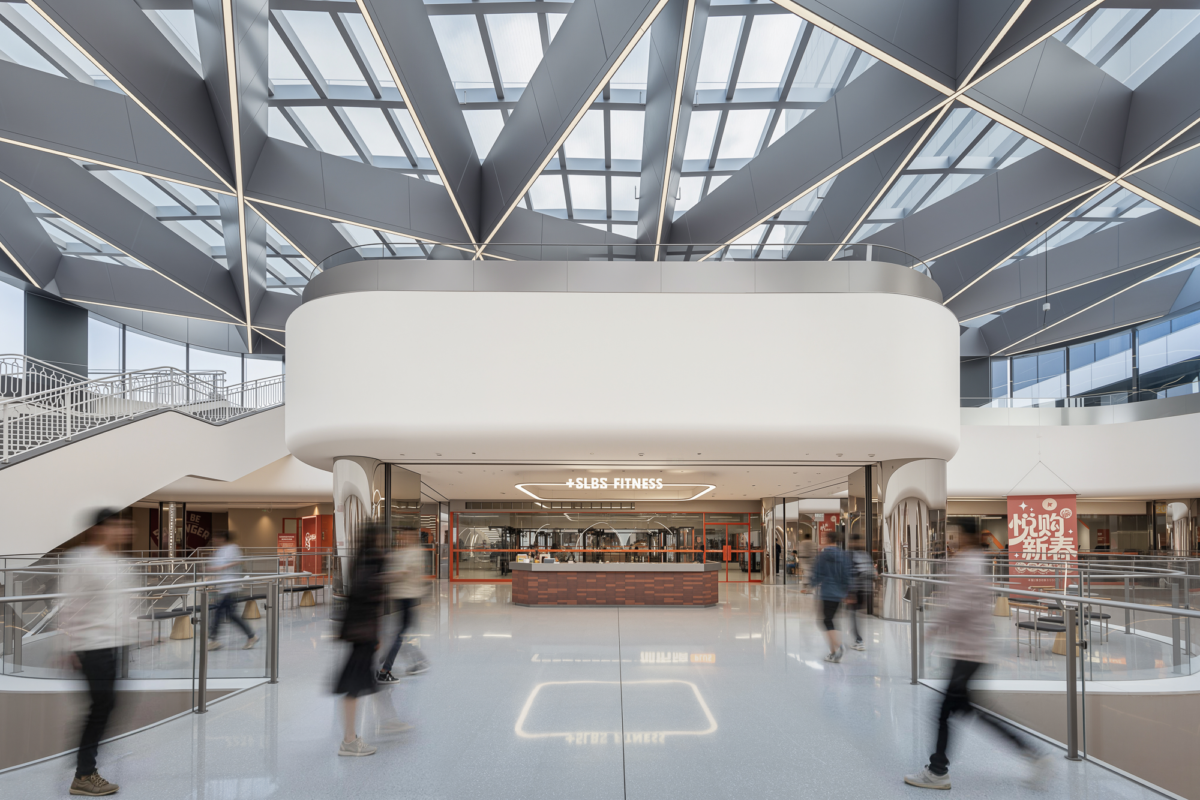
In the Saturn Zone, Rhythmic Mirror (Floors 1 – 4) uses staggered slabs and rhythmic forms to encourage interaction, with anodised aluminium ceiling panels engineered to render shifting light and shadow, a reference to the optical instruments of laboratory work. Above it, Cloud Market (Floors 5 – 6) opens into a double-height void, with cloud-shaped platforms and spiral stairs simplifying vertical circulation and a top-floor skylight drawing daylight in to reduce daytime energy demand.
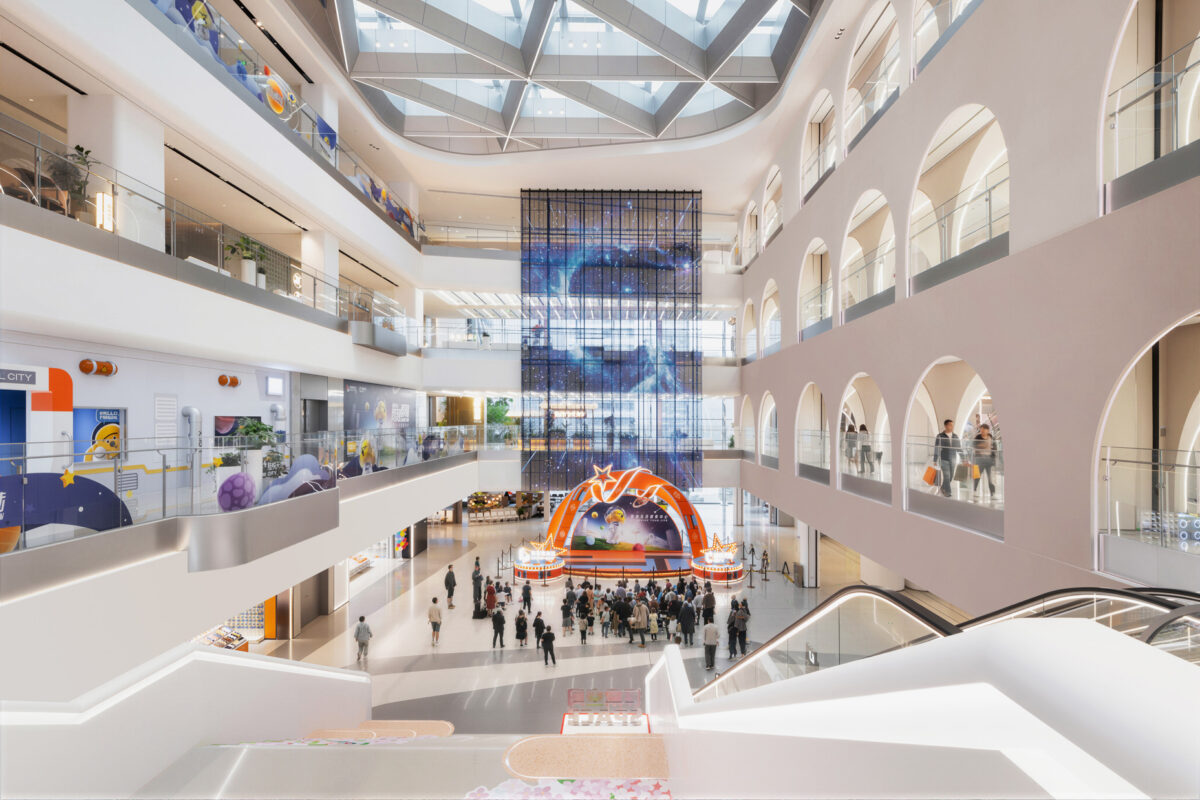
Connecting Saturn to Venus, Parallel Universe serves as the development’s principal event, exhibition and social space. A large central grille screen and ceremonial arcade frame the volume; capsule-shaped engineered-stone steps work the floor in a staggered rhythm, choreographing arrival and supporting flexible programming.
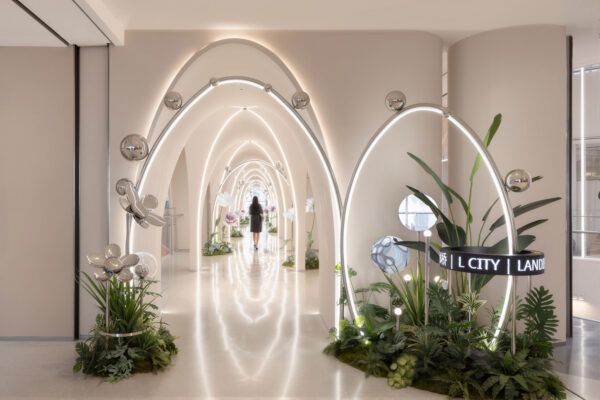
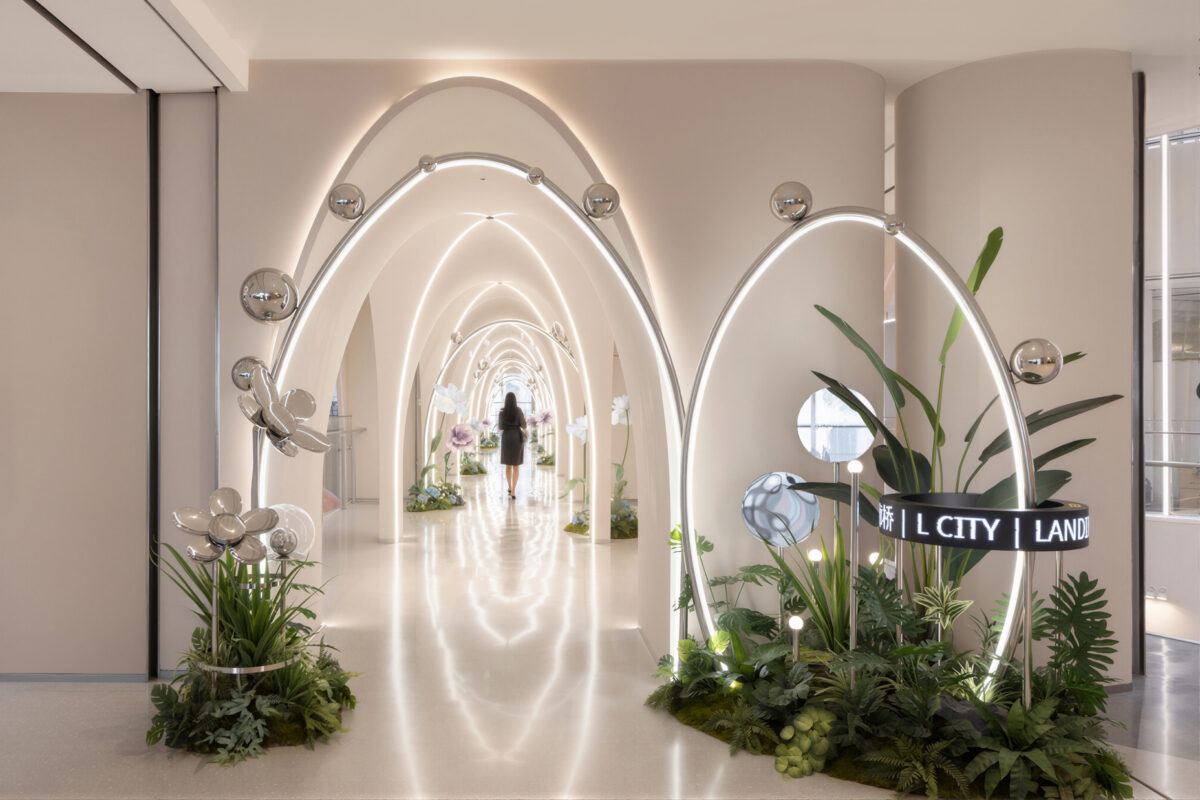
The Venus Zone houses Fragrant Arcade, where custom-moulded GRG (glass-reinforced gypsum) achieves intricate textures while reducing construction waste. It connects to Fragrant Garden, a landscaped void rising from Floors 3 to 7, with spiral stairs and natural daylight guiding visitors towards the roof garden.
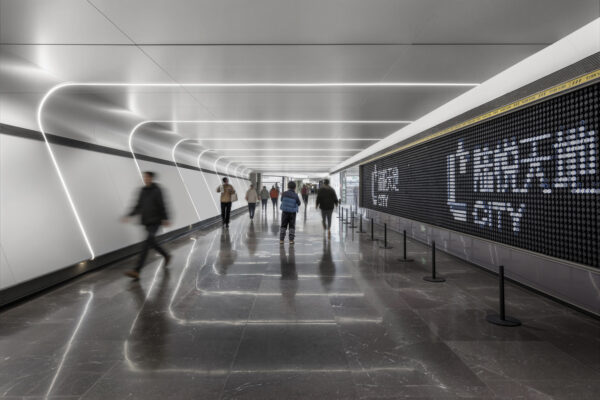
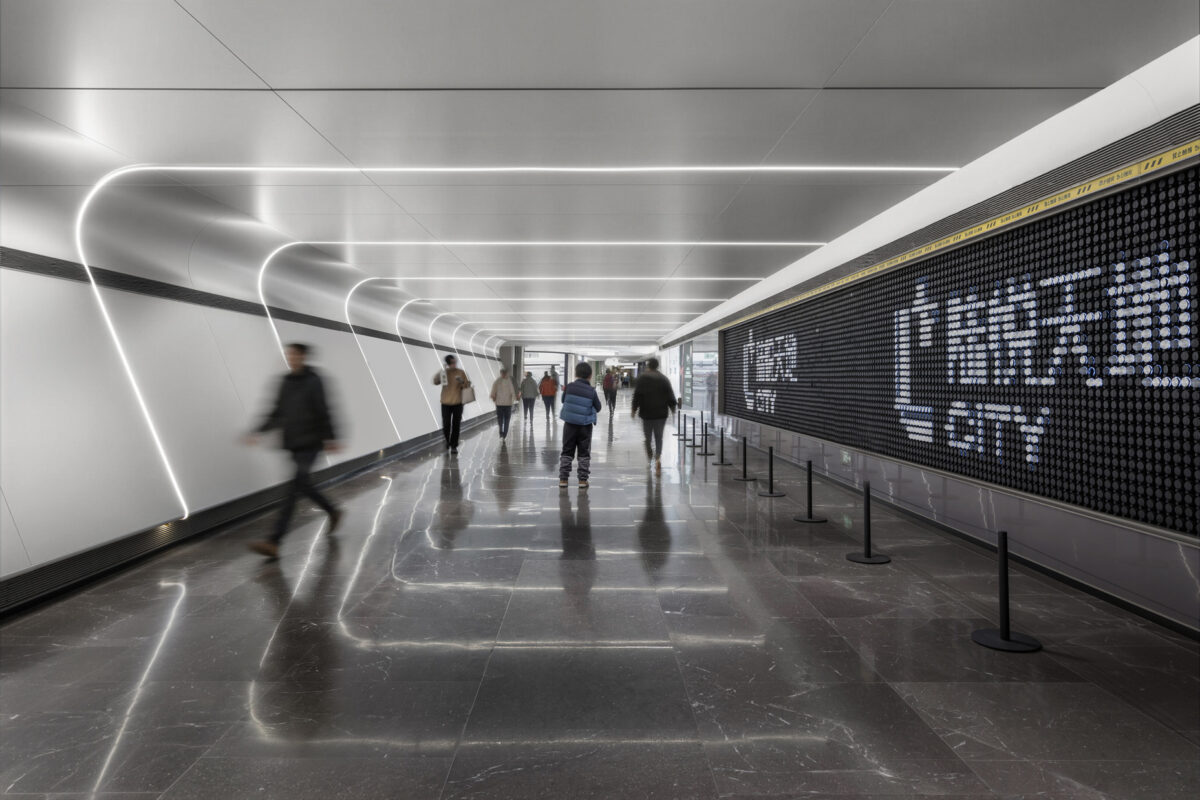
Below ground, Transfer Space Station links the five plots through a curved corridor of mechanical screens, anodised wall panels and rhythmic lighting that conceal building services without surrendering atmosphere. In the Jupiter Zone’s underground retail, sunken plazas and light wells draw daylight in, while a thin water layer over the central canopy uses evaporative cooling to regulate microclimate and reduce heat-island effects, casting moving light into the space below.
Adjacent to it, Super Food Zone takes its cue from oasis ecology. Giant greenery installations, washed-stone texture paint and dark green perforated aluminium panels frame an “Origin of Life” motif, a laboratory-inflected dining environment that doubles as a destination in its own right.
Materials and operational performance
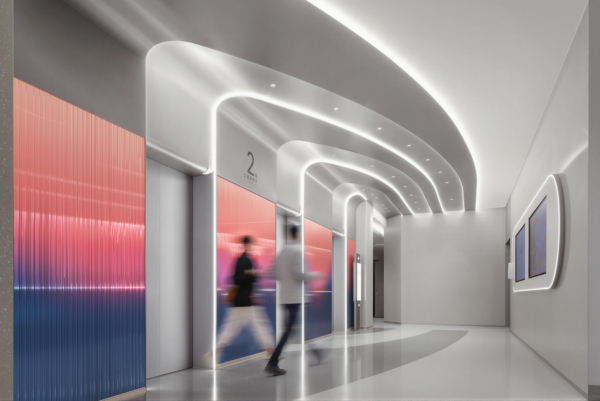
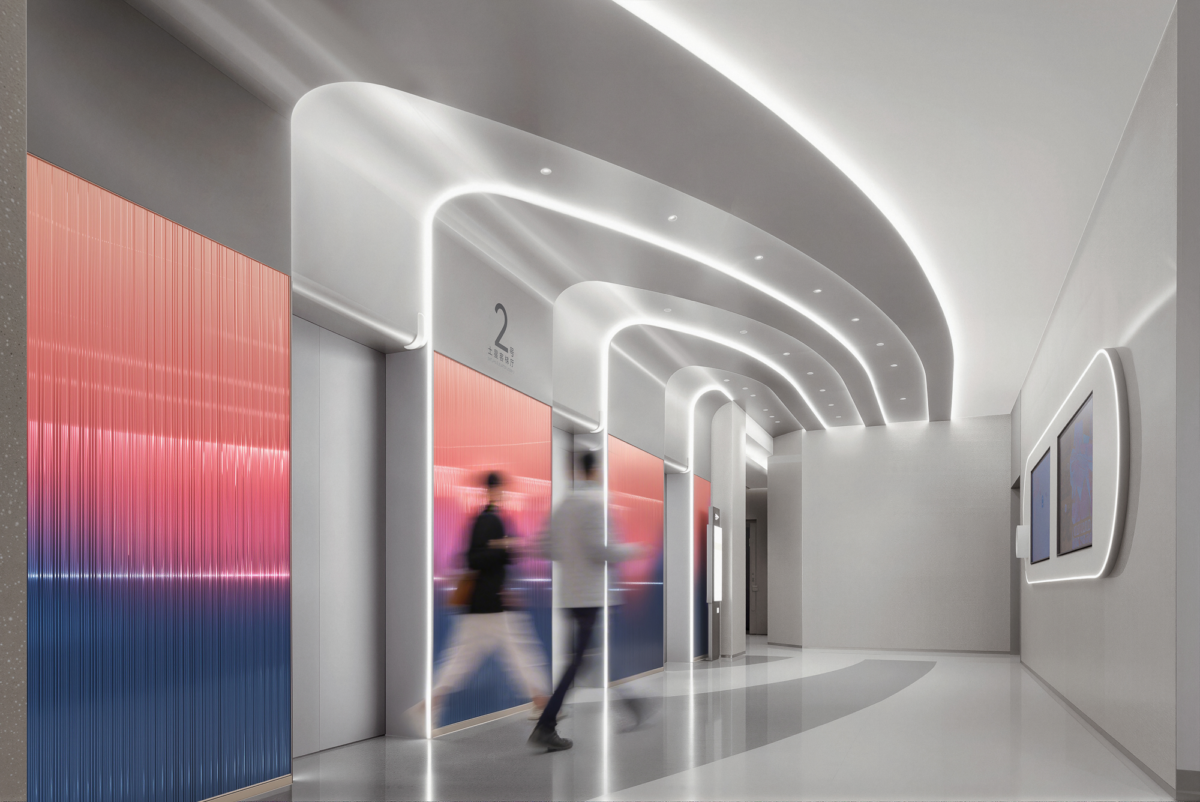
Material choices across the project reflect a consistent approach: durability, recyclability and ease of maintenance. GRG enables double-curved geometries with less mould and material waste than conventional methods. Corian extends the lifespan of high-touch surfaces and supports continuous joinery without visible breaks. Anodised aluminium panels, used widely on ceilings and partitions, resist corrosion and reduce long-term replacement cycles.
Energy performance is addressed at multiple scales. Gradient cornice glass softens the building’s massing while improving thermal behaviour. Energy-efficient LED lighting is zoned for on-demand operation, allowing illumination levels to respond to occupancy and time of day. Skylights and light wells reduce daytime artificial lighting load across both above- and below-ground retail.
Human-centred details
Beneath the spectacle, the interior strategy gives equal weight to the everyday details that make a development comfortable to spend time in. A VIP lounge, commercial exhibition hall, nursing room, children’s restroom and shower area extend the human-scale principle into amenity provision. Restrooms use Corian in a black-and-white palette with curved finishes; nursing and children’s facilities use softer colour palettes and rounded forms; shower areas pair light-blue lighting with a white baking finish for a calmer atmosphere. An intelligent visitor system and low-power dynamic signage support both wayfinding and longer-term energy efficiency.
A counterpoint to the tech-district routine
L City’s design proposition is that an innovation district benefits from a piece of public realm that is not, itself, performing innovation. Warm Tech Aesthetics is a corrective, to the assumption that a tech-adjacent destination must announce itself in cold metal and digital surface. By pairing a coherent spatial narrative with material warmth, daylight, social anchors and considered amenity provision, the L City interiors offer Zhangjiang’s residents and workers somewhere that registers as a place rather than a backdrop.