Nanjing Alibaba Center: A future campus shaped by nature and connectivity
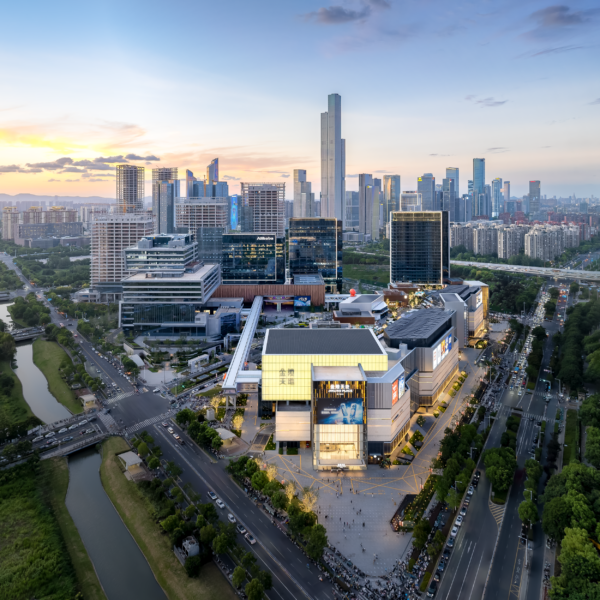
Set against Nanjing’s historic cityscape, the new Alibaba Nanjing Center live-work campus blends community wellbeing with smart technology. At nearly 900,000 m2, our fourth project for Alibaba is the company’s largest and most diverse to date, comprising research facilities, workplaces, residential apartments, retail and supporting amenities. Guided by a design ethos of connectivity, the mixed-use landmark presents a vibrant, unified lifestyle hub to Nanjing.
A human-scale response
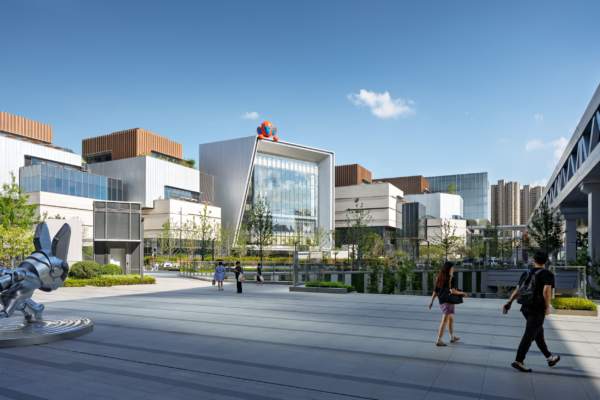
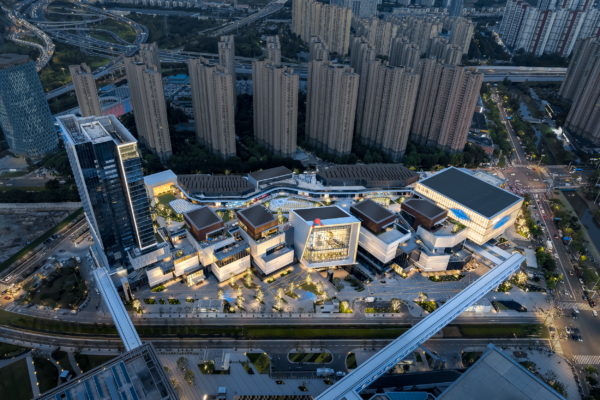
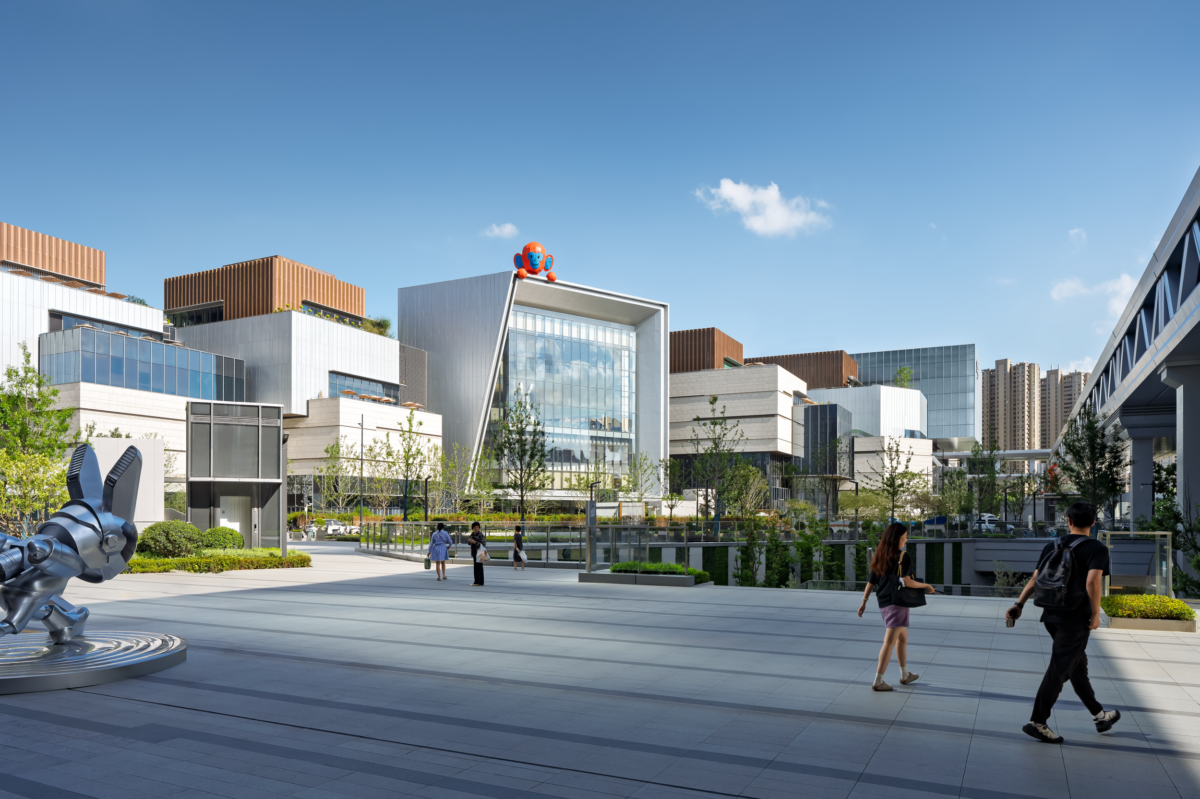
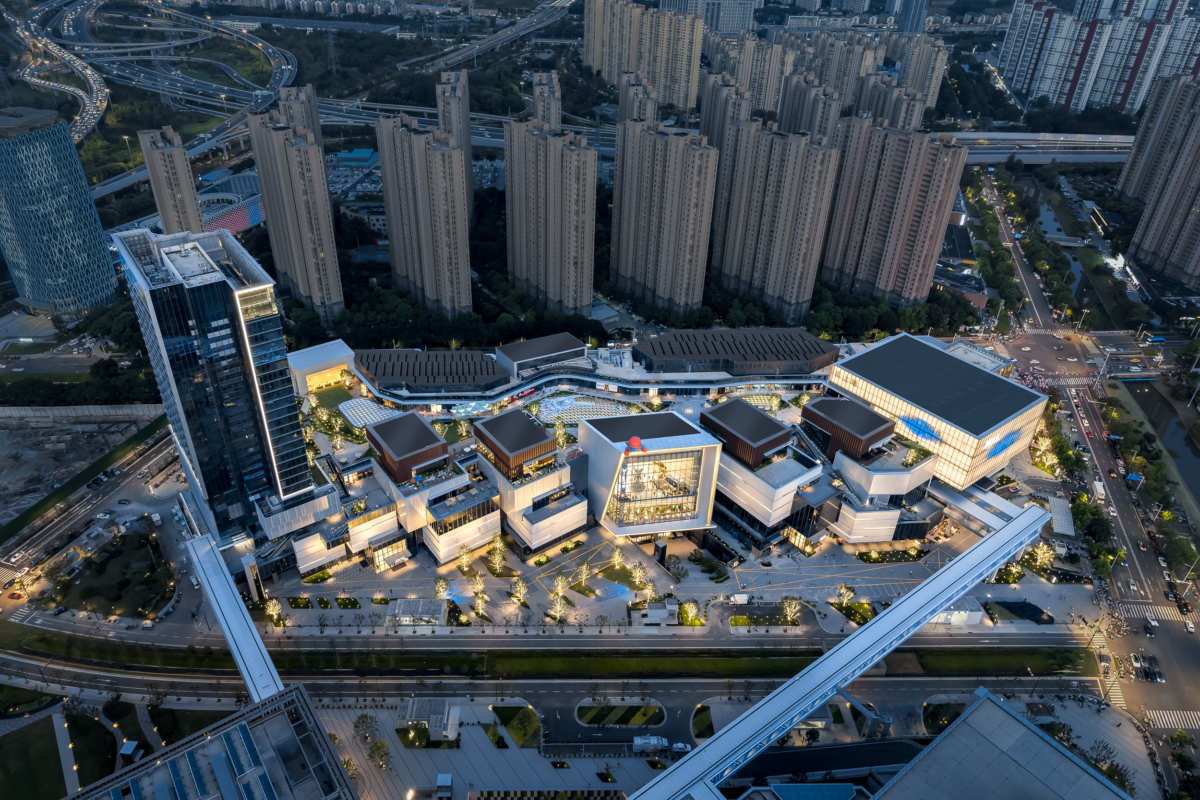
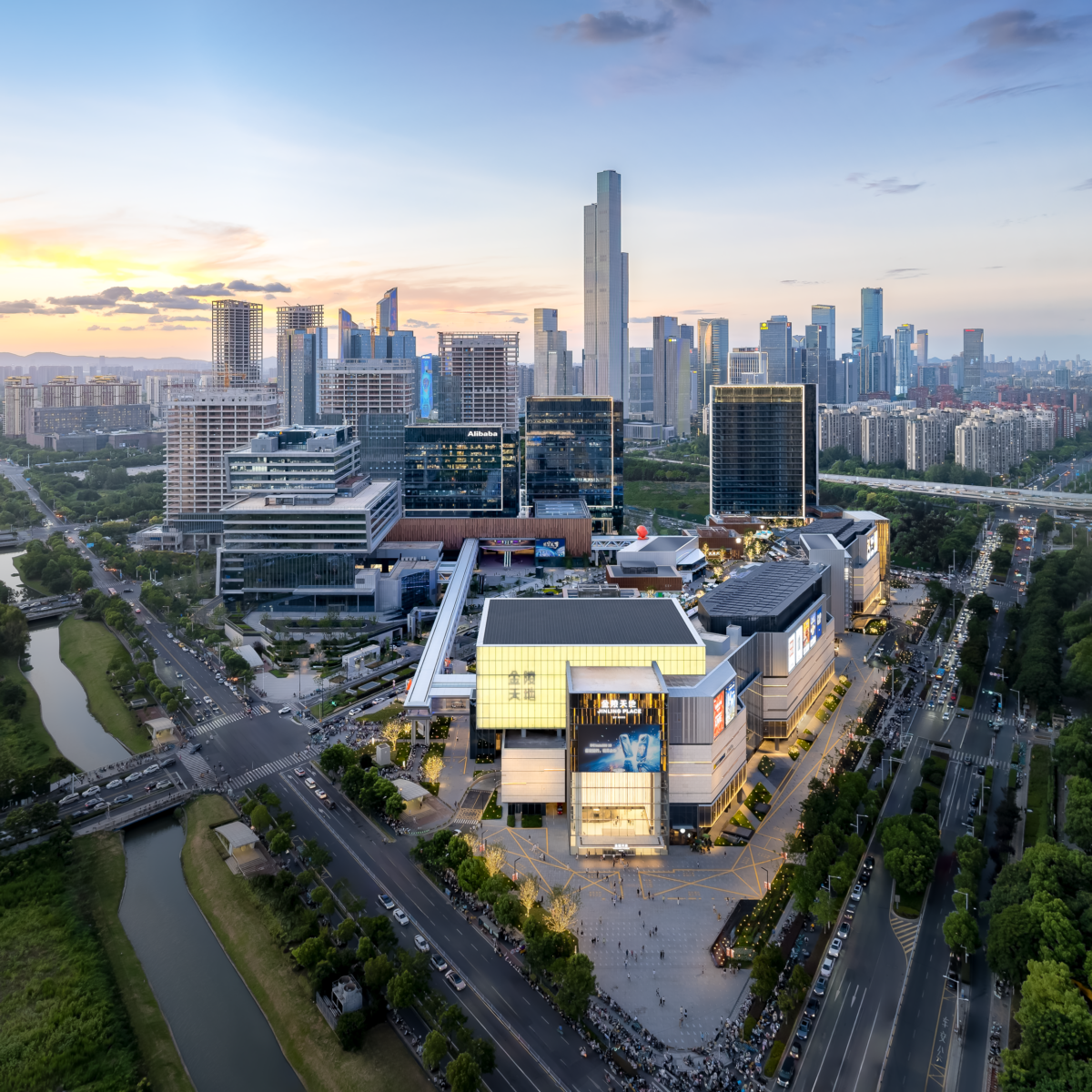
In Nanjing’s Hexi New Town CBD, where large-scale development and infrastructure have shaped the district, the Alibaba campus introduces a walkable, fine-grained network of interconnected buildings and pedestrian bridges.
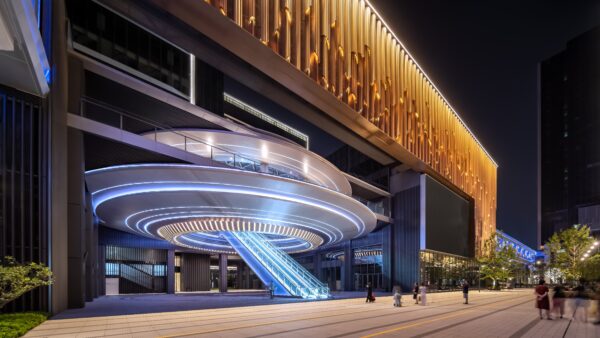
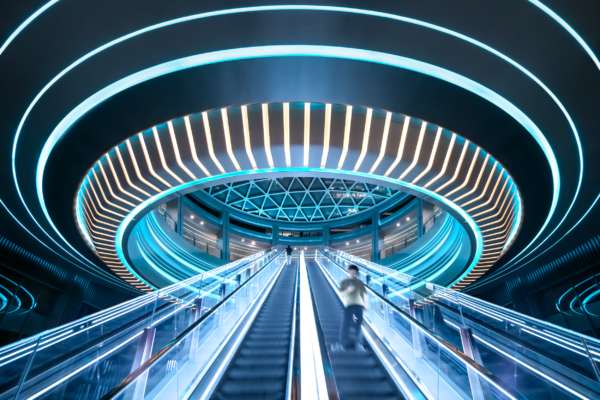
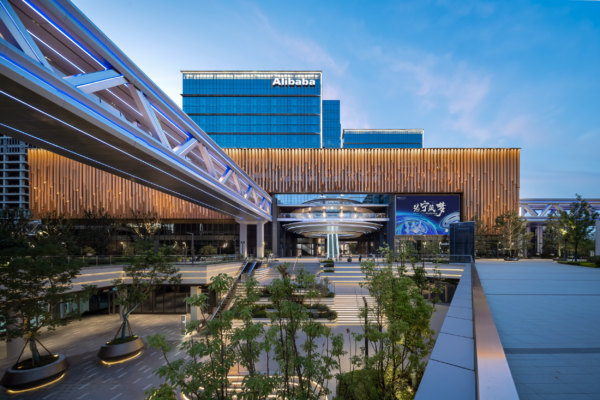
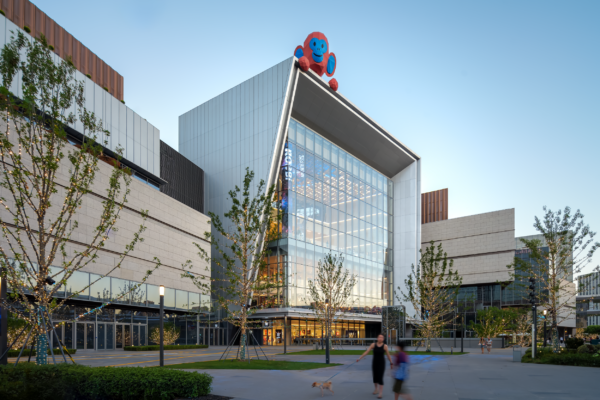
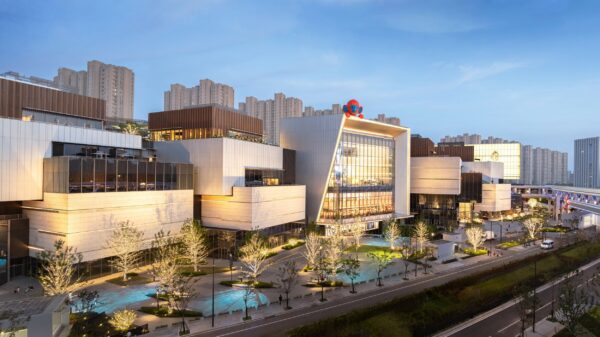
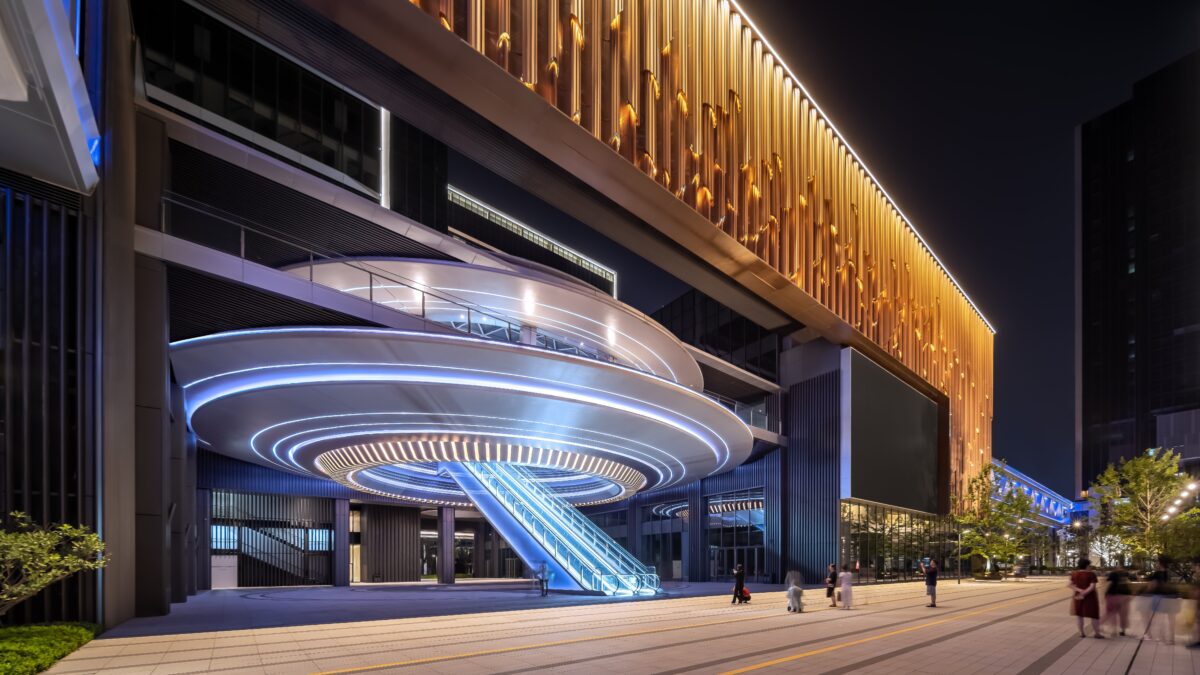
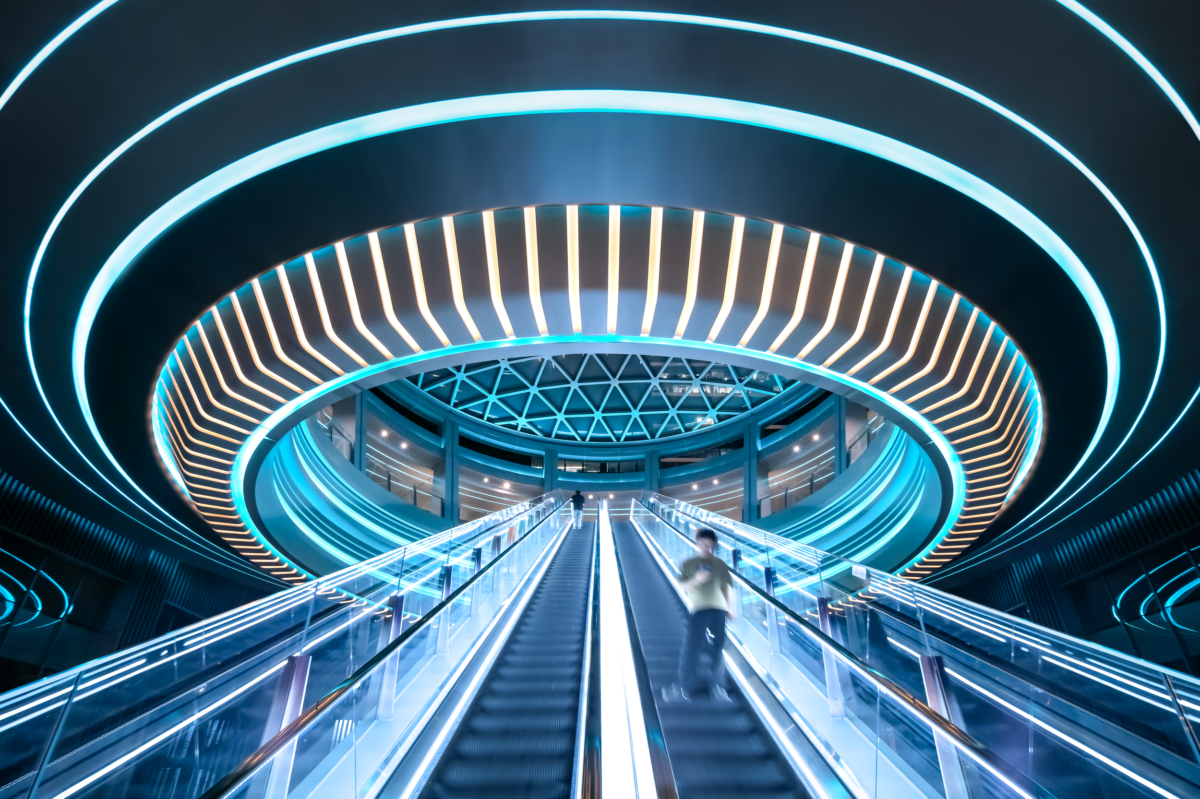
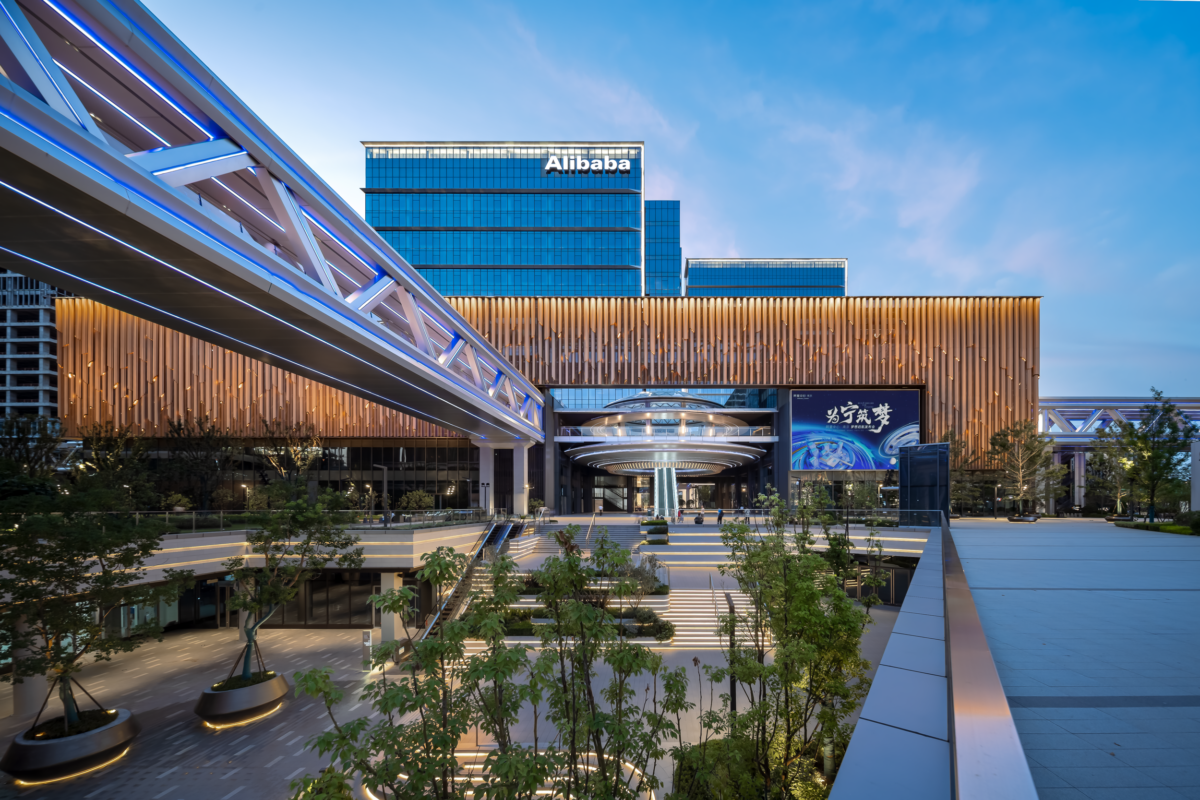
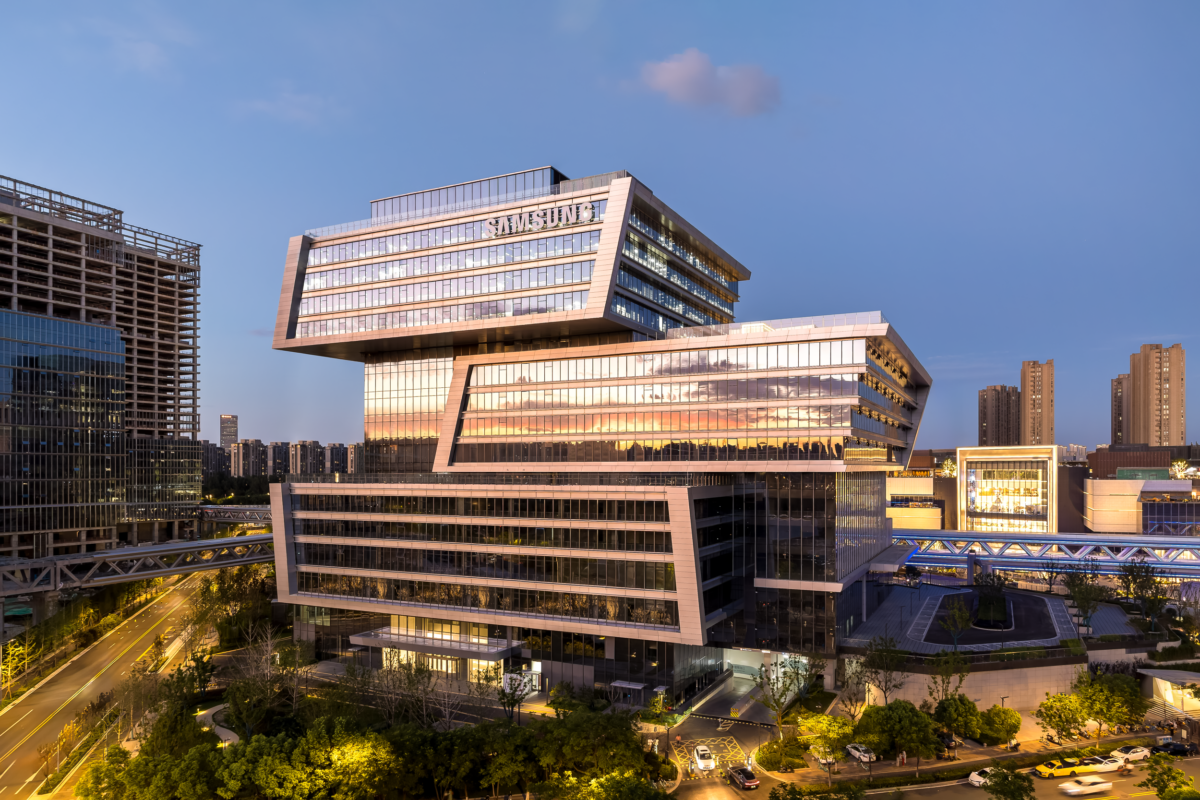
Aligned on a true north – south axis for optimal energy performance and daylight, the permeable building clusters form an interconnected ecosystem inspired by a computer motherboard. At the core of the campus, the headquarters building functions as the ‘central processing unit’ (CPU) with the Ali-Hub as its ‘router’, housing the main arrival portal and event venue. The 37m-diameter stainless-steel entrance portal has become an emblematic visual landmark and popular destination in Nanjing, with its futuristic form like that of a spaceship. Radiating out from the Ali-Hub, the Ali-Bridge network connects every building across the campus, supporting the flow of people and information while embodying Alibaba’s values of openness and inclusivity.
Blending work, retail and community
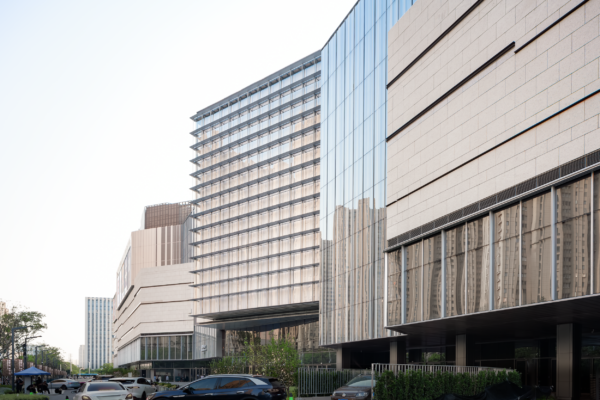
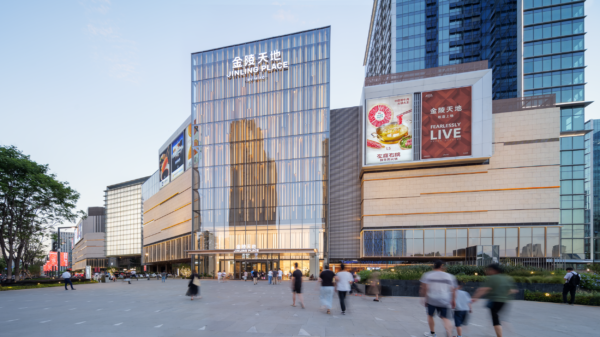
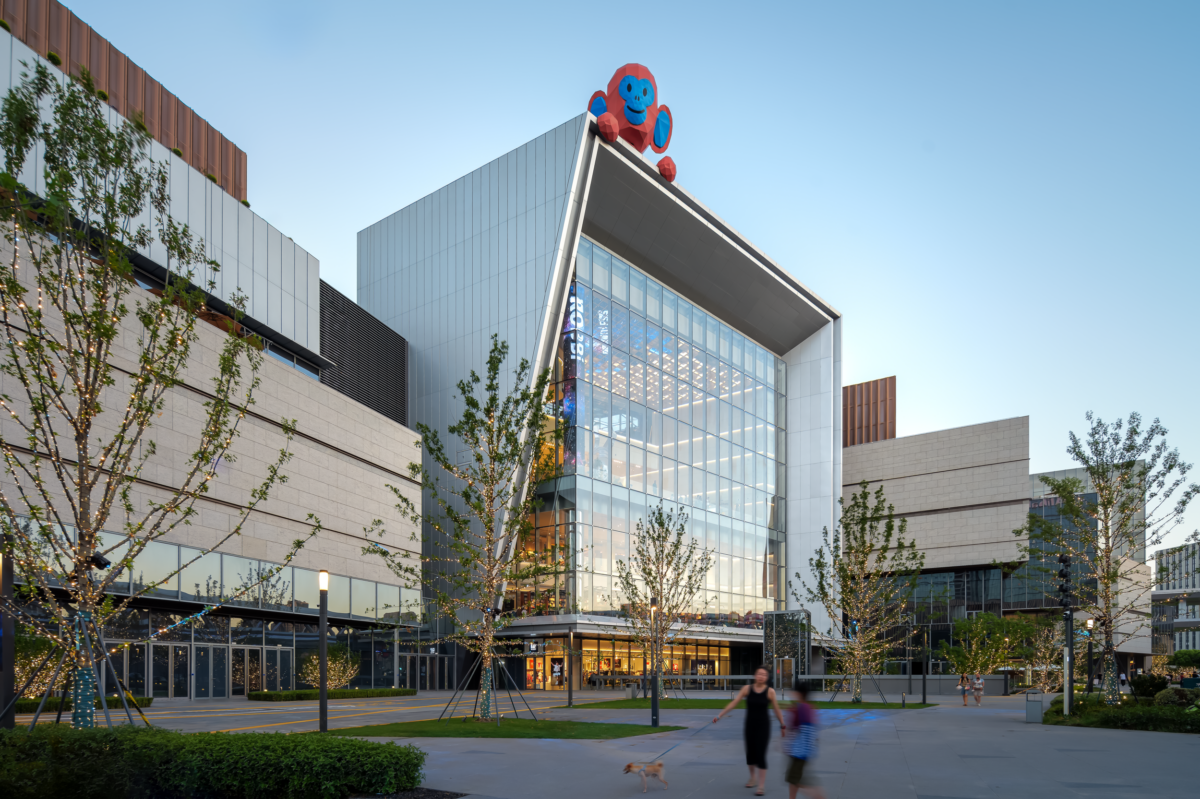
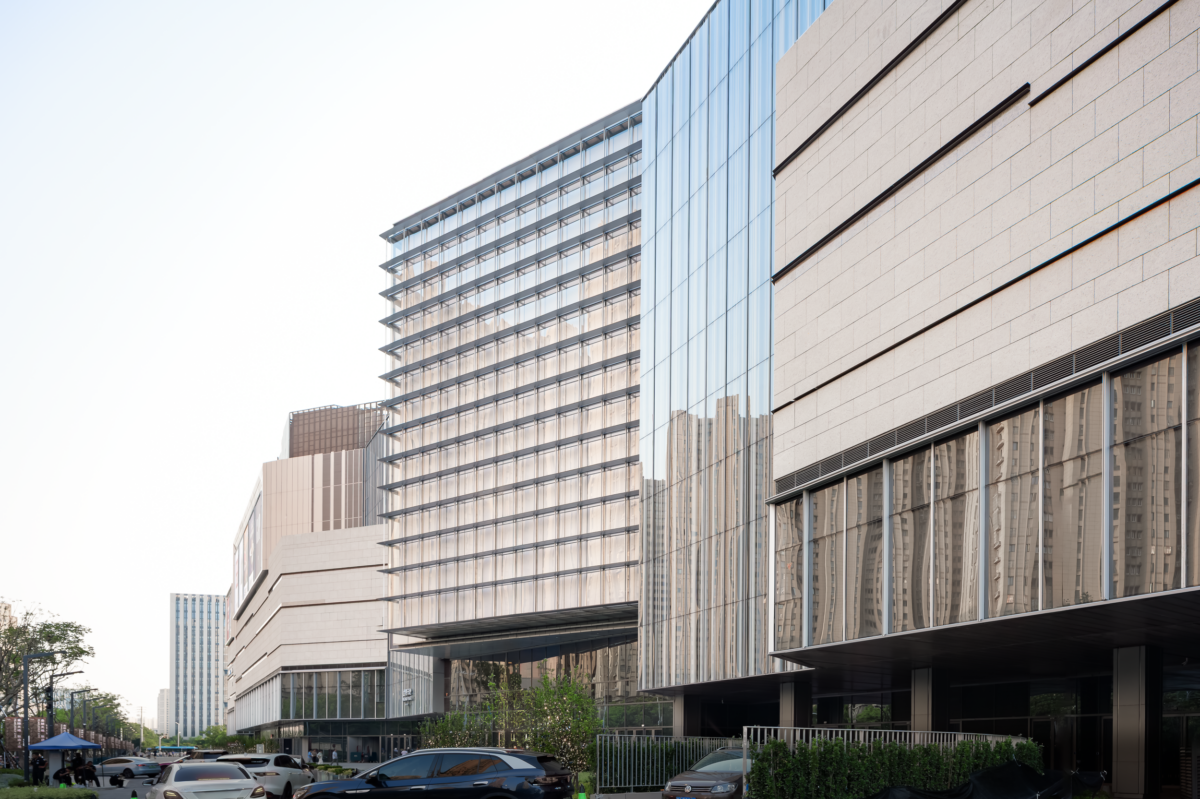
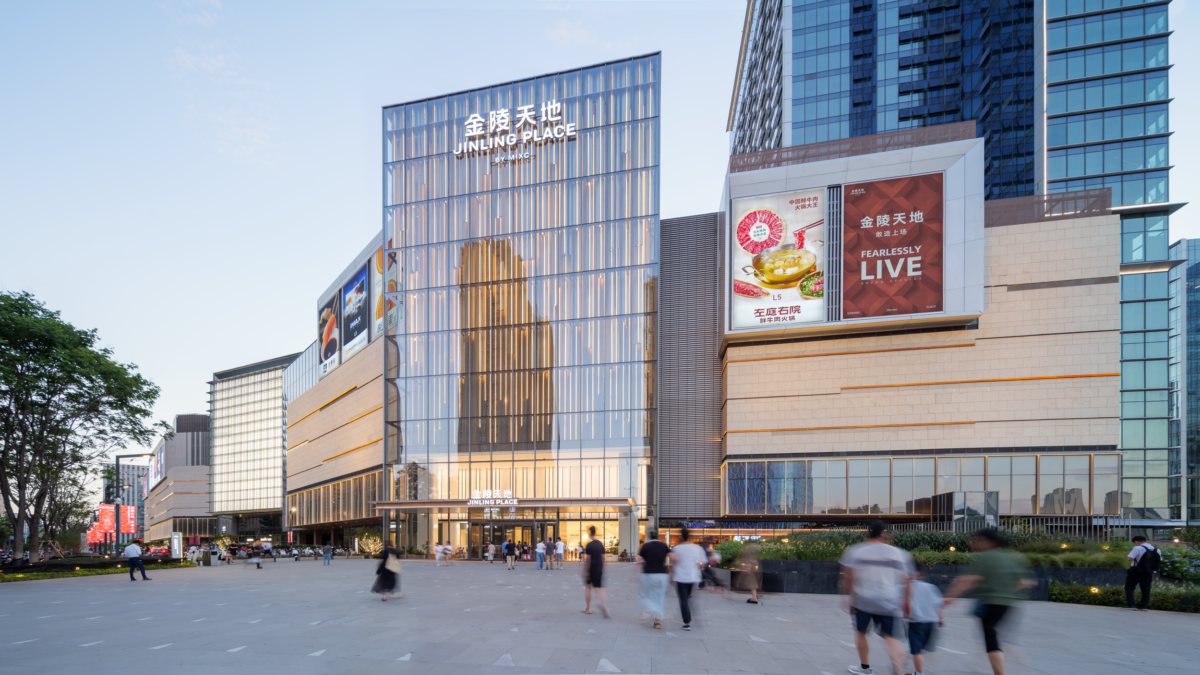
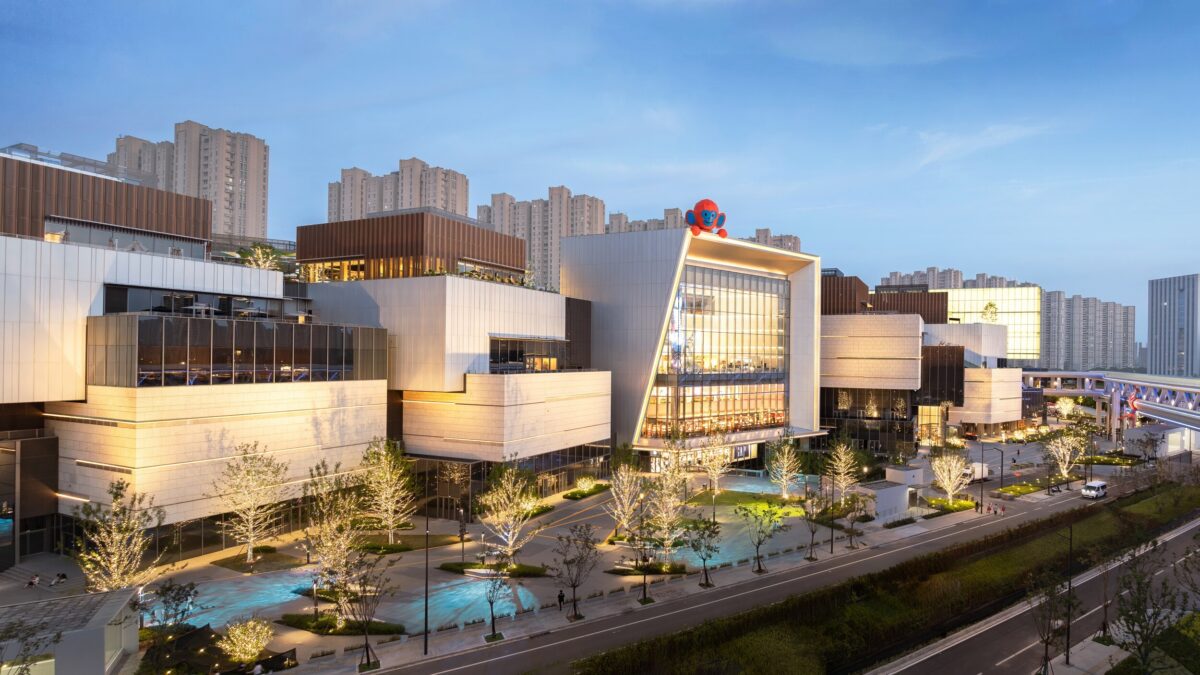
Nanjing Jinling Place, the campus’ retail anchor operated by MixC Life, takes on a stacked form with a series of stepped green terraces. Inspired by towers of stones, we chose natural stone for the facades to juxtapose the wider campus’ technological character.
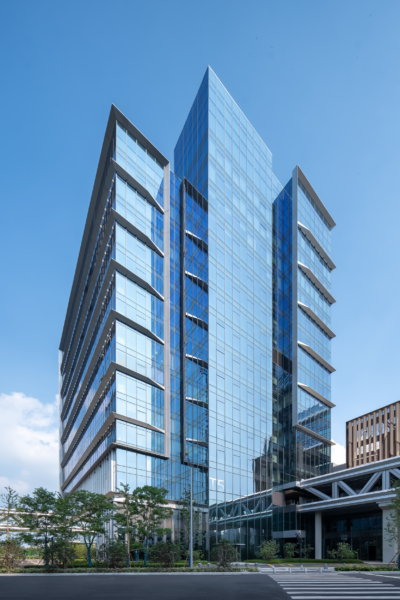
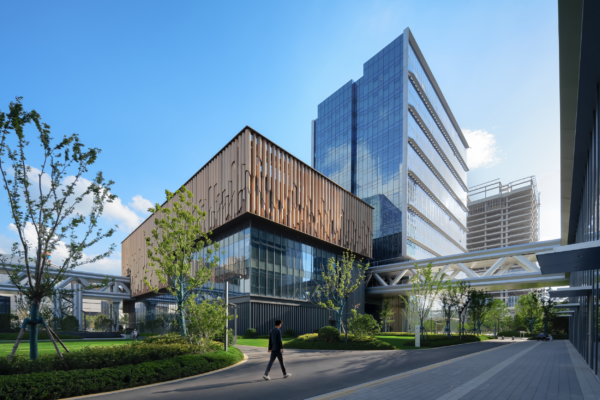
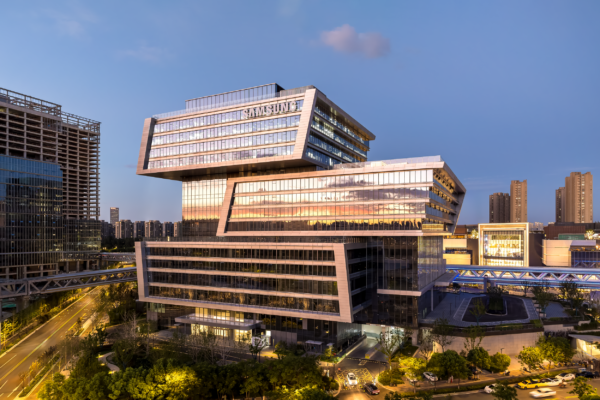
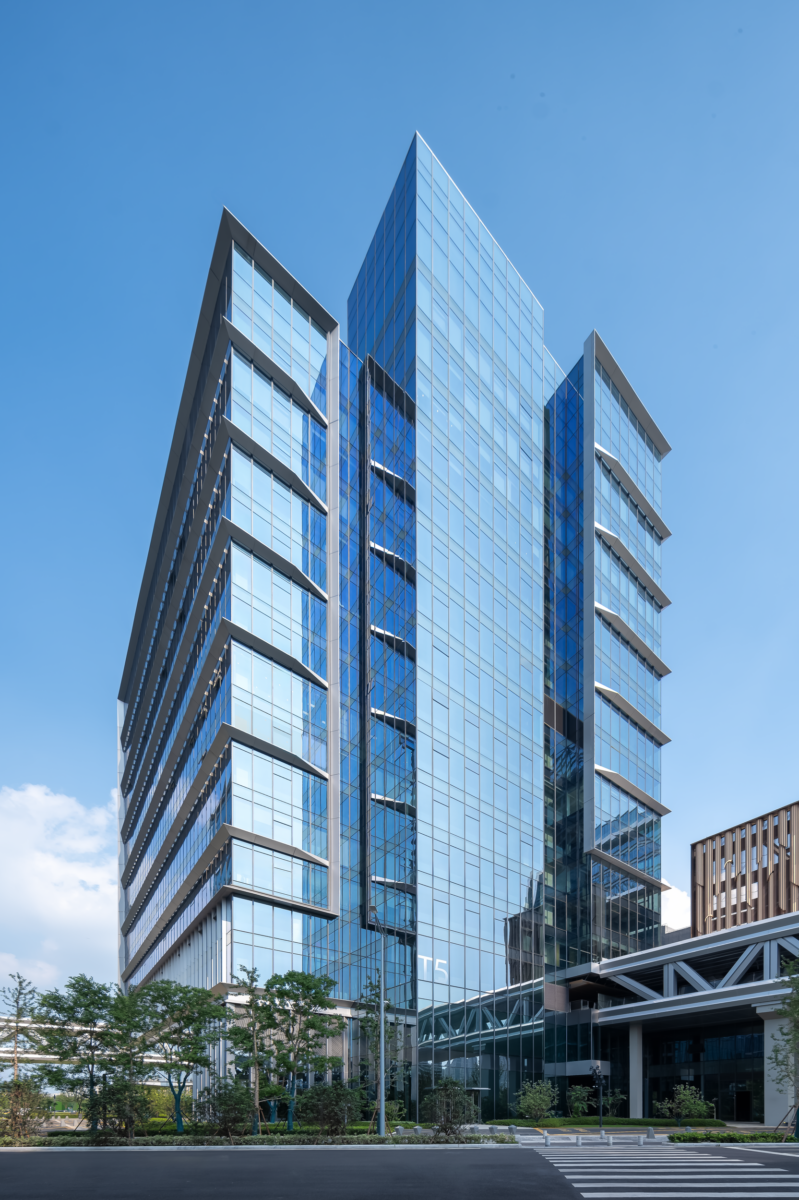
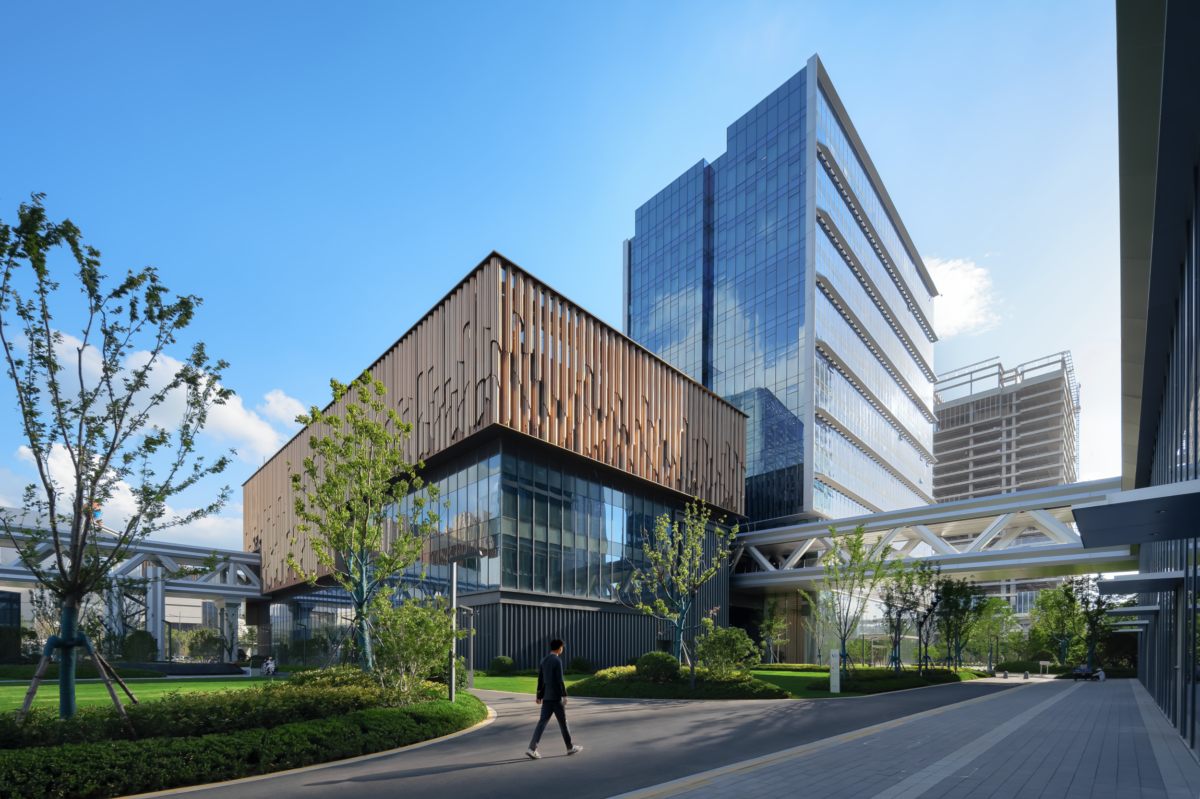
Across the wider masterplan, the building clusters are expressed through glass façades articulated with linear metal details. The transparency lends the architecture a sense of lightness and movement, while the metal detailing creates a unified yet layered expression.
Extending this narrative, the bridge network takes its cue from the concept of ‘data transmission’. We designed a streamlined metal structure with repeating diagonal truss frames to create a strong sense of motion and connectivity, symbolising the rapid flow of information in the digital age.
Smart design: advancing ecological responsibility
We embedded sustainable design initiatives throughout the design process – from material selection and energy modelling to environmental management – helping the project achieve LEED-CS Gold and China’s top green-building rating: the Three-Star Certification.
We integrated low-reflective materials, rooftop gardens and outdoor shading to 20% of the site to ease the urban heat-island effect. High-efficiency systems and smart start-stop technologies deliver annual energy savings of 4.13 million kWh, resulting in the building energy use being as low as 43.56 kWh/m² per year – less than a third of comparable buildings. We also selected recyclable materials to support the circular economy and future adaptability.
Inside, a two-stage filtration system (G4 followed by F8) supported by real-time air-quality monitoring captures over 90% of fine particles, resulting in cleaner air. The project also reduces operational carbon by over 40% compared with baseline values.
Responding to Nanjing’s riverside context, we integrated a suite of sponge-city strategies – aligned with international water-sensitive urban design (WSUD) principles – such as rooftop greening, permeable paving and rainwater harvesting. Together, these measures deliver a high annual run-off control rate of 76% as well as a significant 60% reduction in nonpoint-source pollution.
Our landscape design follows a framework of ‘one axis, one belt, six gardens’, covering 40% of the site with green space. The vertical green axis links technology and culture, and a horizontal landscape belt expresses the site’s green attributes. Meanwhile, the entry gardens introduce a calm, wellbeing-focused environment.
A campus living with the city
From its ‘CPU motherboard’ design narrative to its human-centred, interconnected spatial structure and holistic sustainability approach, the Nanjing Alibaba Center embodies our innovative thinking in campus design. The project exemplifies how technology and nature, city and architecture, function and experience can not only coexist but also elevate one another.
Read more and watch the video here: https://www.benoy.com/projects/nanjing-alibaba-center/
Project overview
Scope of services:
Masterplanning, Architectural Design
Sector:
Mixed-use, Office, Retail, Apartment
Client:
Alibaba Group; CR MixC Lifestyle (retail operator)
Size:
Total GFA 850,000 m²
Chief Designer:
Qin Pang
Project Director:
Yejia Zhu
Project design team:
Ke Xu, Victoria Li, Daniel Xu, Tielong Xue, Xinyi Chen, Yining Lai