To deliver truly sustainable mixed use communities, there should be a focus on strengthening existing town centres before developing out towards the green belt. Here Benoy Director, Rob Bentley, explores some of the issues at stake.
Return to Future ThinkingTown centre regeneration - retail parks into green parks

Contact Rob Bentley, Director
robert.bentley@benoy.com
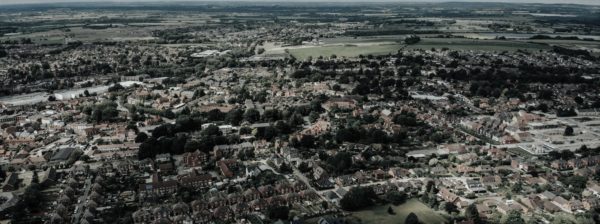
No one would ever suggest that town centre conversion is an easy path, with typically multiple ownerships and stakeholders vying for control.
However, when significant sized plots do become available, these can offer great potential to deliver a proportion of housing need and help generate a community.
- Shopping centres are not the only assets facing the current retail climate challenge, retail parks are also vulnerable, with an oversupply of provision in a contracting market. Well located and strong parks will either thrive or some may convert to leisure use. When this is not attractive to the market, redevelopment for a wider range of uses including residential is also a possibility. Retail park units, combined with their servicing and parking provision, tend to present significant plots and therefore a compelling opportunity for mixed use development, offering potential for scale and critical mass.
- For many retail parks, often edge of town centre and “well connected” in a residential context actually means surrounded by ring roads and disconnected from communities. Any new development will need to seamlessly join existing communities to the town centre core, delivering an attractive, active enhancement to existing routes.
- Ground plane activation through social and community uses such as libraries, health can strengthen the community connection in addition to a reconsidered retail provision.
'For many retail parks, often edge of town centre and “well connected” in a residential context actually means surrounded by ring roads and disconnected from communities. Any new development will need to seamlessly join existing communities to the town centre core, delivering an attractive, active enhancement to existing routes.'
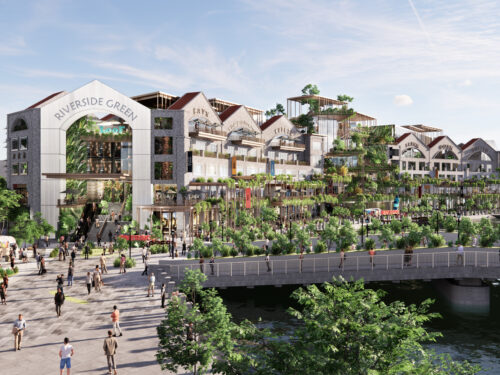
As one example, Benoy’s Fourth Mile scheme, which recently secured planning approval, proposes the regeneration of a B&Q warehouse that is on a challenging island site, separated from its neighbours by the M4, A4, North Circular and a railway freight line.
Repositioning the retail use to create both community and knowledge economy jobs were key drivers for the development. Identity, positive environment and connectivity to the surrounding context were critical to delivering this vision.
Regular continuous consultation informed the response, strengthening the connection to the surrounding communities to deliver essential new homes alongside the strategic regeneration of the wider area.
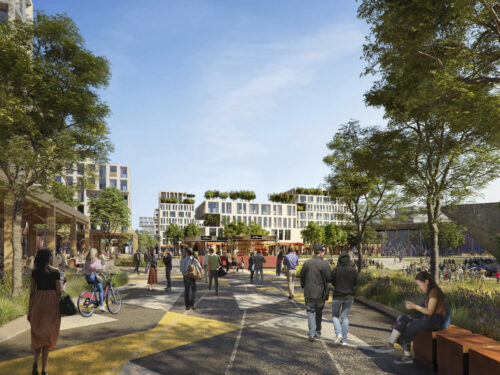
We looked beyond the “red line” to enhance, connect to and activate pedestrian and cycle routes, around the site and through the new public square, which provides a point of calm from the surrounding road network for both public and residents, at the heart of the scheme.
The mix of employment, leisure, hospitality and retail/showcase uses combine with a range of residential types to create a community which provides life throughout the day and evening, delivering activity to the square and external edges.
'Retail park units, combined with their servicing and parking provision, tend to present significant plots and therefore a compelling opportunity for mixed use development, offering scale and critical mass.'