- Author
- Niloofar Abounoori, BIM Coordinator
Niloofar Abounoori, BIM Coordinator, explores how BIM can be used as a design aid to ensure that architectural vision is carried through to the finished design despite project complexity.
For a long time, the architecture industry has seen the transition from ‘concept’ to ‘construction’ as a fragile bridge, one where the poetry of a design vision can diminish before reaching the reality of the final building.
However, by mastering Building Information Modelling (BIM) as a design leadership tool, we can fortify this bridge. BIM has evolved from a documentation tool into a collaborative instrument. BIM forms an environment where the architect maintains the design vision while enabling engineers and specialists to contribute their expertise effectively, allowing all stakeholders to perform at their best. The question is no longer, ‘How do we model this?’ but rather, ‘How does the model enable all collaborators to maintain design quality?’.
Collaborative governance: a shared 3D reality
In contemporary practice, moving from fragmented 2D overlays to a data-rich 3D environment allows the architect to act as a facilitator of design. This is critical in complex projects or refurbishments where architects translate legacy records into dynamic, shared rules.
In this ecosystem, every bolt, pipe, and partition is not a potential obstacle, but instead a contribution to the building’s performance. By maintaining a digital archive of the building’s evolution, we ensure that the logic of the design remains transparent to the client and the engineering team. This means that technical evolution moves away from a series of compromises and instead enables better, more refined execution. The digital archive becomes the ‘single source of truth’ for the entire team to align with, maintaining coherence throughout the process.
Synergy preserves design intent
The greatest advantage of a BIM-led workflow is the ability to accelerate client decision-making without sacrificing quality. When optimising a façade, for instance, we aren’t just changing a drawing; we are creating a shared language where thermal performance and aesthetic proportions work together. This allows the team to interrogate the building, ensuring that the ‘poetry’ envisioned at the competition stage is realised by the ‘precision’ of engineering data. Therefore, the original concept is not lost, but rather matured and tested through collaboration.
Case study: collaboration in complex design integration
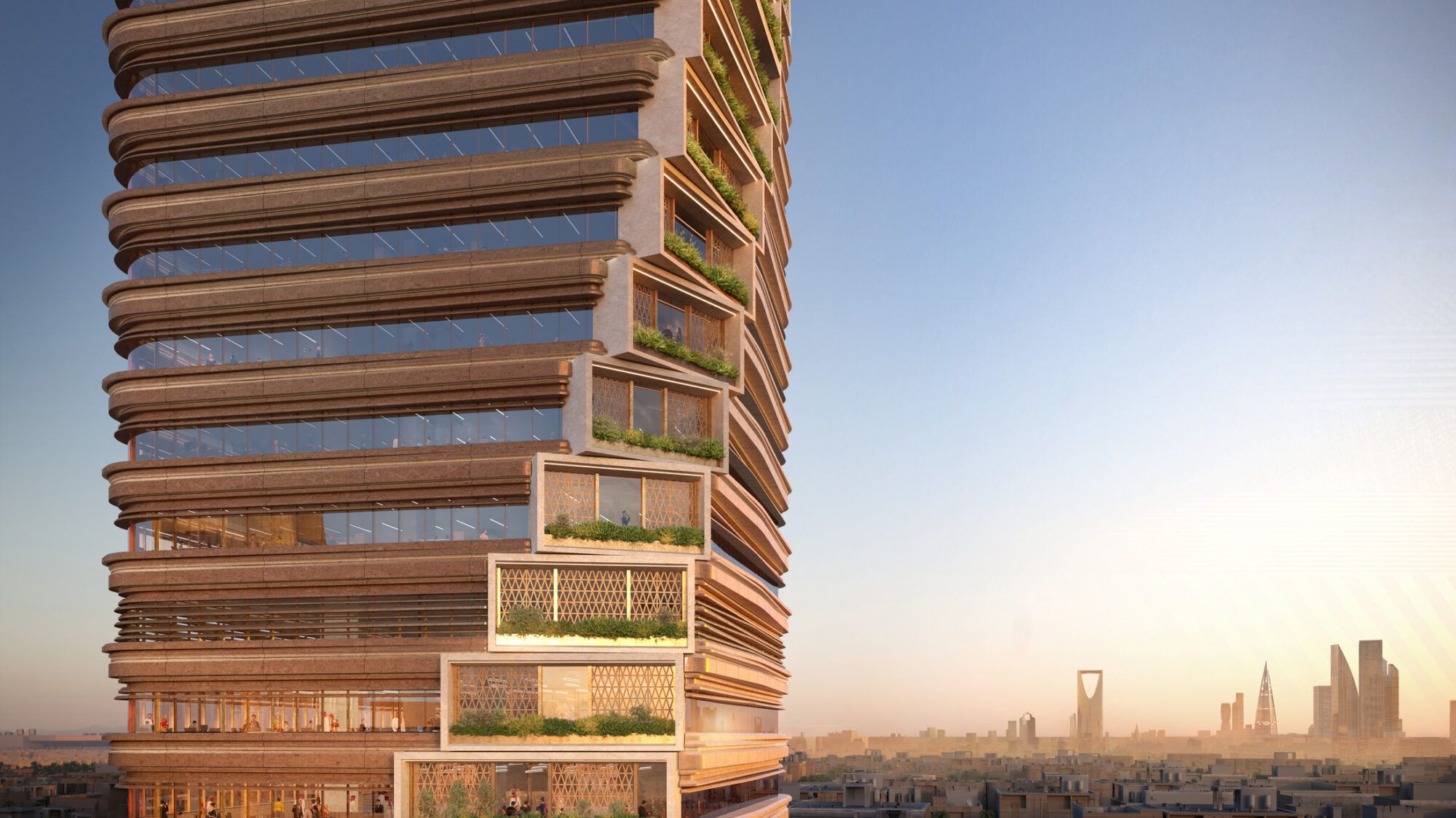
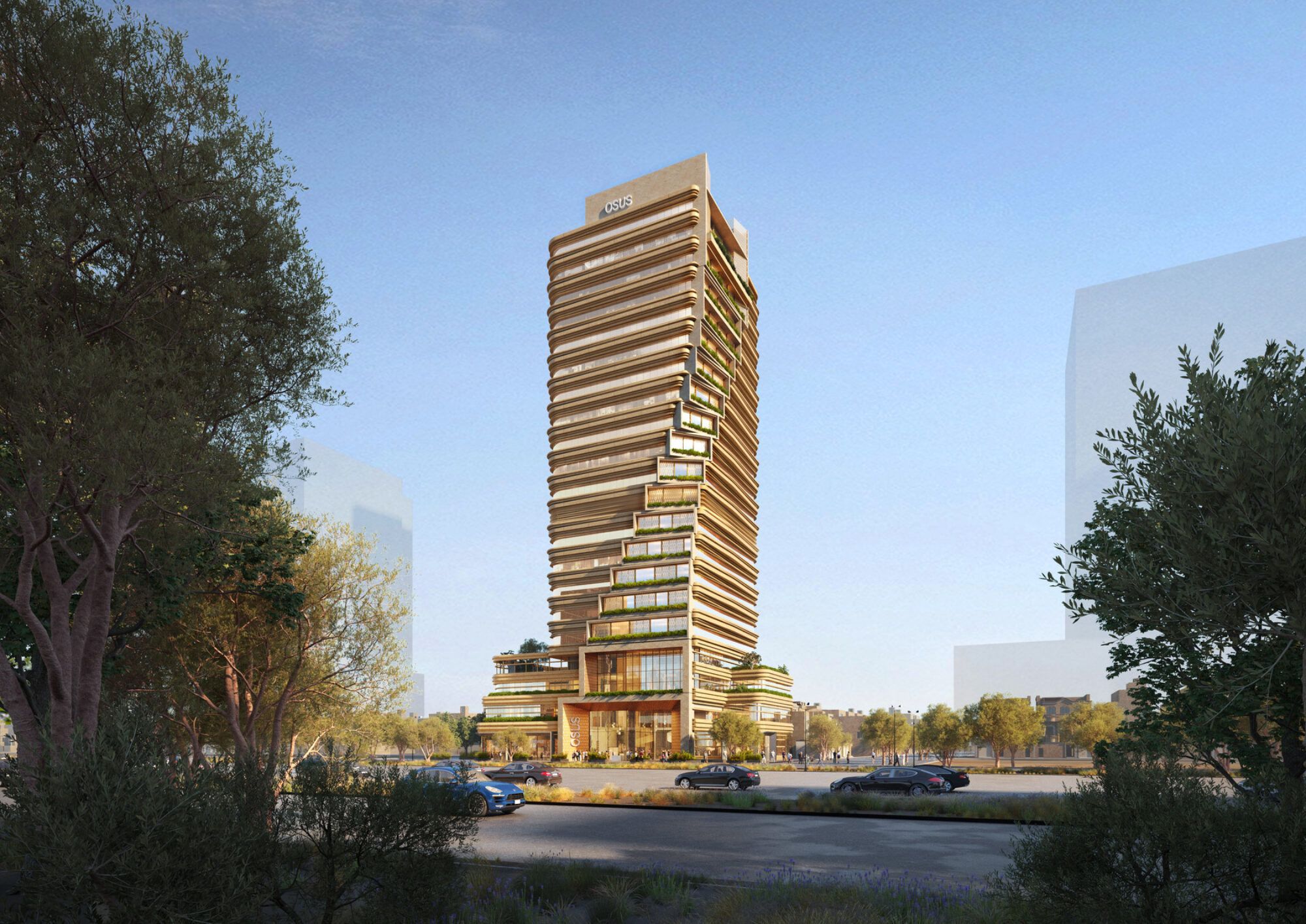
Project: Green Tower, Riyadh, Saudi Arabia
Phase: Technical Design and Coordination
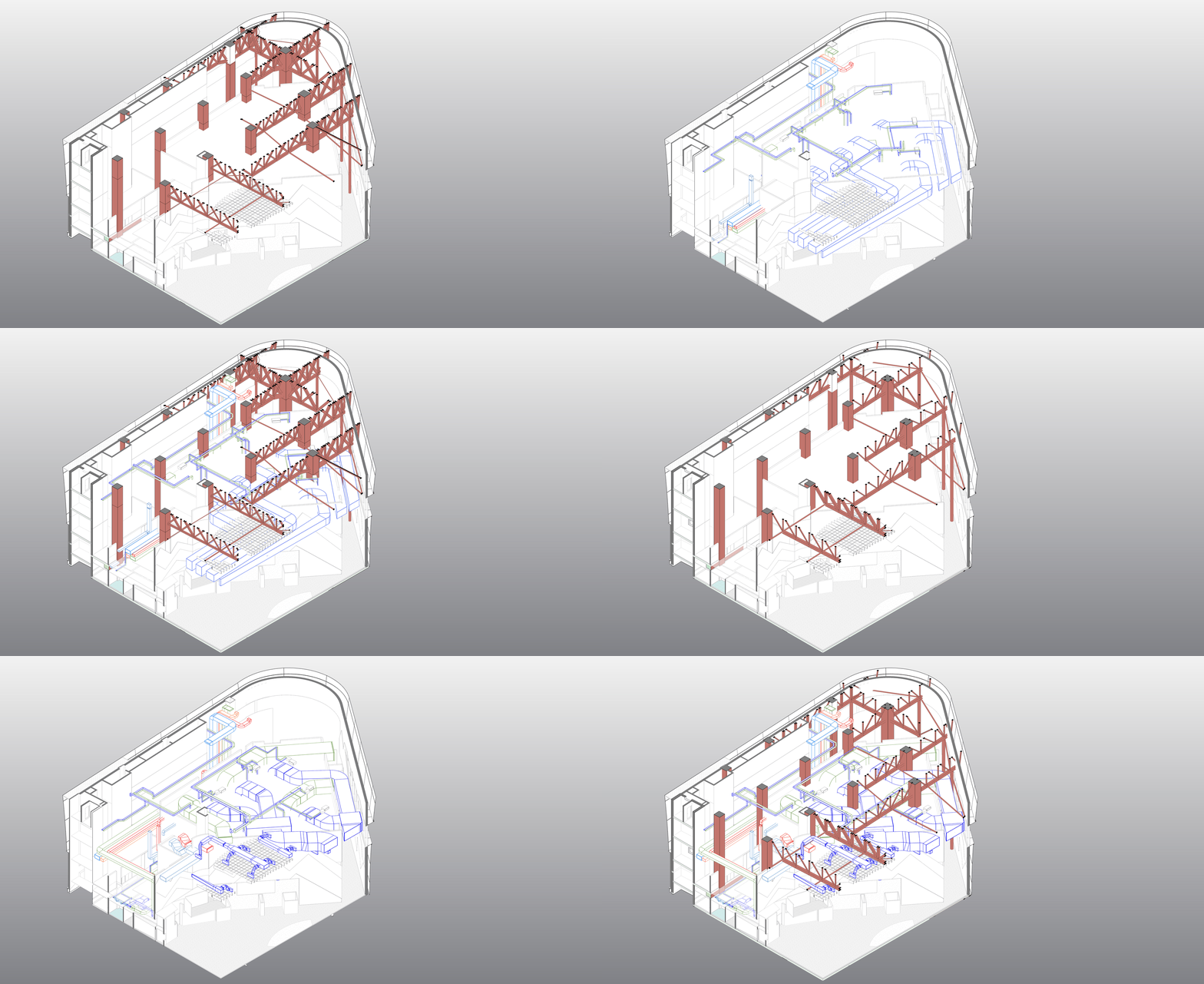
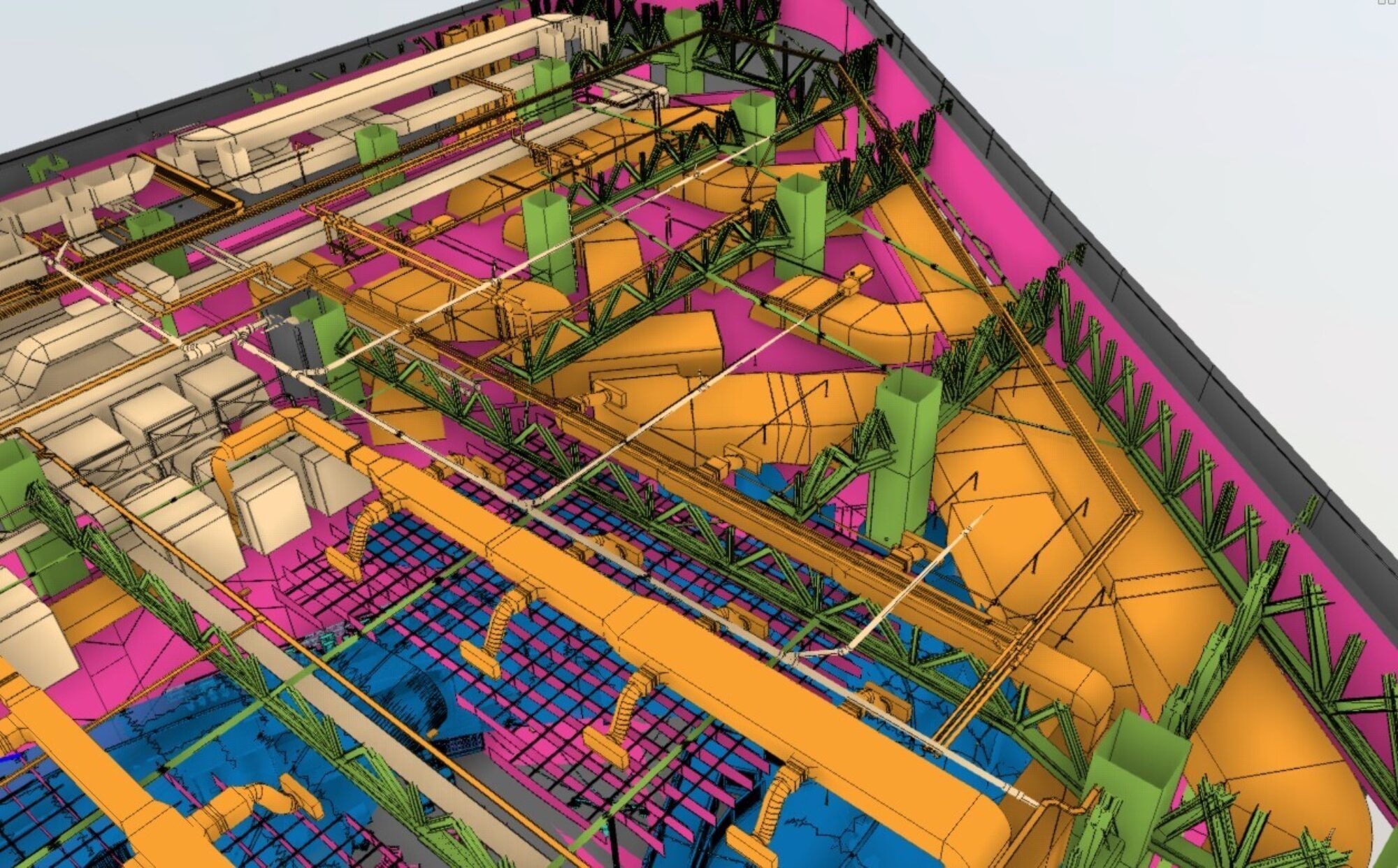
Challenge: Our federated model revealed a conflict where structural lateral bracing intersected with the transparency of the façade and ducts. In a traditional workflow, this could have led to late-stage surprises and site-based compromises.
Collaborative intervention: Using BIM as our shared environment, we led a series of spatial strategy workshops with our structural partners and façade designer. Instead of viewing the bracing as a disruption, we treated it as a coordination puzzle. We explored how technical requirements could be integrated into the architectural profile of the façade and how MEP can work with it.
Outcome: We successfully redesigned the connection nodes to be part of the visual rhythm of the ceiling. By resolving this issue early, we protected the client from projected delays, eliminated costly site-based reworks, and ensured that the guest experience remained as open and light-filled as originally promised. The building is now experienced exactly as intended: a seamless blend of structural strength and architectural clarity.
Orchestrating collective intelligence
Coordination is often mistaken for ‘clash detection’, but true coordination is more similar to proactive integration. Detecting a clash is easy; resolving it architecturally, however, is where leadership is required. To best facilitate this we have transformed coordination meetings into an environment where everyone is empowered to do their best work. These meetings centre around three principles:
- Transparency: Every stakeholder has access to live data, eliminating the ‘information silos’ that cause late-stage friction.
- Proactive resolution: This deep awareness of all potential disruptions allows the architect and engineers to implement necessary changes while the project is still on the ‘digital drawing board’. We fix the problems while we still have options, well before the concrete has been poured.
- Knowledge production: By managing the model as an intelligent database, we ensure that every technical solution is vetted against the architectural ‘soul’ of the building. We are no longer simply solving clashes; we are ensuring that the poetry of the design survives the reality of the construction.
Ultimately, the value of BIM lies not in the software’s complexity, but in the clarity of the outcome and its ability to transform the ‘abstraction’ of a conceptual sketch into the ‘precision’ of a high-performance building. In navigating the delicate intersection of research-led heritage preservation and the high-velocity demands of complex commercial developments, we have come to the conclusion that BIM is not merely a technical necessity; it is the architect’s ultimate instrument for maintaining the vision of a project.
In an era of increasing industry fragmentation, BIM allows us to deliver architecture that is both technically flawless and uncompromising in its aesthetic ambition. Architecture should be defended through professional synergy, and the digital model serves as the most powerful bridge we have to ensure that our collective, built reality lives up to the integrity of our initial design.