Peter is Benoy’s Design Director for Aviation, leading the studio’s work across airport portfolios including FBO and general aviation facilities. Peter has delivered FBO projects, in the UK, Europe, the Middle East, and South America. Over more than 35 years delivering airport projects internationally, he has worked across almost every aspect of airfield and terminal operations, with recent focus on passenger experience and commercial masterplanning.
A Fixed Base Operation (FBO) or General Aviation (GA) facility is, at its core, a guest-focused operation. That distinction should sit at the heart of every design decision.
Unlike a conventional passenger terminal, despite sharing many of the same functional components, an FBO or GA facility serves a different kind of traveller with different expectations. For these guests, the experience is defined by seamlessness: the ease and fluidity of movement from the moment they arrive to the moment they depart, in either direction.
The terminal building itself plays a variable role in that journey. In some facilities it is almost incidental: a pass through rather than a destination. In others, it becomes something more meaningful: a moment of calm, a place to gather, to meet, to decompress before the next leg. Good design accounts for both possibilities and for everything in between.
Beyond the guest experience, a well-considered FBO or GA facility also attends to those who make it function. Pilots, crew, and ground personnel each have distinct needs that require the same rigour of thought.
Defining the operational vision
Our approach to projects of this kind begins with developing a clear operational vision for the facility, one that encompasses both an aesthetic direction and, crucially, a guest service vision.
From the outset, we work collaboratively with our clients to shape a project vision that creates the conditions for bespoke design: one that balances seamless guest experience with effective, commercially viable operation. We bring to that process a depth of experience from delivering aviation projects at comparable scale across GA and FBO facilities, combined with hospitality knowledge that enriches the design dialogue and keeps the guest at the centre of every conversation.
The project ‘Vision’, customer/passenger touch-point and operational map will not only aid the design process, it will also inform the future operations of the facility from ORAT and beyond. It doesn’t remain a fixed concept and will develop and mature over time.
Touch-point and operational mapping
Central to our methodology is a guest touch-point mapping process, run in parallel with operational mapping. This begins with a detailed definition of user demographics, the target guest personas, both individual and group, and the client or operator’s policy towards each. Those findings are used to refine and inform the design process throughout.
An effective guest-centric strategy has two components. The first is a journey touch-point service standard map, which charts each step of the guest experience through the facility, identifying all touch points, needs and opportunities. This is then overlaid on an operational functional map to ensure that service ambition and operational reality are fully aligned.
We review this framework with the facility operator to agree priority service standards and the best means of fulfilling them, whether through physical space, personal service, or virtual interaction.
Spaces, adjacencies and flow
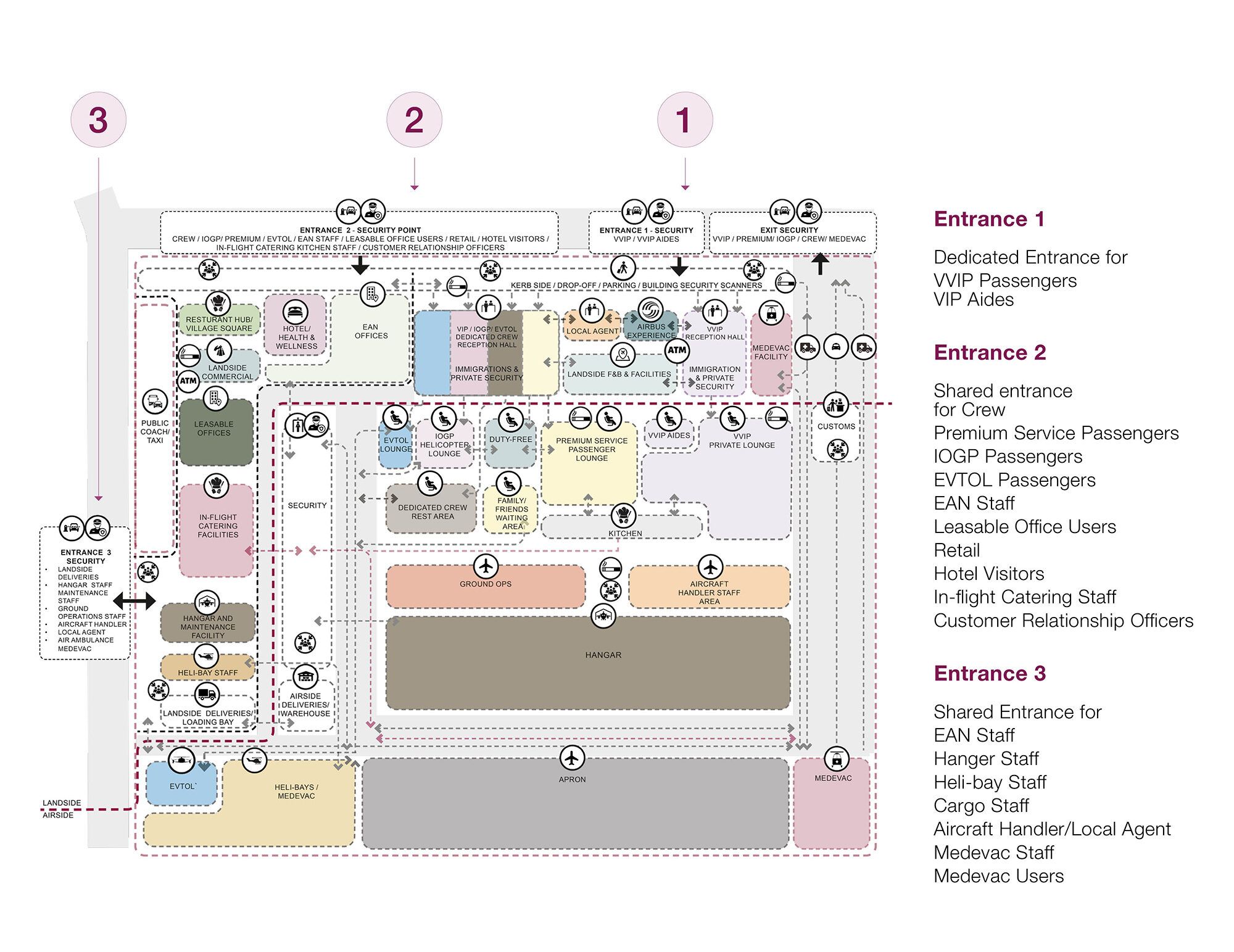
Working closely with the facility operations team, we develop a functional plan that establishes the full schedule of spaces and their key adjacencies. Many of these are common across GA and FBO facilities, though certain elements will shift depending on where and how they are provided within the wider operation.
Ramp and operational activities, for example, may be accommodated within the facility itself or handled elsewhere on site; the configuration varies by project. Guest and immediate crew facilities, by contrast, tend to follow a more consistent pattern, and we draw on our experience across comparable projects to help shape a functional map that is both grounded in best practice and tailored to the specific brief. The initial mapping typically takes the form of the example below.
Where guest and operational priorities meet
Guest experience and operational efficiency are not competing priorities, they are interdependent. A facility that runs well serves its guests better, and one designed with operational rigour is more economically sustainable over the long term. Staff workflow matters as much as guest flow: considered adjacencies reduce friction behind the scenes, and well-designed staff accommodation drives the engagement that ultimately shapes the quality-of-service guests receive.
This approach produces a guest-centric strategy that is grounded in operational reality, a touch-point service standard map fully integrated with an efficient functional plan. The result is the best possible guest experience regardless of dwell time, within a facility that operates smoothly and with minimal disruption to those passing through it.
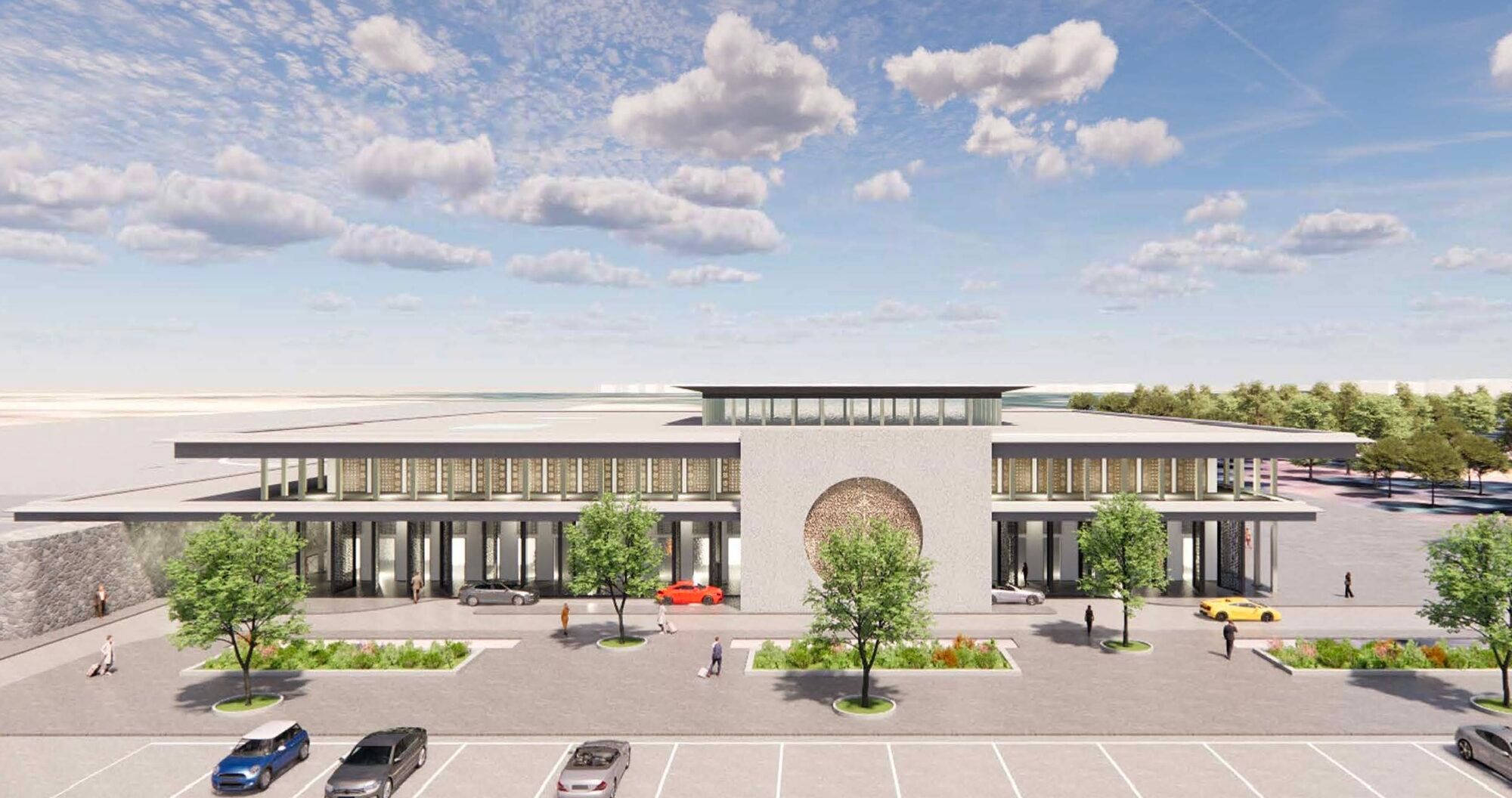
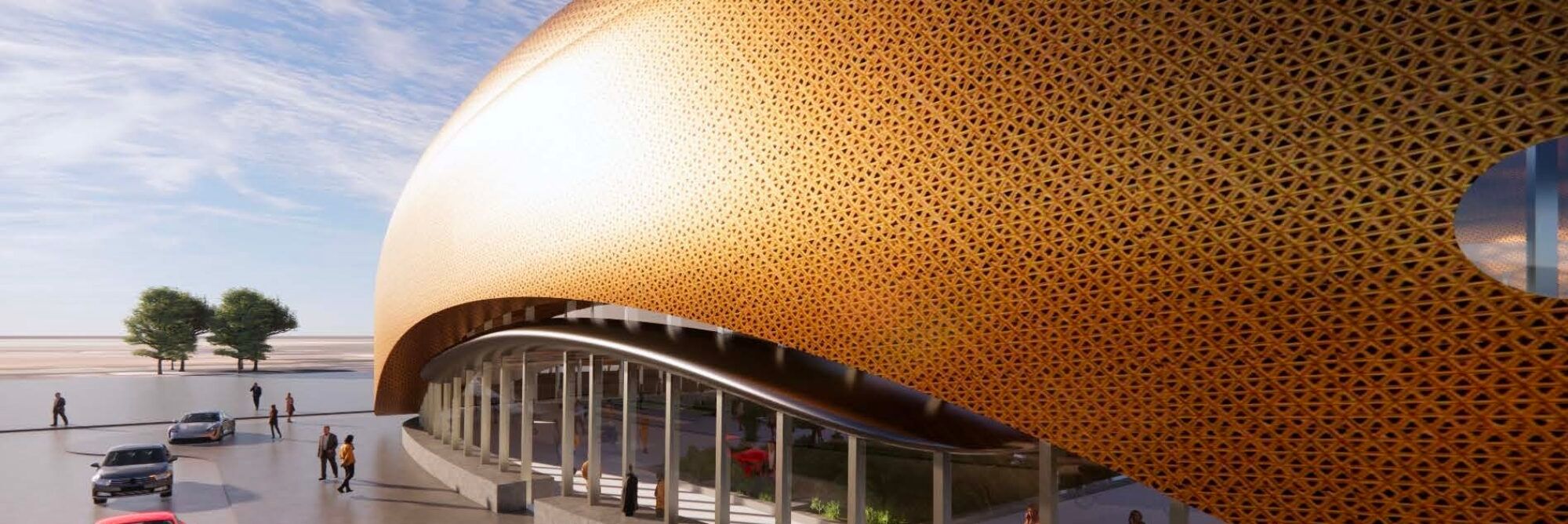
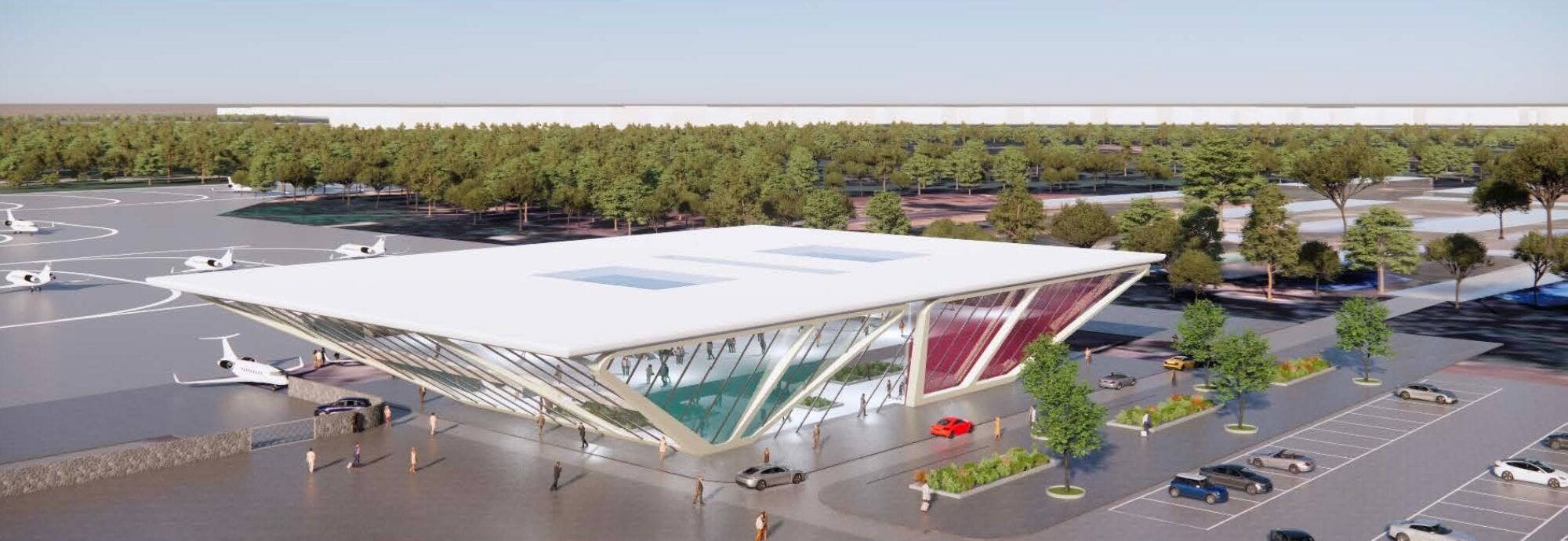
We applied this methodology on our project in North-Western India, where we explored a range of architectural expressions, each of which fulfilled the spatial, operational and guest touch-point brief.
Designing for individuals, not averages
Designing for the average traveller is no longer sufficient, and increasingly, it is no longer expected. Society expects more personalised, more responsive, and more authentically sustainable experiences, and the design process must reflect that shift. Groups of travellers frequently behave as collections of individuals rather than a consensus, each with distinct needs, preferences and expectations that a generalised approach will fail to meet.
Our process begins with a data-rich understanding of current and future guest and visitor profiles, examined at the level of granularity that meaningful personalisation requires. That same rigour extends to the provisions we make and the standards we set for service delivery throughout the facility.
In our project in West Africa, the detailed breakdown of user profiles and subsequent journey mapping was essential; the range of guest typologies was broad, and their needs varied considerably. Critically, that analysis extended beyond the guests to encompass staff and other users. This reflected a growing and well-evidenced understanding of the relationship between staff welfare and the quality of the experience the guests receive.
The role of human interaction
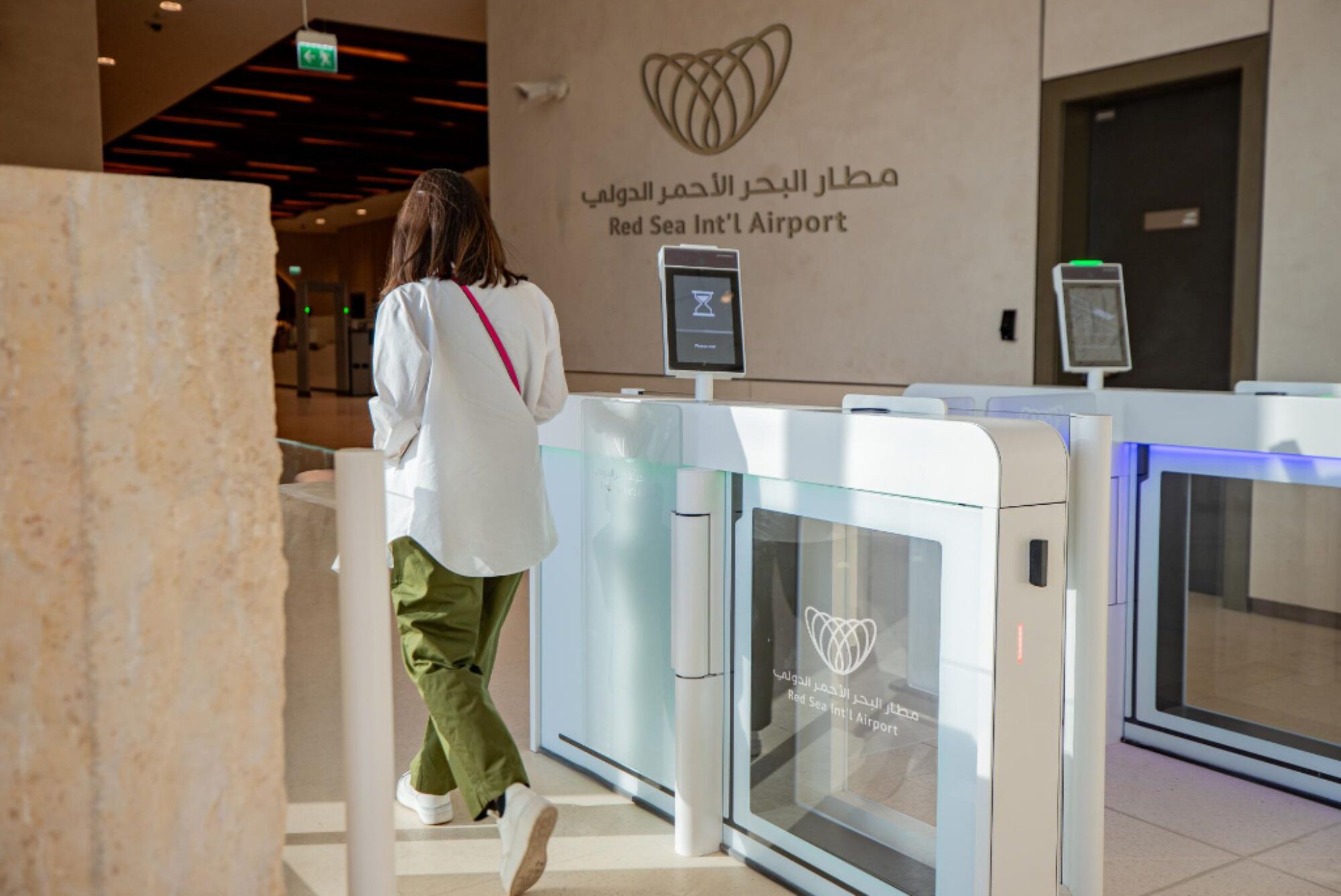
The defining balance for any GA and FBO facility is to deliver an experience that feels both effortless and personal, seamless in its operation, yet warm and attentive in its character. Quality human interaction is central to achieving that. At the same time, the long-term sustainability of the operation depends on a facility that can be run to the highest standard with as few staff as possible, making operational adjacencies a critical design consideration. Technology has a role to play, but it remains a support rather than a substitute for genuine human connection.
That connection is something guests are increasingly seeking out as a deliberate choice. Face-to-face service has become, for many, a welcome escape from screen fatigue and flatness of digital-only engagement. While this sentiment is broad, it is felt most strongly among older cohorts, Gen X and Boomers in particular, though its expression varies considerably across global markets.
Place, identity and longevity
With operational and guest experience optimised, the focus turns to the quality of the spaces themselves. There is a growing appetite for local cultural references within aviation facilities, lending a sense of place that distinguishes one from another. This is balanced, however, by the expectations of multi-facility and international operators, who rightly seek a degree of consistency in environment, brand familiarity and service standard across their networks.
Longevity matters as much as first impressions. Facilities that are easy to maintain, through considered layout, material selection and detailing, sustain quality of the guest experience long after opening day.
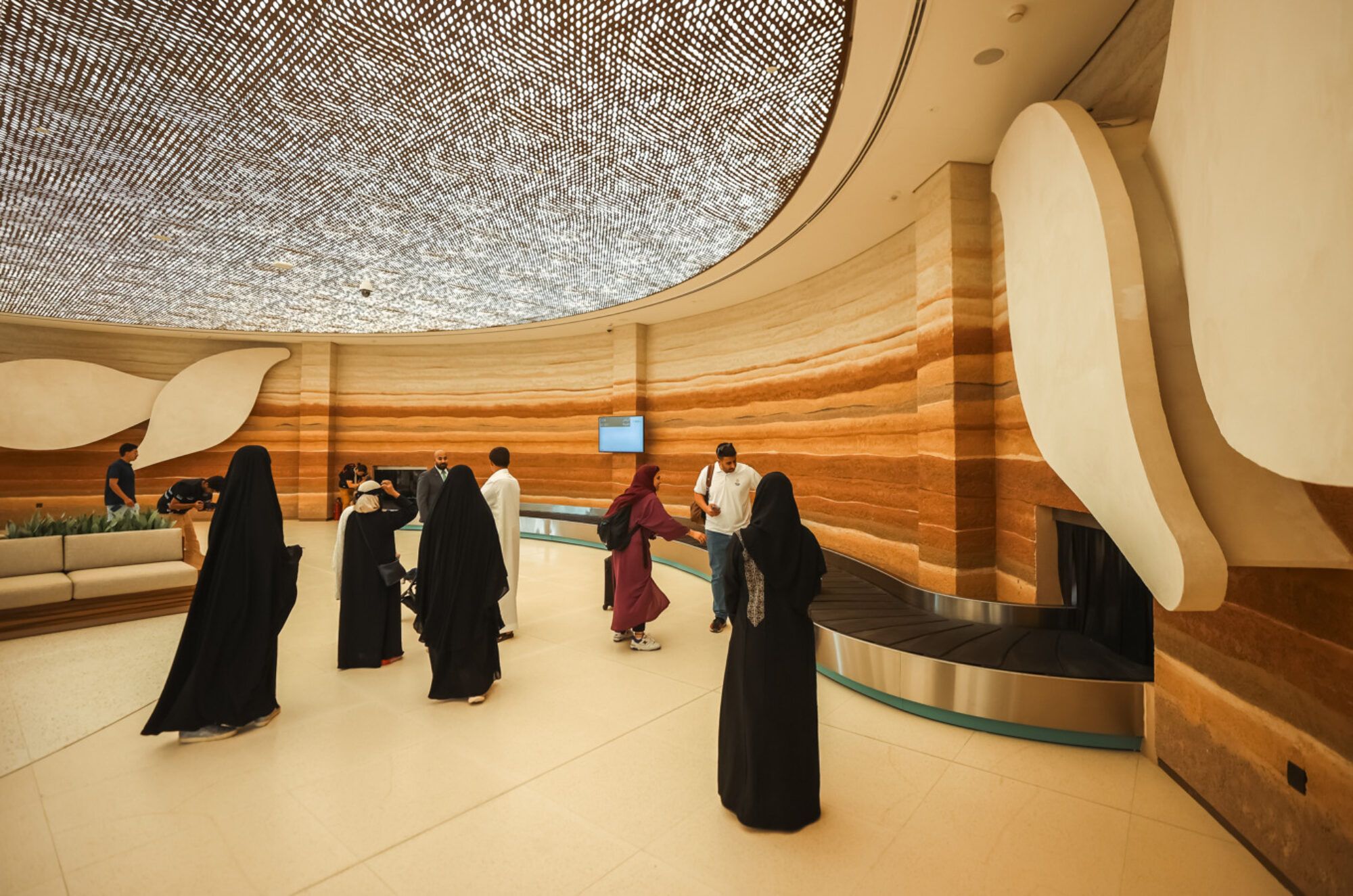
We set out to create an airport environment that blends traditional and modern elements, providing more personalised and authentically sustainable experiences: with unique identity areas that set it apart from other airports around the world.