Louise Ma, Senior Associate Director, outlines a people-centric model for commercial interior design grounded in site, narrative and user experience. She references projects across China that integrate cultural context, spatial storytelling and commercial performance into cohesive environments.
The core design philosophy
Over the past two years, the completion of Shanghai Huamu Time Edition, Shanghai Expo Place and Chengdu Tianfu Garden City have exemplified our concept of ‘lifestyle-driven commercial design’. The core philosophy underpinning our work is always derived from the site, then structured by narrative and animated by anticipated user experience. This philosophy helps us to turn commercial spaces into living vessels which connect the city and its people, allowing for a dialogue between the two.
People seek emotional belonging, recognition and a sense of ritual in a place. The essence of design, therefore, is to build tangible places for these desires to be met.
Cultural and historical engagement
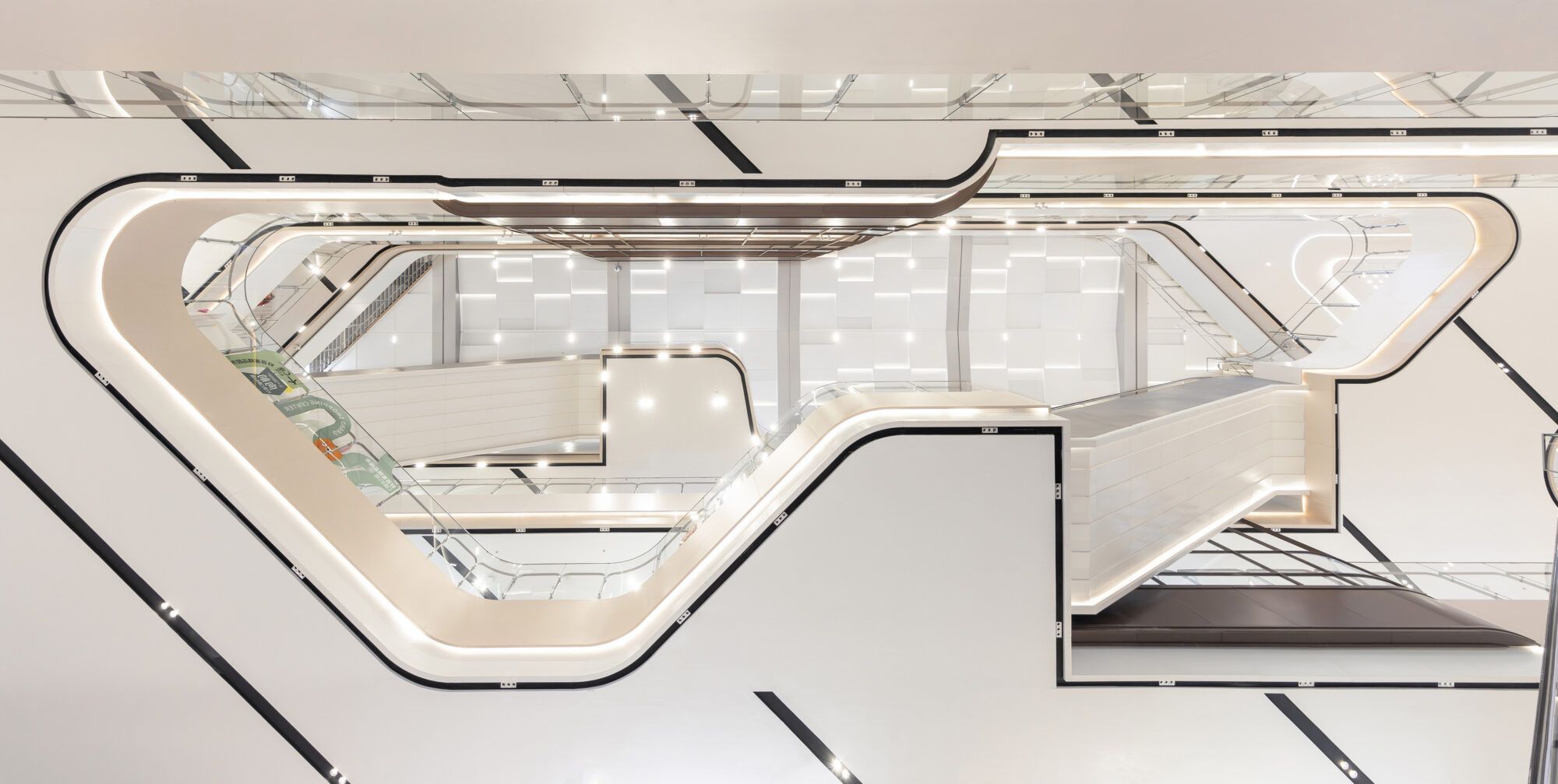
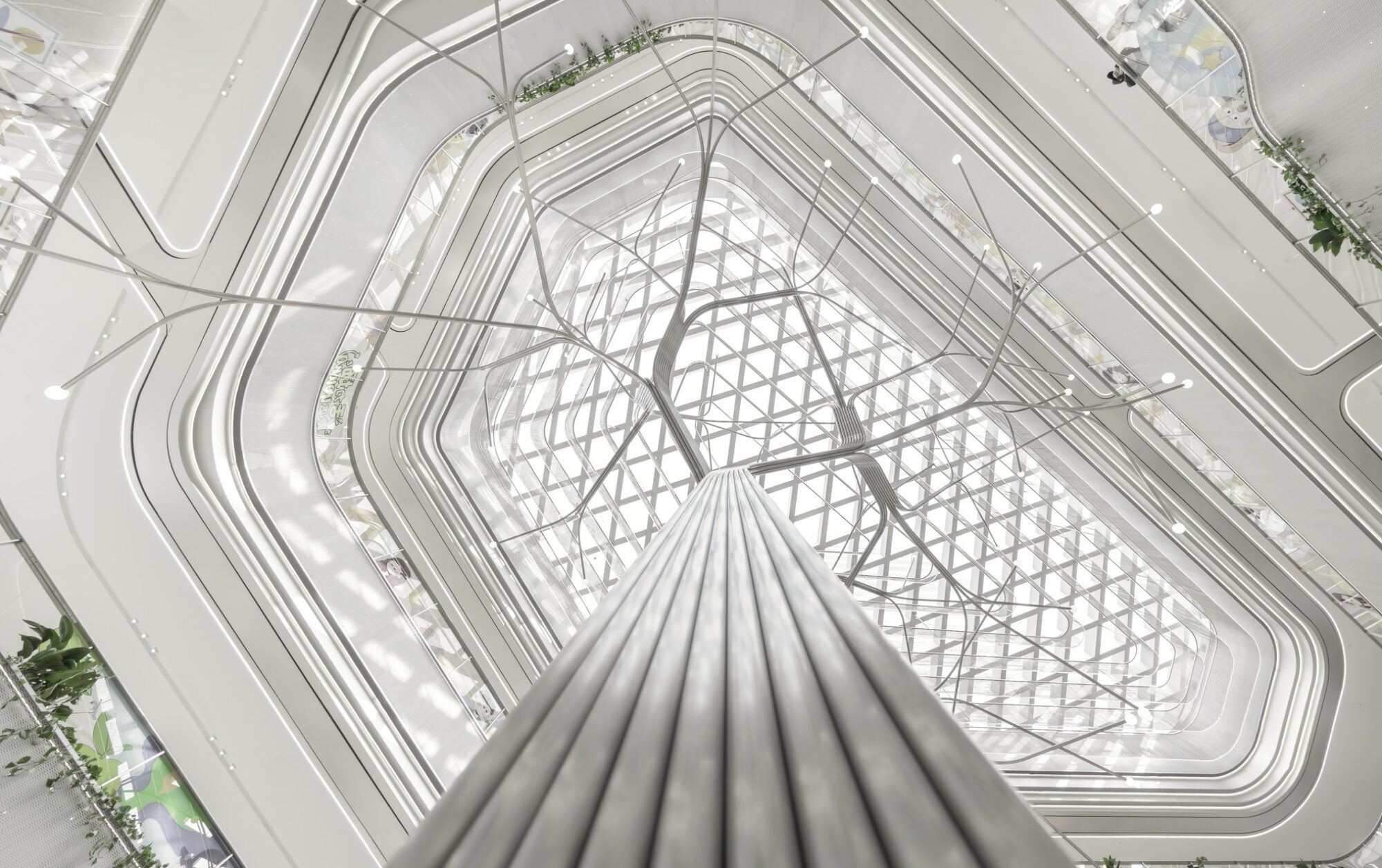
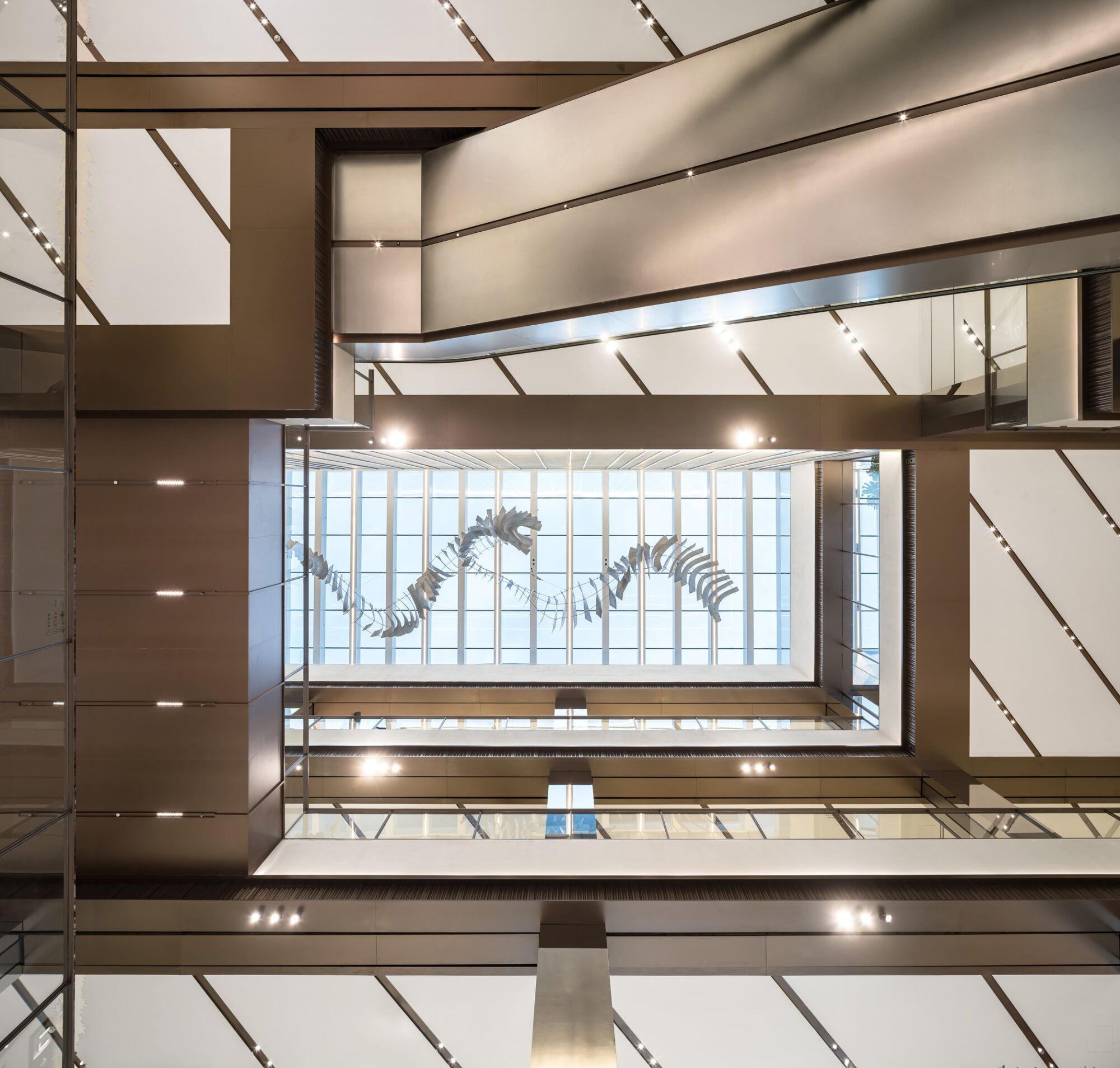
Nestled in the cultural hub of Lujiazui, Shanghai, sits Shanghai Huamu Time Edition, a cultural and commercial hub with the city’s first international art gallery. We designed a culturally immersive space around the concept,‘Framed: A Fusion of Chinese and Western Commercial Art Galleries,’ enhancing visitor engagement through art and commerce. We translated cross-cultural elements into an artistic atrium stage, blurring the line between commerce and art, and making shopping an artistic journey that truly responds to the site’s context.
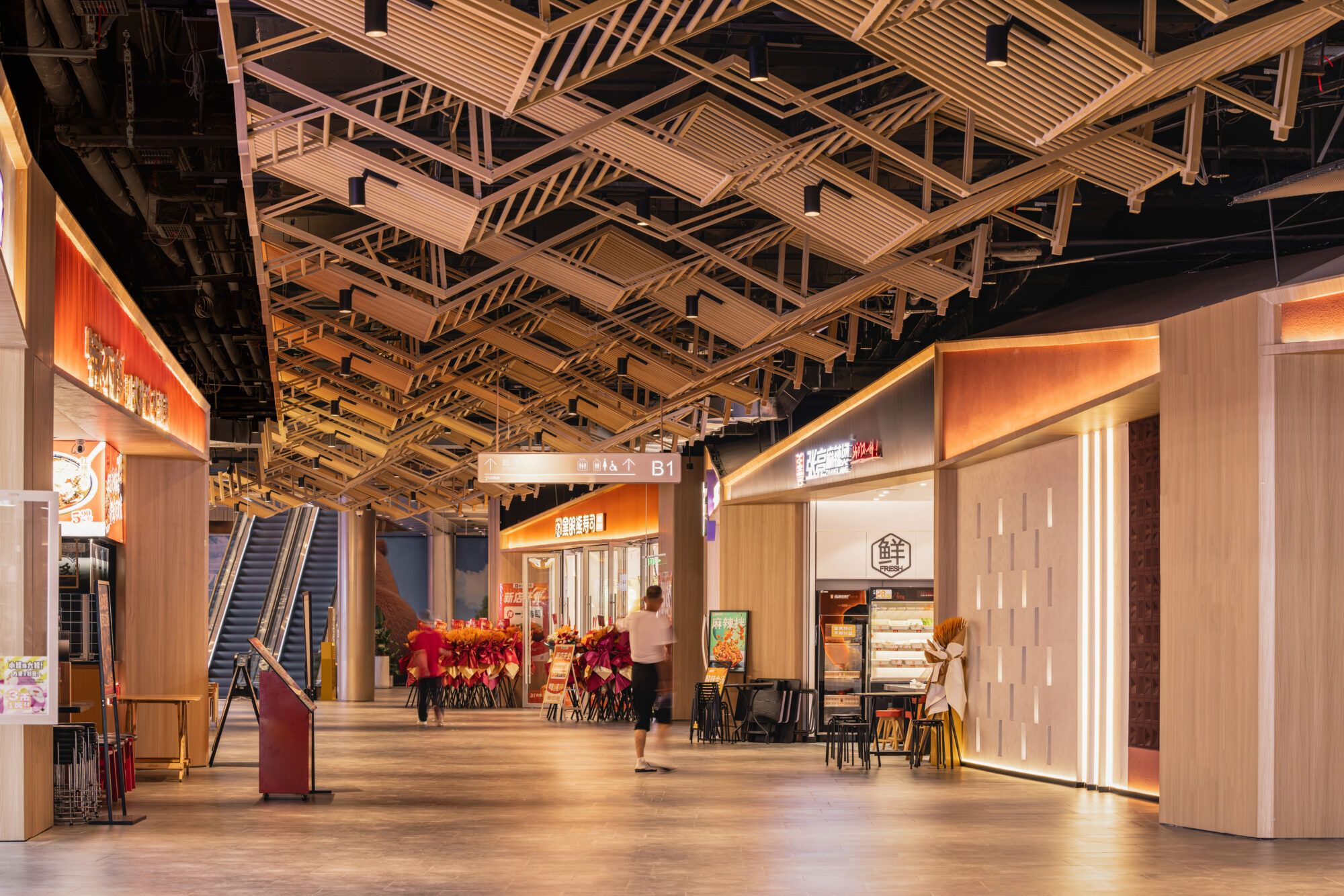
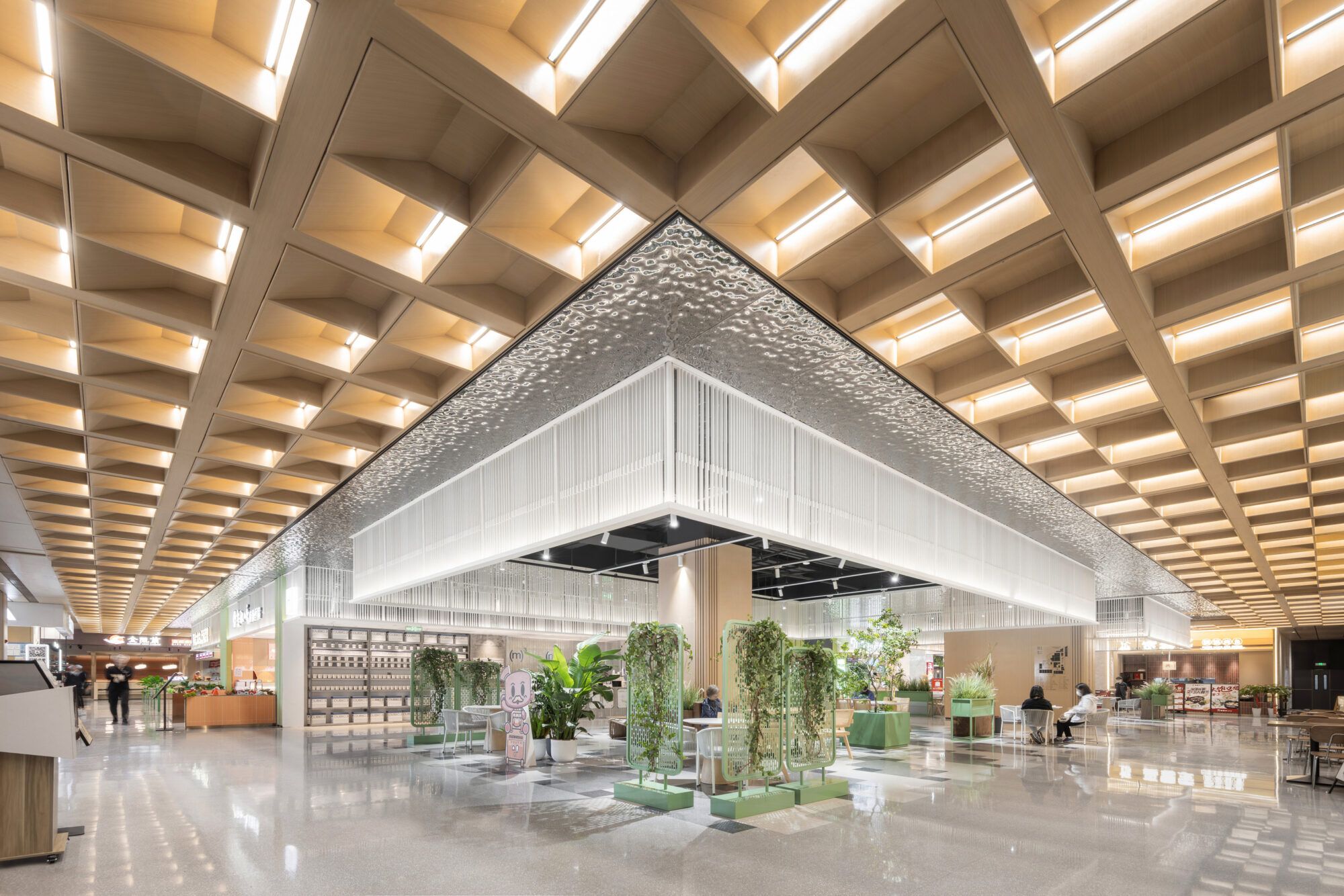
Far more than a mere upgrade of a building façade, urban renewal is growing increasingly significant in interior design. Take Shanghai Expo Place as an example: the project preserves the unique industrial heritage of Shanghai No. 3 Steel Plant and applies the philosophy of‘urban rhythm within a frame’, we extracted industrial textures, softened the heaviness of structural columns with mirrored materials and captured natural light through corrugated stainless steel, lending the project a light and modern spatial quality. We were also guided by the ‘hyper-connector’ design principle and broke down functional boundaries and adopted organic renewal instead of blind demolition, revitalising the space while retaining the city’s historic memory of the site.
These two projects engage with culture and history respectively. Both reject superficial symbolism and extract design prototypes from the site DNA, user needs and urban character, and translate them into experiential narratives using a contemporary language.
Collaborating effectively
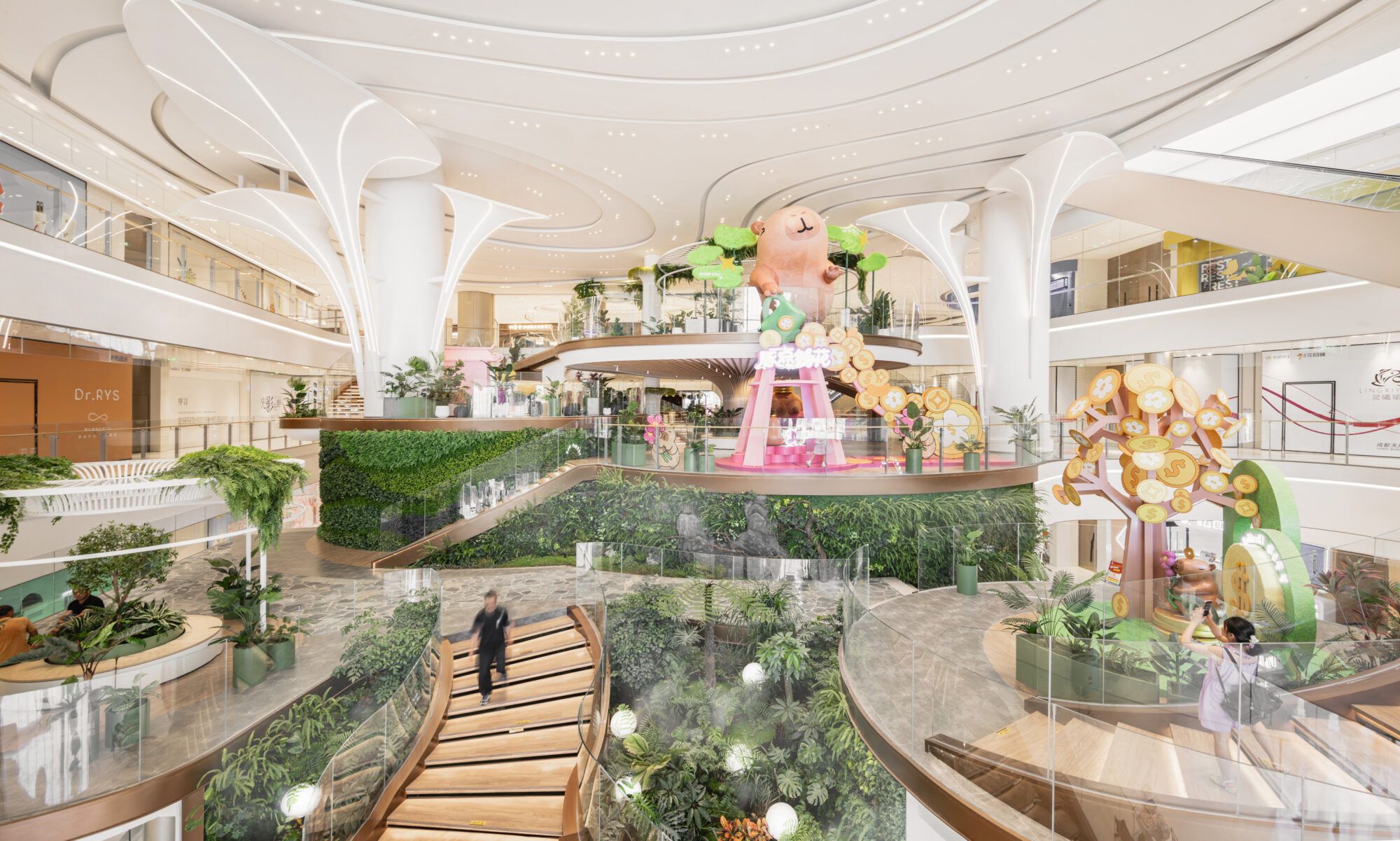
Diverse professional backgrounds spark more practical creative ideas, and reduce communication costs and technical conflicts, enabling the deep integration of commercial logic, local culture and spatial experience. Chengdu Tianfu Garden City is a great example of integrated design: from the initial masterplanning phase, our architecture and interior teams worked together from the outset, sharing a consistent spatial narrative and design logic. We created the space based on the site’s unique DNA in order to eliminate design disconnect and formal conflicts between the exterior and interior. This ensures that users enjoy a continuous experience from entering the building through to walking around its interior.
The architecture team used bamboo as the core design language to create a double-ground-floor form that blends the park and commerce without boundaries; the interior team carried forward the ‘garden’ narrative and extracted thematic elements from the poetry of the 8th-century Chinese poet Li Bai. The two teams collaborated throughout the process, perfectly connecting the ecological foundation of the architecture with the poetic scenes of the interior, both rooted in the vision of the ‘Garden City’.
This cross-team collaboration achieved efficient design progress and full delivery precision for Chengdu Tianfu Garden City. It allowed the space to grow from the inside out and ultimately is a benchmark project that stands the test of the market.
Balancing circulation efficiency, sales per square metre and user experience
Retail layout optimisation serves as the narrative backbone and vital circulatory system of commercial spaces, and it is also the foundational logic for the implementation of interior design. When the building structure is capped and physical boundaries are fixed, retail layout optimisation is the key to resolving inherent dilemmas such as overly long circulation and underutilised spatial value.
Excellent layout optimisation essentially reallocates spatial value within a fixed site, balances the underlying relationship between pedestrian flow organisation, user experience and commercial vitality, and activates every inch of space effectively.
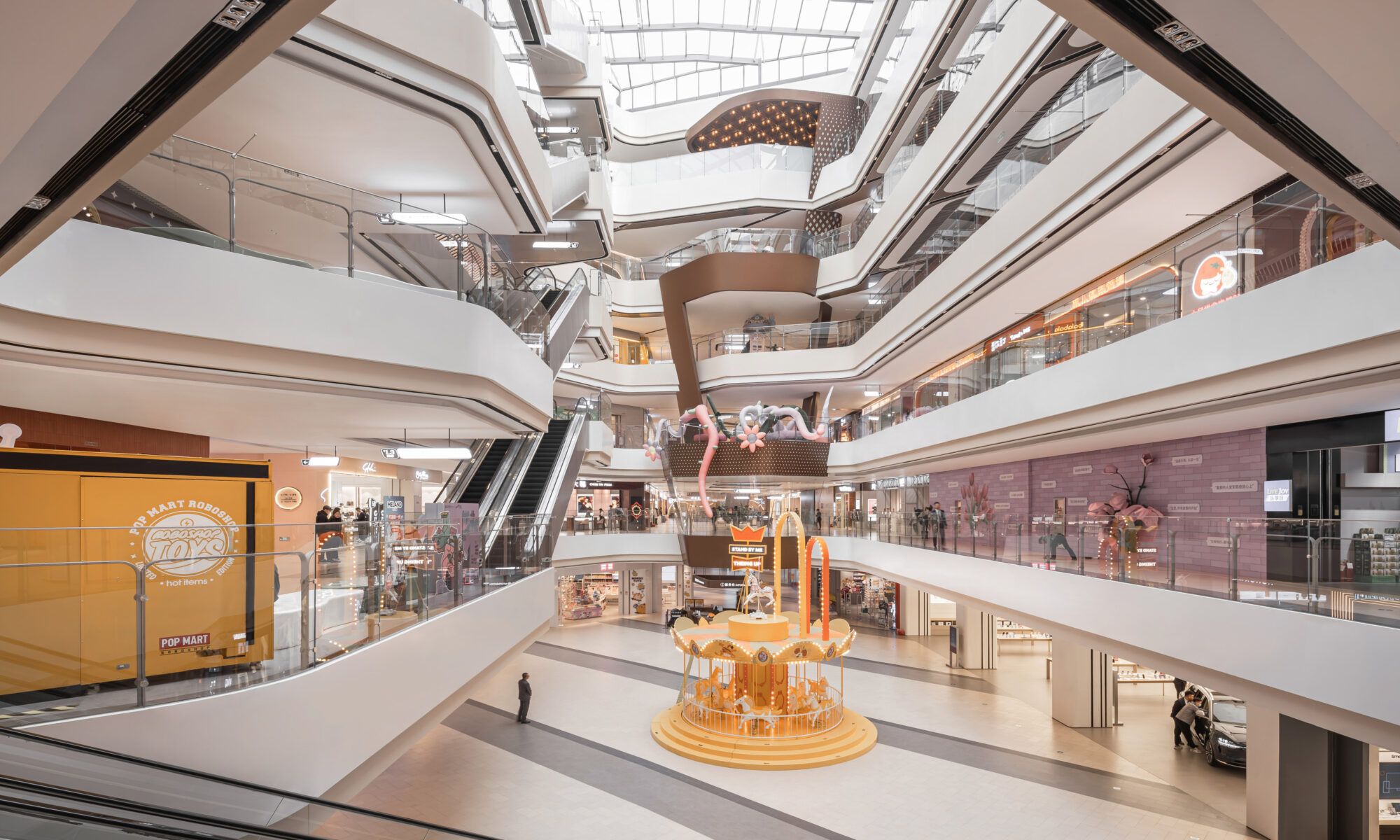
Take Changchun Grand Shopping Center as an example. The project’s nearly 600-metre-long circulation route could easily cause visitor fatigue and reduced foot traffic. Instead of fighting against the site constraints, we followed the circulation context, divided the space into three rhythmic zones – cheerful, tranquil and dynamic – based on the business positioning of the three zones, and embedded narrative anchors such as observation decks, skylit atriums, themed corridors and immersive theatres at key nodes.
When balancing circulation efficiency, sales per square metre and user experience, they are all interdependent. We guide visitor dwell time through node creation, visual interpenetration and business zoning, transforming the monotonous long circulation into a changing spatial scroll, while opening up dead corners and activating low-traffic areas.
Ultimately, we turn site constraints into distinctive, memorable features, making the space fit human movement and emotions while maximising commercial value, endowing the project with sustainable vitality and higher-than-expected long-term operational value.
Aligning a space to its intended users
Faced with diverse target audiences, our design always takes human behaviour as the prototype, site character as the foundation, and lifestyle as the narrative thread. We avoid copy-pasted viral templates and return space to its essence.
The Oasis Wisdom Valley Garden, Shanghai, serves the surrounding tech professionals and local residents. We captured their need for relaxation and order, using green and white as the dominant tones to create a soothing, free-flowing mixed social venue. Changchun Grand Shopping Center, on the other hand, focuses on families and younger consumers. The 600-metre ultra-long indoor circulation becomes more approachable when divided into the different zones mentioned above. The different zones reflect the spatial rhythms, so that every group can find a place that resonates with them.
We also avoid superfluous symbol stacking. Instead, we deeply decode the behavioural patterns and emotional needs of the target audience and translate them into a spatial language unique to the site. With customised areas, differentiated narrative rhythms and appropriate spatial scales, we endow projects with a one-of-a-kind character. This breaks the homogeneity of commercial spaces, makes the design precisely align with the lifestyle of its users and forges a distinct identity for each space.
Creating and converting emotional value
In an era of growing homogeneity, spatial emotional value and narrative are the key to standing out and achieving long-term vitality. They are not about decorative spectacle; rather they’re focused on giving space warmth and memory points that foster emotional attachment. This extends dwell time and repeat visits, translating into sustained commercial value which is the key to escaping short-lived ‘trendy’ templates.
We always break abstract narratives into tactile, perceivable details: the ‘Framed’ concept at Shanghai Huamu Time Edition materialises as framed vistas, layered lighting, and art installations, turning a visit into a cultural tour; the poetic imagery from classical poetry at Chengdu Garden City translates into greenery, colour and bespoke ambiance, weaving natural poetry into daily life; and the three rhythmic languages at Changchun Grand Shopping Center unfold through circulation shifts, material changes and nodal design, turning movement into an emotional journey.
When it comes to spatial experience, the aim is always to create genuine resonance. We prefer to base experiences on nature, light, and art, paired with modest digital interaction, so experiences flow naturally without feeling forced or abrupt.
In the end, abstract narratives need to become tangible details. Emotional recognition converts into foot traffic and commercial vitality, showing us that emotional value converts to commercial value which, in turn, ensures the longevity and success of a project.
Maintaining ‘people-centric’ designs amid emerging tech advancements
Benoy’s interior design team is currently focusing on sustainable, resilient design, hybrid social scene creation and biophilic space construction in the commercial and office sectors.
In commercial design, we promote the deep integration of retail, social and culture to create flexible spaces that can evolve with the times. For workplace design, we have abandoned the single-workstation mindset and shifted to designs centred around connection, creating healthy and flexible spaces adapted to diverse working models.
AI and immersive digital technologies have brought efficient innovations to design, driving the shift from experiential intuition to data-driven rationality. Their overall impact is positive and does not conflict with the concepts of ‘people-centricity’ and ‘human-scale experience’.
Our team has responded to industry changes through practical projects: Shanghai Huamu Time Edition empowers commerce with art; Oasis Wisdom Valley Garden integrates natural elements such as forests, valleys, fields and waters to build biophilic spaces; and we have used AI in multiple projects including Guangzhou Hopson to improve design efficiency and creative expression. Adhering to spatial narrative and human insight, we organically integrate technology, local culture and natural texture to continuously create spaces with commercial value, human warmth and enduring design.
Looking ahead, we believe that the ultimate value of commercial design lies in balancing aesthetics and commerce, the present and sustainability. By letting spaces take root in their context, narrate stories and embrace life, commercial design will keep pace with the evolution of modern lifestyles and become a core carrier for the city and its people to grow in tandem.