Peter, Director of Aviation, and Charlotte, Founder and Director of CC Consulting Group, explore the idea that the drive to maximise a ‘frictionless journey’ through passenger terminals may not be an entirely good thing. They outline why airports should resist the urge to completely remove friction from customer journeys, with the primary goal being customer satisfaction alongside simple and enjoyable access to and from flights.
Return to Future ThinkingPositive Friction: Why airports striving for frictionless journeys are getting it wrong

Contact Peter Farmer, Design Director, Aviation
peter.farmer@benoy.com
Defining ‘friction’ in the context of airports
Airport passengers tend to be in a high-stress psychological state defined by the ‘hurry up and wait’ paradox, leading to anxiety, time distortion and heightened alertness. This state often impairs executive functions, disorientating people, reducing patience and increasing susceptibility to impulsive spending.
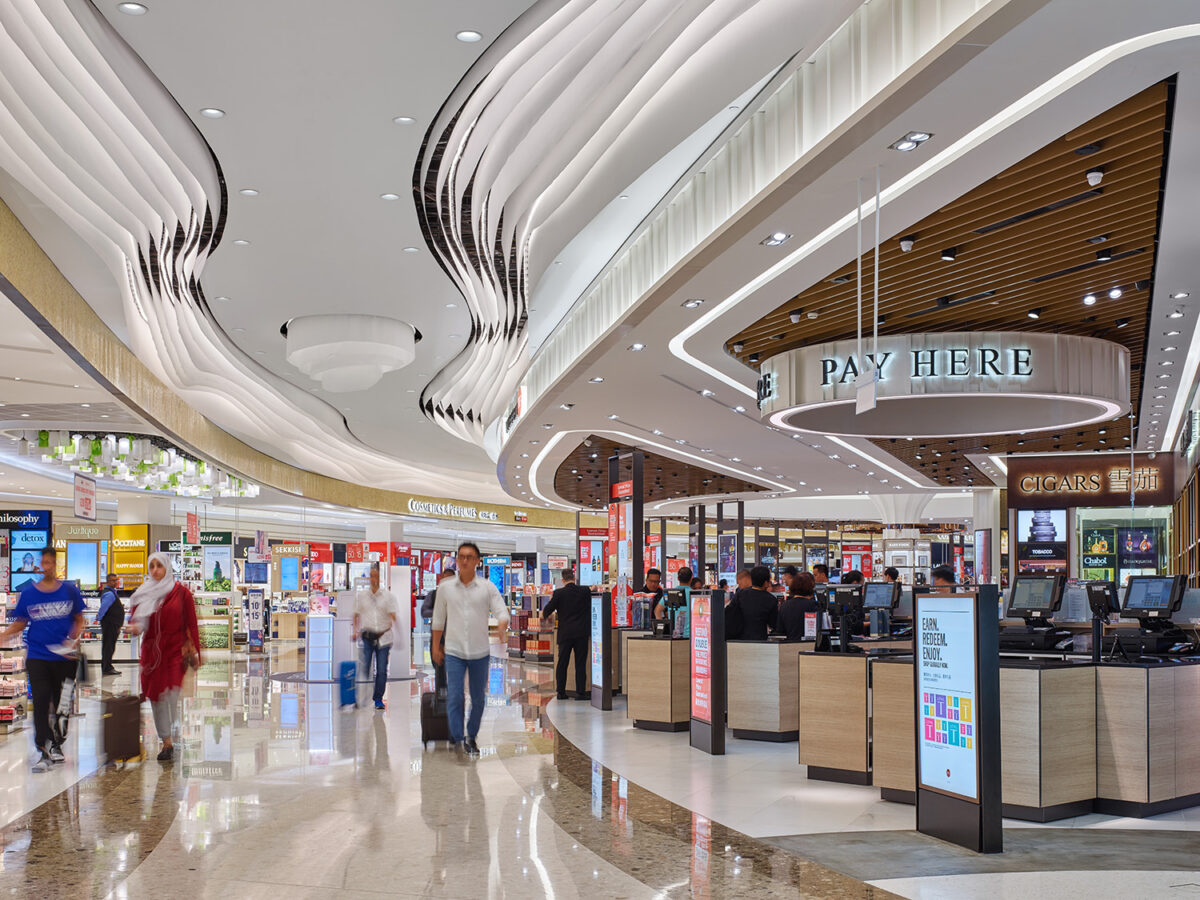
This has a direct commercial implication which the push towards frictionless journeys rarely acknowledges. The dwell time that drives F&B and retail revenue is, by definition, friction. When passengers browse, pause or discover something unexpected, they’re not rushing toward the gate but rather slowing down and looking to fill their time. That is precisely when they spend. The question the industry should be asking is not how to eliminate that pause, but how to make it as pleasant, engaging and commercially productive as possible.
While the stress-induced impulse purchase could be considered a good thing commercially, the mindset isn’t helpful in the wider airport environment, which is why we spend so much time looking to reduce stress after processes such as security. But this method often neglects the fact that opportunity lives in the friction: the wait, the wander, the moment of not quite knowing what you want. These are not inefficiencies to be engineered away but the experience itself.
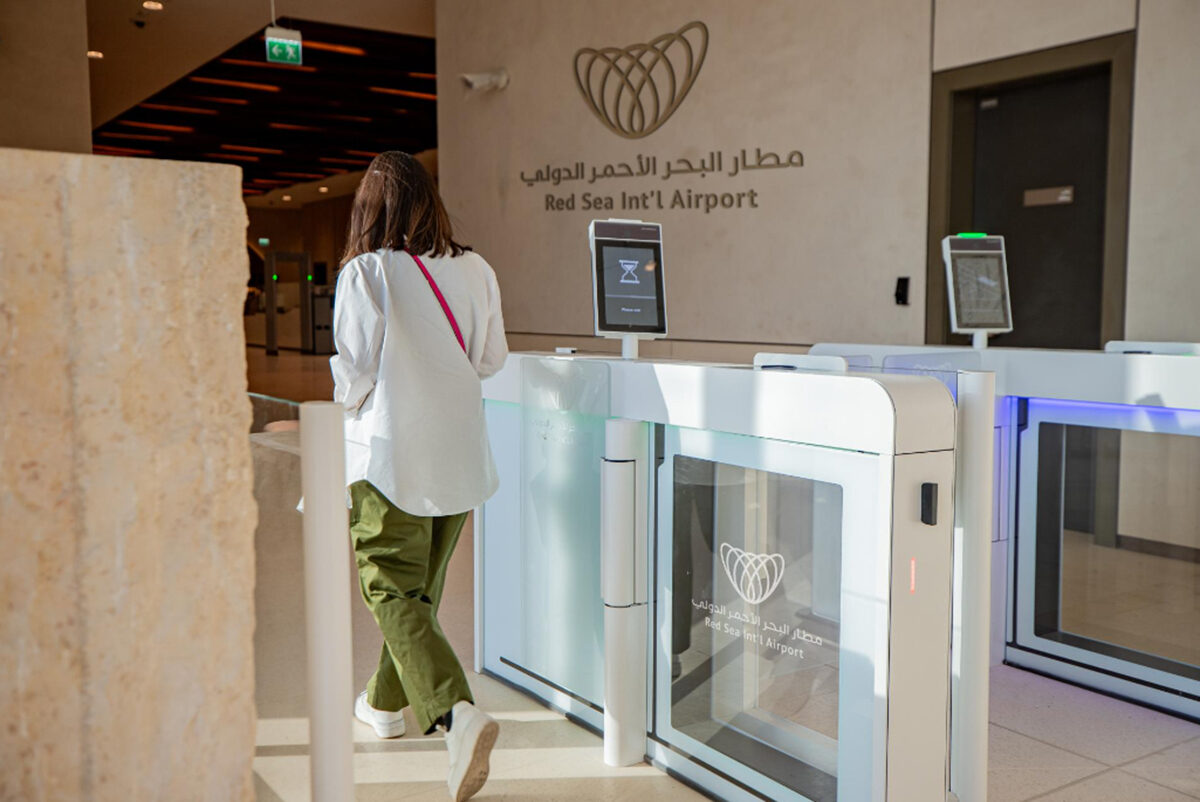
The concept of ‘frictionless’ is borrowed from digital UX and payments, where it’s almost always the right goal. Every extra tap in an app loses users, every additional step in a checkout cost conversion. But the translation to a physical journey is imperfect. In an airport, friction is not a single thing. Some is operational: unnecessary queuing, redundant form-filling, confusing wayfinding. Some is mandatory and functional: security and border control are non-negotiables, and the goal is not to remove it, but to make it feel purposeful and dignified rather than arbitrary. And some friction is genuinely desirable. An airport is one of the last truly liminal spaces in modern life – between home and destination, between routine and adventure. A completely frictionless experience risks turning that threshold into a non-event.
Trending in the wrong direction
Globally, airports are rolling out ‘smart airport’ digital solutions to help address bottlenecks, stress points and processes which frustrate travellers and strain operations. The removal or minimisation of this friction is a good thing. But the industry has moved too quickly to conflate two very different things: removing process friction and removing human presence.
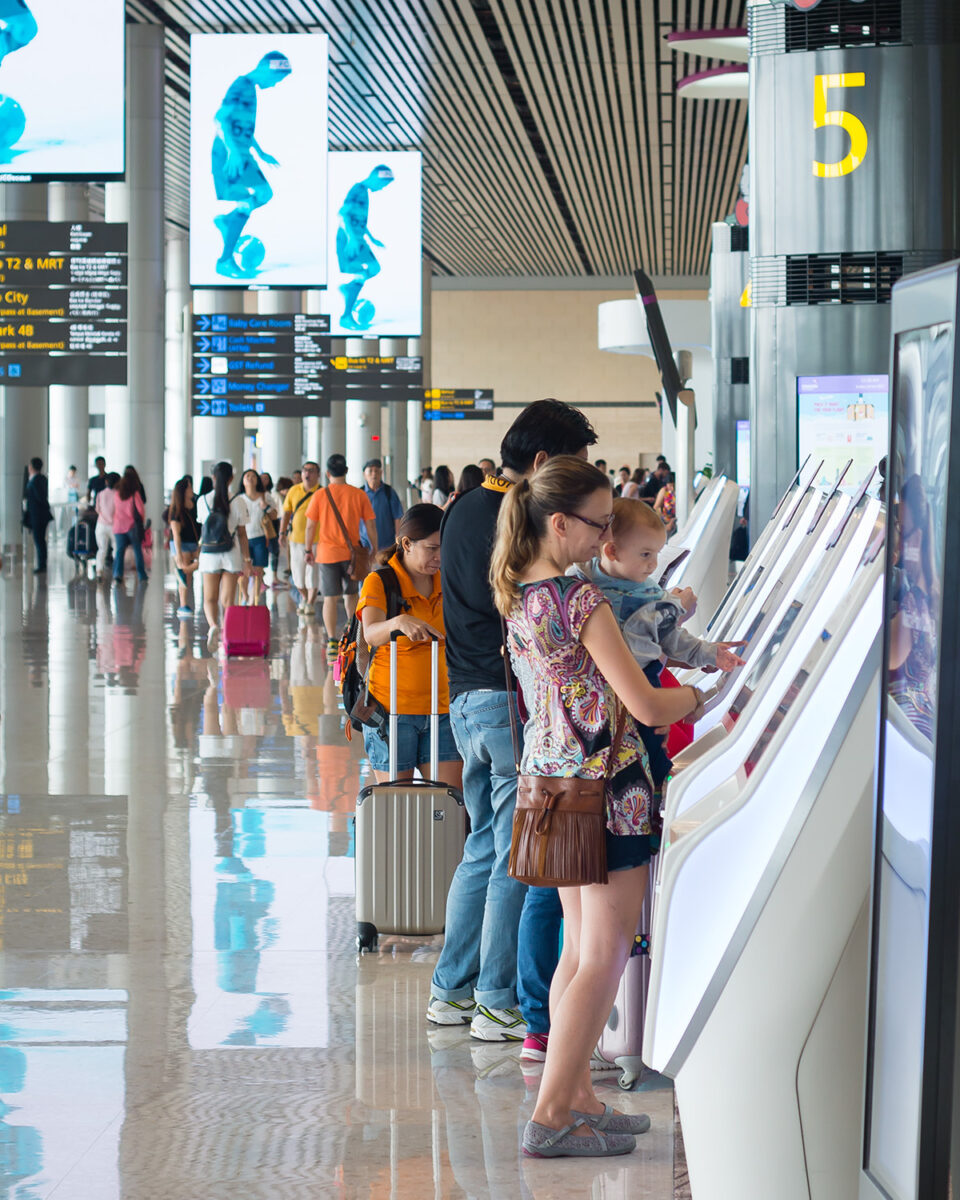
For example, the rollout of kiosk ordering, QR-code F&B service, and order-ready screens across airport dining – including full-service restaurants – is accelerating across major operators globally, all framed as reducing friction. While kiosk ordering does drive 10 – 12% higher spend per transaction, that tells us nothing about whether the passenger had a good experience or not.
When a guest completes an entire F&B visit without speaking to a single person, that is not friction removal in the spirit intended here. The efficiency gains are real – higher throughput, lower labour cost, stronger concession revenue on the basket uplift – but they accrue primarily to operators and landlords. The passenger’s experience is simply less human. Frictionless and hospitality are not the same thing. In many cases, they pull in opposite directions.
Different travellers need different experiences
A frequent business traveller at 6am wants a frictionless journey, but a family with children on a holiday may want engagement, distraction, a sense of occasion, or help navigating a journey that may be unfamiliar. A nervous first-time flyer may actively benefit from more touchpoints, because human interaction reduces anxiety in a way that a well-designed digital system cannot.
Designing a frictionless experience optimises for one passenger type but actively alienates others. So, instead of removing friction entirely, we should be asking “which frictions are worth keeping, which are worth redesigning, and which should be removed entirely?”
A simplified passenger-type framework illustrates this directly. For the solo business traveller, process friction should be minimised, but a well-placed human touchpoint, like a greeting, still adds value. The leisure traveller, particularly in a group or family, has time and is the highest-value commercial opportunity. They are the most responsive customer segment to human engagement, discovery retail and experiential F&B. Human presence is functionally important for the infrequent or anxious traveller, not just commercially desirable. Unlike the transit passenger who has a compressed dwell window and a specific need set, making relevant, fast-access commercial offers and clear wayfinding the priority. No single friction strategy serves all four.
Why human interaction can’t be designed out
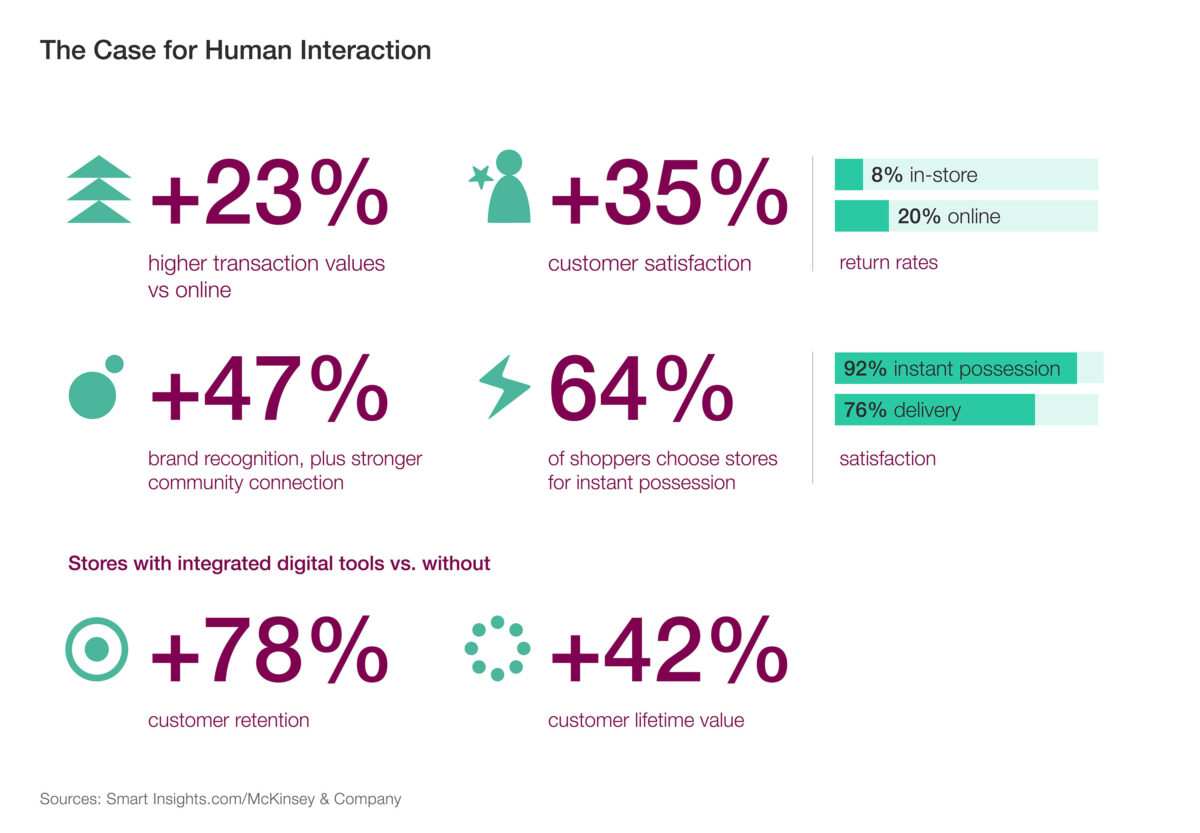
Physical sales channels create meaningful connections between customers and products through direct human interaction, personalised service and hands-on experiences. Physical stores and face-to-face customer engagement offer unique advantages, driving (see above):
As airports compete with virtual marketplaces, they have some key differentiators working in their favour, such as a captive audience. There are, however, some key traditional barriers to sales that can be addressed through the employment of knowledgeable, well-trained and motivated sales staff with an emphasis on a hospitality approach.
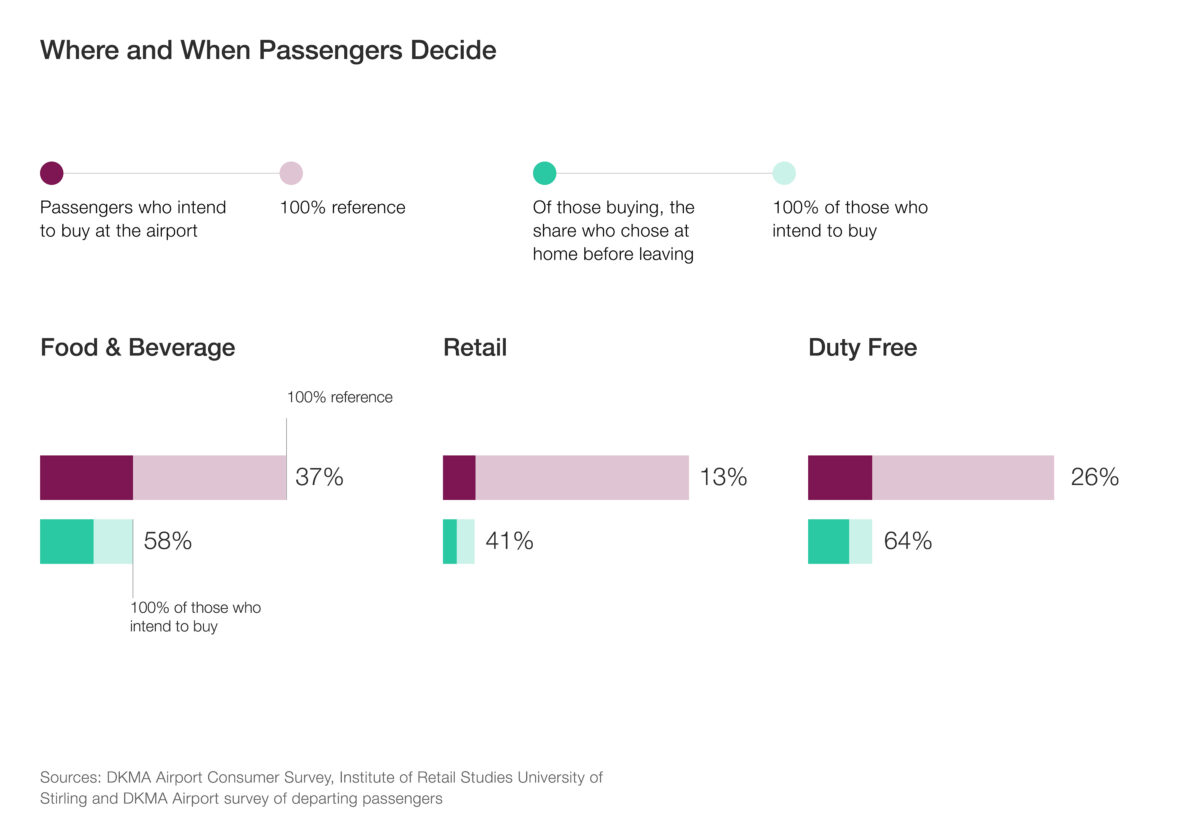
We know that most passengers don’t intend to spend at the airport, particularly in retail (see right):
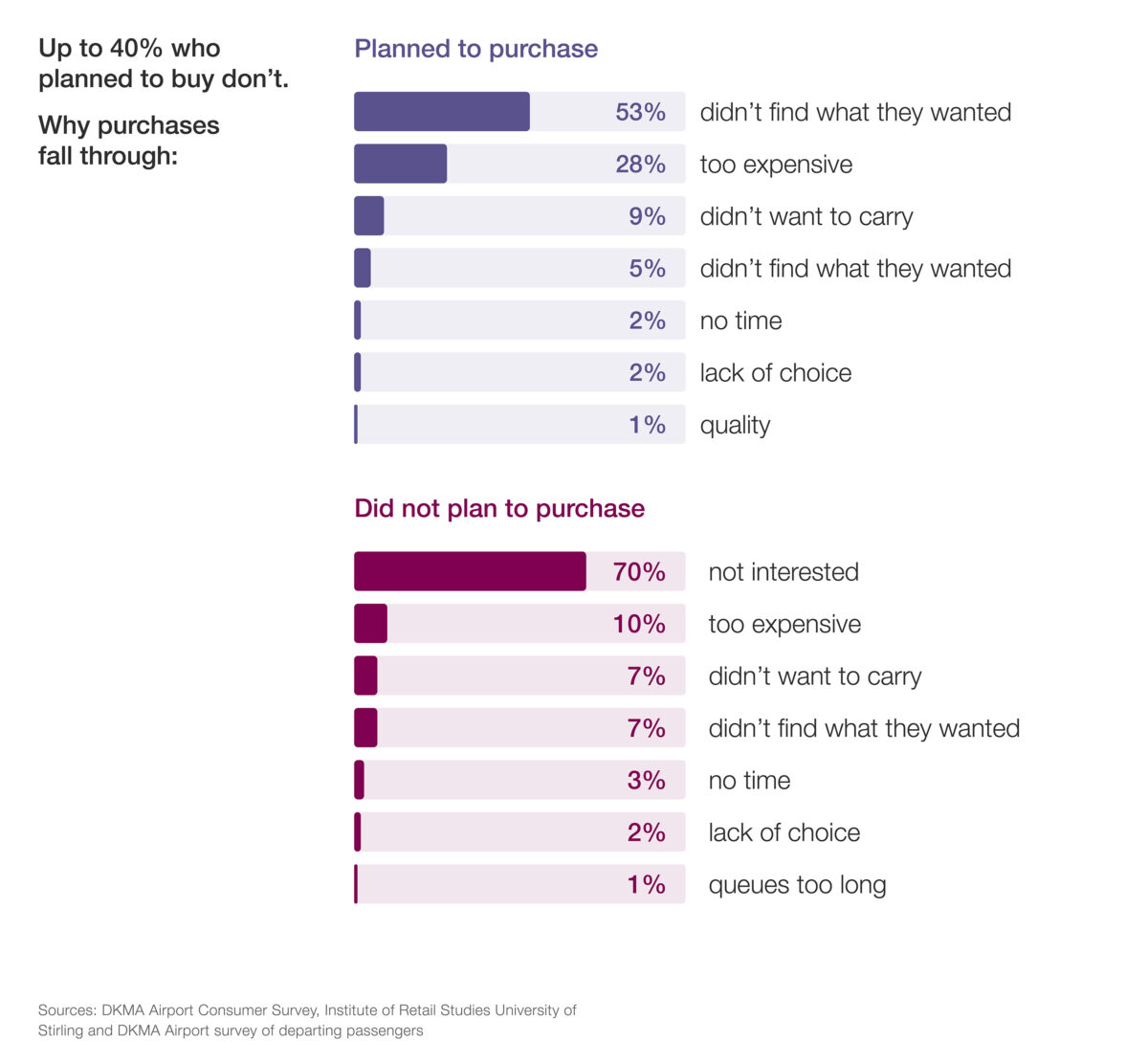
Once at the airport, up to 40% of those who planned to buy don’t, and those who hadn’t planned to purchase cite the following reasons for not buying (see below):
Some of these groups could be influenced through positive human sales interaction.
The real cost of labour cost savings
69% of consumers are more likely to purchase when receiving human assistance which in turn provides empathy, trust and tailored advice, fulfilling the desire for experience over mere transactions. This human touch is crucial for building lasting brand relationships.
To return to our F&B kiosk vs human service example, a passenger enjoying a conventional dining experience will interact with people at multiple touchpoints: with those who greet them, take their order, bring the food, check back and offer to bring another drink or dessert. Trivial individually, these micro-moments of human connection cumulatively create a feeling of being looked after. That feeling is what people remember and what they tell others about. By removing the human service, operators will have saved labour costs and gained basket size, but they will have simultaneously reduced an experience to a transaction.
There is also a sleight of hand in the narrative of ‘frictionless ordering’ worth mentioning. Kiosks may allow passengers the perception of efficiency, but when the barista or kitchen is the same regardless of the ordering system, the wait is identical. The psychology of perceived wait times is well established, but it’s not the same as a genuinely better experience.
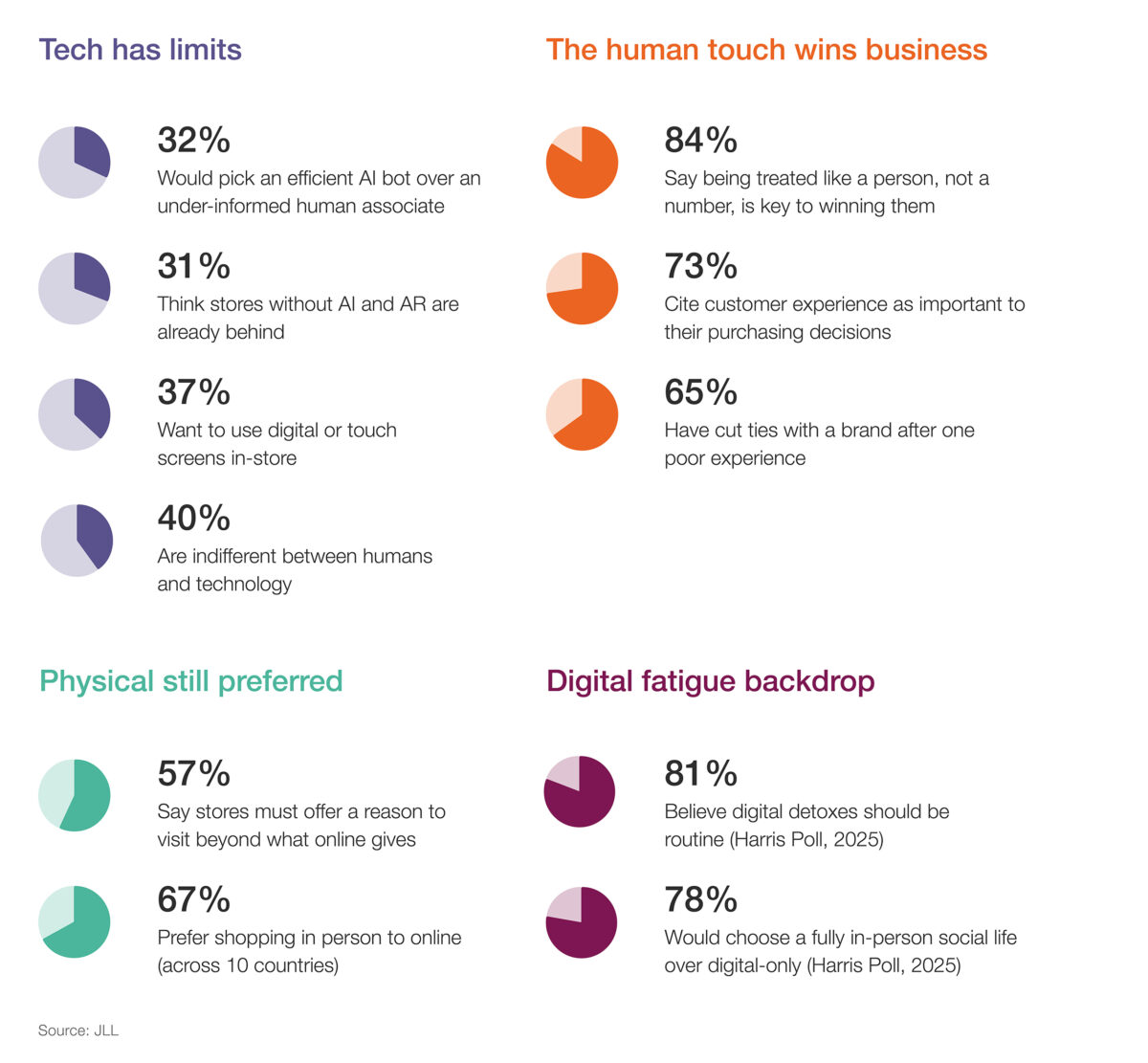
Despite years of investment in game-changing in-store technology, recent research by JLL shows a continuing preference for the human touch blended with technology (see below):
This preference is not merely attitudinal. ACI’s Airport Service Quality (ASQ) programme, the industry’s most widely used passenger satisfaction benchmark, has flagged commercial touchpoints – airport facilities prior to 2022, and shopping/dining specifically since – as the lowest or joint-lowest scoring category in nearly every annual barometer since 2017, with ACI’s own analysis repeatedly naming food & beverage and retail value for money as the primary driver
If the commercial and technological investment of the past decade were delivering genuine experience improvement, this score would be closing rather than remaining persistently low. It is worth noting that ACI attributes this primarily to passengers’ perception of value for money – a distinct issue from the service-quality argument made here, since even a warm, fully-staffed restaurant will score poorly on value perception if pricing feels high and the passenger feels captive. The two issues likely compound one another, but they call for different remedies: pricing and value strategy alongside service design. What the data does support is that the sector has conflated operational efficiency with experiential quality and has used the language of ‘guest experience’ to justify what is, at its core, a labour cost reduction strategy.
The opportunity cost is the experience gap that ASQ has been tracking for nearly a decade – representing both a commercial risk and a genuine competitive opportunity
Creating a seamless passenger experience on the ground requires a shared vision that aligns all airport stakeholders. This needs to be led from the top by the airport or terminal operators’ vision and mission, ensuring every staff member understands the core values, objectives and expectations of their role in delivering a cohesive experience.
Balancing generational appetites for digital and personal touchpoints
There is an increasing awareness that future-ready airport terminals will connect people, processes and partners, through both digital and human connections, to work as a single ecosystem making these experiences seamless and bespoke, giving passengers what they want and unlocking new revenue for airports.
It has increasingly become a choice for people to visit stores or restaurants to break from screen fatigue or the isolation of online-only engagement. While this sentiment spans across age groups, Gen X and Boomers emerge as the strongest advocates for maintaining human connections in physical spaces.
That said, research from travel retail specialists Wonderworks confirms that Gen Z makes nearly half of all their purchases in bricks-and-mortar environments. Despite being the most digitally native generation in history, they want the option of technology but not the obligation of it. Of all passenger groups, Gen Z is most acutely attuned to the difference between being treated as a guest versus a revenue unit. If airports can authentically deliver a guest-first experience, Gen Z passengers can provide the most loyal, vocal advocacy an airport can have.
What this means for airport design
The airports that consistently perform well on ASQ commercial scores tend to be those that invest in understanding their passenger mix and designing the commercial environment accordingly.
Our design process stems from the same philosophy. Before putting pen to paper, we develop a data-rich understanding of current and future passenger and visitor profiles. This analysis needs to be thorough, as do the provisions that we make. It also requires a high level of service from service providers.
We know that society today demands a more bespoke, personalised and authentically sustainable approach. The physical environment and the human environment need to be designed as a single system, not sequentially.
We need to design more fluid spaces that blur the boundary between store and seating, where offers complement rather than compete. Clear signage and dedicated ‘recovery’ spaces need to be integrated after necessary stresses, like security and immigration checkpoints, and we need to be mindful of how bright lights affect wellbeing.
Interactive activities and entertainment can help shift passengers from a state of anxiety to a state of leisure. While seamless digital experiences supported by informed staff can reduce cognitive loads and the stress of navigation.
We also need to design for staff. Clearance to work within an airport environment is expensive, as is the training that follows, which makes retention a commercial concern as much as a human one. We have seen how much human interaction drives sales conversion, so the people delivering it warrant better provision within the terminal itself. Well-motivated staff should not be walking hundreds of metres to reach a rest room or retrieve deliveries. Efficient design and proper staff facilities are not competing priorities, and the value of the latter needs to be recognised at the planning stage.


Where next?
Evidence from nearly a decade of ASQ data is clear: the commercial experience in airport terminals is underperforming relative to the investment made in it, and the gap between what passenger’s experience and what they could experience represents one of the most significant unrealised opportunities in airport retail. Closing that gap requires airports and their commercial partners to have a more precise, passenger-led understanding of which friction to remove, which to redesign, and which to actively protect.
Related articles