Physical Wayfinding still anchors how people understand a place, helping them look up and engage with what is around them. In this article, Graeme Crow, Director of Branded Environments, shares how and when to layer in digital navigation, from QR codes to interactive directories, so information stays current and visitors with different needs can find their way with confidence.
Return to Future ThinkingPhysical and digital wayfinding: navigating the development of integrated solutions

Contact Graeme Crow, Senior Associate Director, Branded Environments
graeme.crow@benoy.com
Deciding whether it’s appropriate to complement a physical wayfinding scheme with a digital element is an important decision for every client. How much to invest in digital and working out the most complementary design to the physical wayfinding are questions which require a sensitive response to the environment, visitor needs and operational requirements. That decision has become more pressing as the way people navigate has shifted, thanks to Google Maps and destination specific apps which can be tailored to specific customer needs such as translation, improved legibility and voiceover directionals.
Physical wayfinding remains the bedrock for effective schemes because experiencing physical spaces means looking up, out and around. Wayfinding can improve the immediate interaction with a space and help us to avoid constantly reaching for our phones, often leading to distraction and disengagement with our environment.
A practical and an emotional response to space
A lot of the research we do at the beginning of projects is centred on observation. We carry out customer mapping, watching and thinking literally about how different visitors navigate spaces. Deciding whether digital wayfinding will complement a particular physical wayfinding scheme always starts here, with observation, understanding both how people move and the spaces where we want people to dwell and experience moments of joy and surprise. We then work closely with our clients to give them real-life examples of how users are experiencing their spaces, such as where they stop or encounter any little challenges. At this early stage we also understand where information requires updating on a daily, monthly or quarterly basis, as this will have a significant impact on whether digital is the right solution. Practically speaking we want to help people move through a space during different times of the day, month or year, but then emotionally we are always seeking to enhance their connection to a space.
Physical wayfinding paving the way
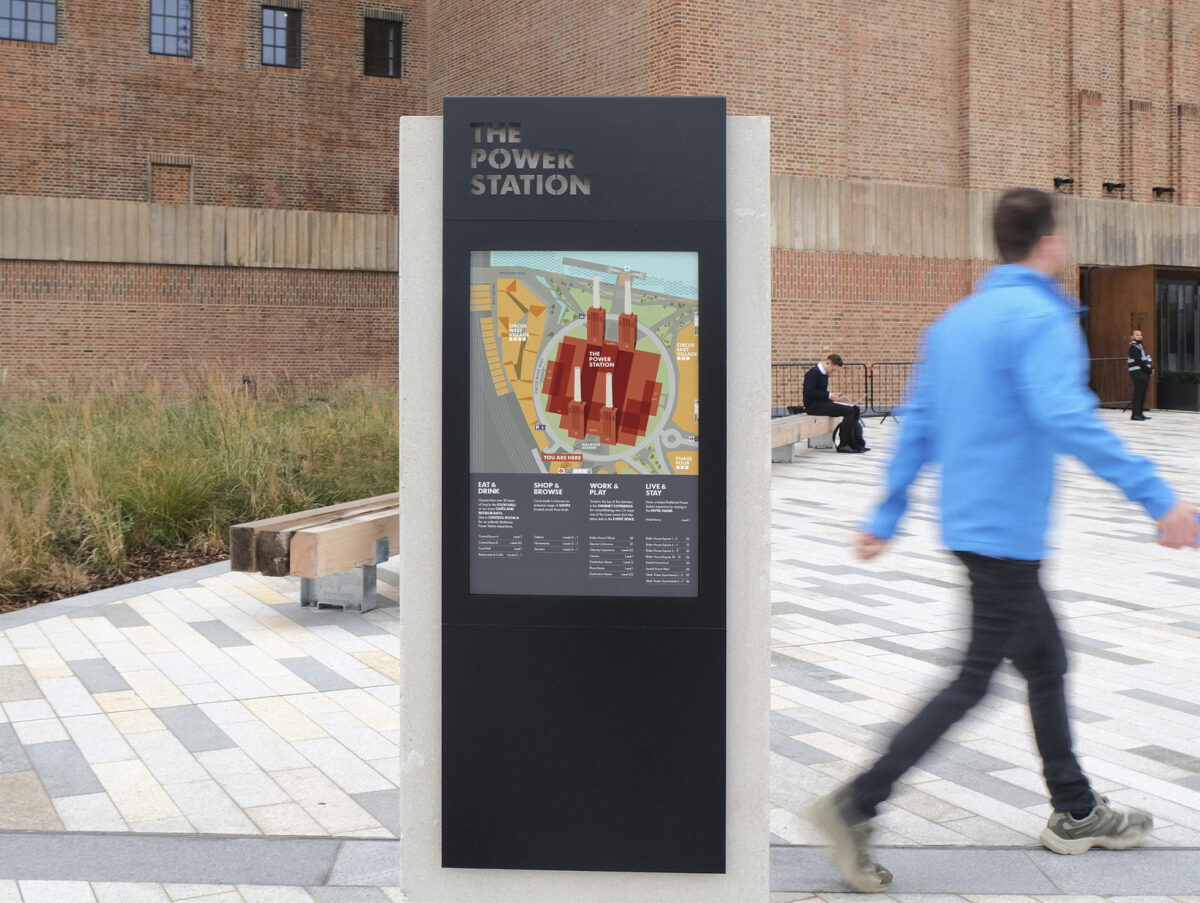
Physical wayfinding forms the basis of all wayfinding schemes. The role of wayfinding is to help the broadest range of people understand and engage with environments. Public realm wayfinding, such as our work on the Battersea Power Station retail spaces, or Coal Drops Yard in King’s Cross, has to be aware of moving from one system to another, moving smoothly from a city-wide wayfinding scheme like Legible London, to an estate wayfinding scheme. Being in tune with the complexity of the environment also helps create more experiential wayfinding, which embeds users further into the experience, such as in a gallery or museum. After all, wayfinding helps communicate the identity and character of a place, rather than simply directing people through it. The sooner we can be involved with the operational teams, the people who will often own the wayfinding scheme going forward, the better we can help shape what the navigation experience will be in a space.
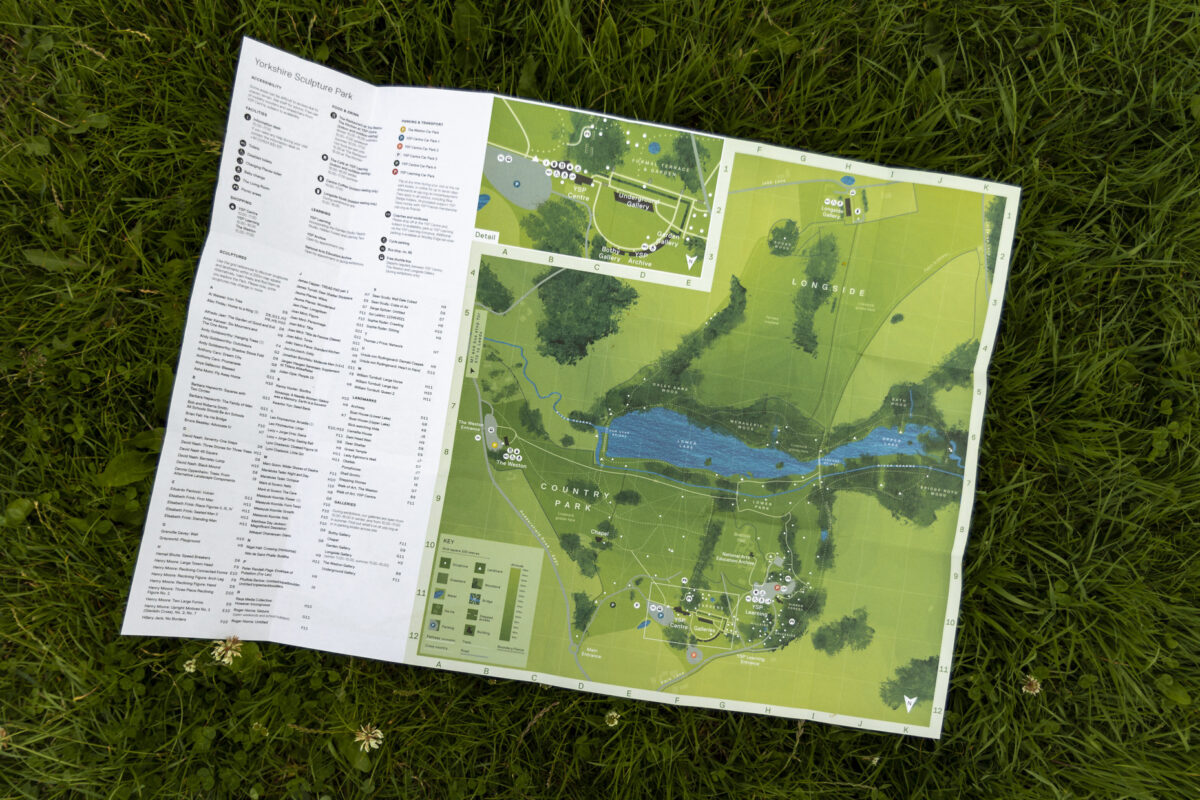
Taking this one step further, printed maps or maps placed into the Public Realm can function as a keepsake while opening wayfinding up to an even wider audience. A physical piece of paper that you can hold, put in a bag, take with you as a memento, is another way to keep the story of a place going, long after you have departed. Maps can still be useful as well, because they mean that you don’t have to rely on a device and, after all, some people won’t be used to navigating on a device at all. Ultimately, they offer users another choice. It’s rare nowadays that someone could be in the public realm without an element of digital wayfinding, perhaps a QR code, but for certain generation physical maps will always win.
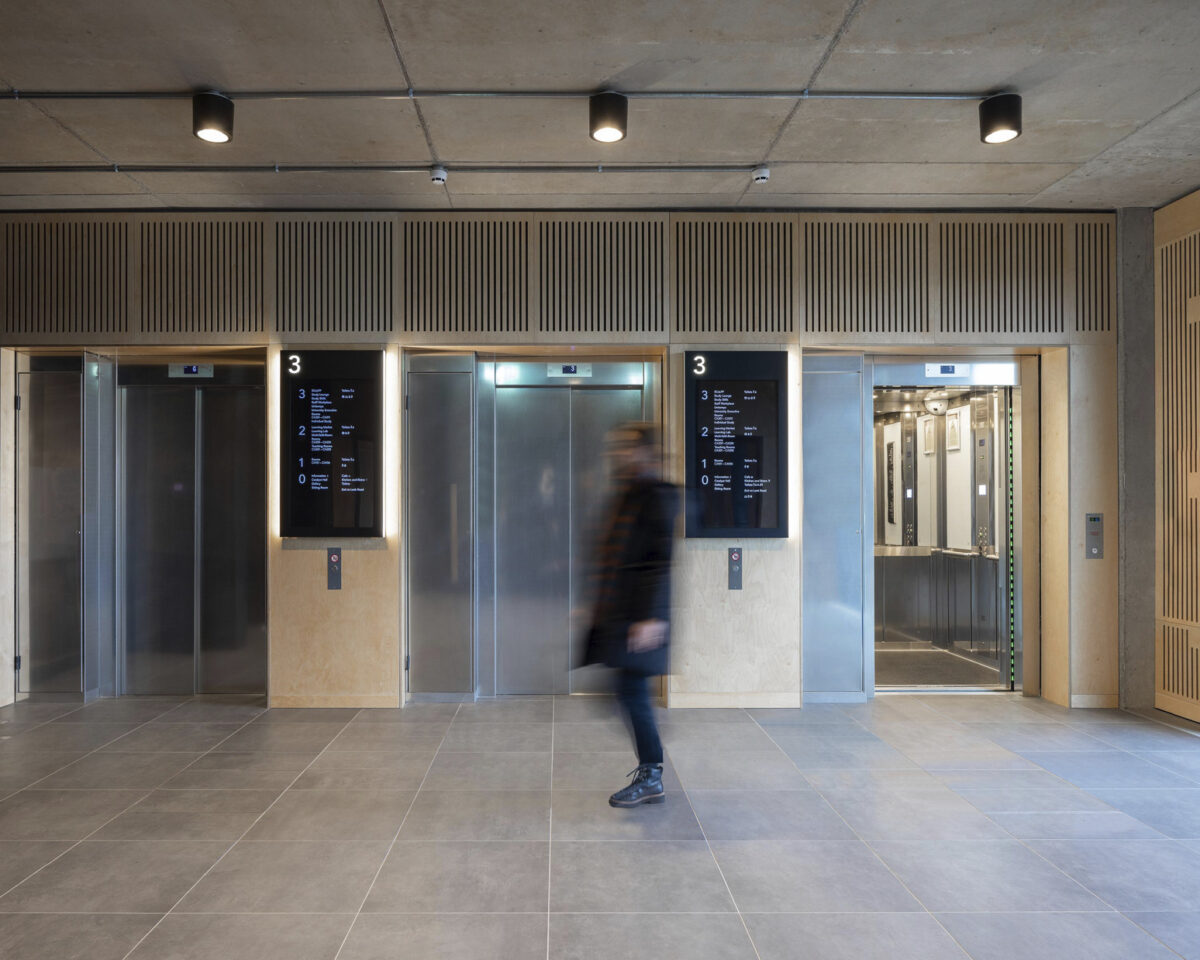
Digital navigation as an aid
Digital totems, interactive directories and embedded screens are becoming more common in public spaces and universities. Over the years our Branded Environments team has developed digital lift directories for Staffordshire University, interactive retail directories for the Battersea Power Station and marketing screens for the likes of Olympia in London and Oxford University.
Digital wayfinding works best when it is considered right at the start of a project. When clients want to understand more about whether digital wayfinding is right for their building or space, we carry out a ‘digital discovery stage’ to see how appropriate the use of digital is for their space and to understand their appetite for it as well, because ultimately, they will have to manage it in the future. This requires a level of investment, but with that investment can come flexibility as well. Creating spaces that are more digitally enabled and potentially future-proof – if done right – can be a real benefit in terms of being able to easily update information and keep spaces activated and feeling alive.
How personalisation is shaping the future of wayfinding
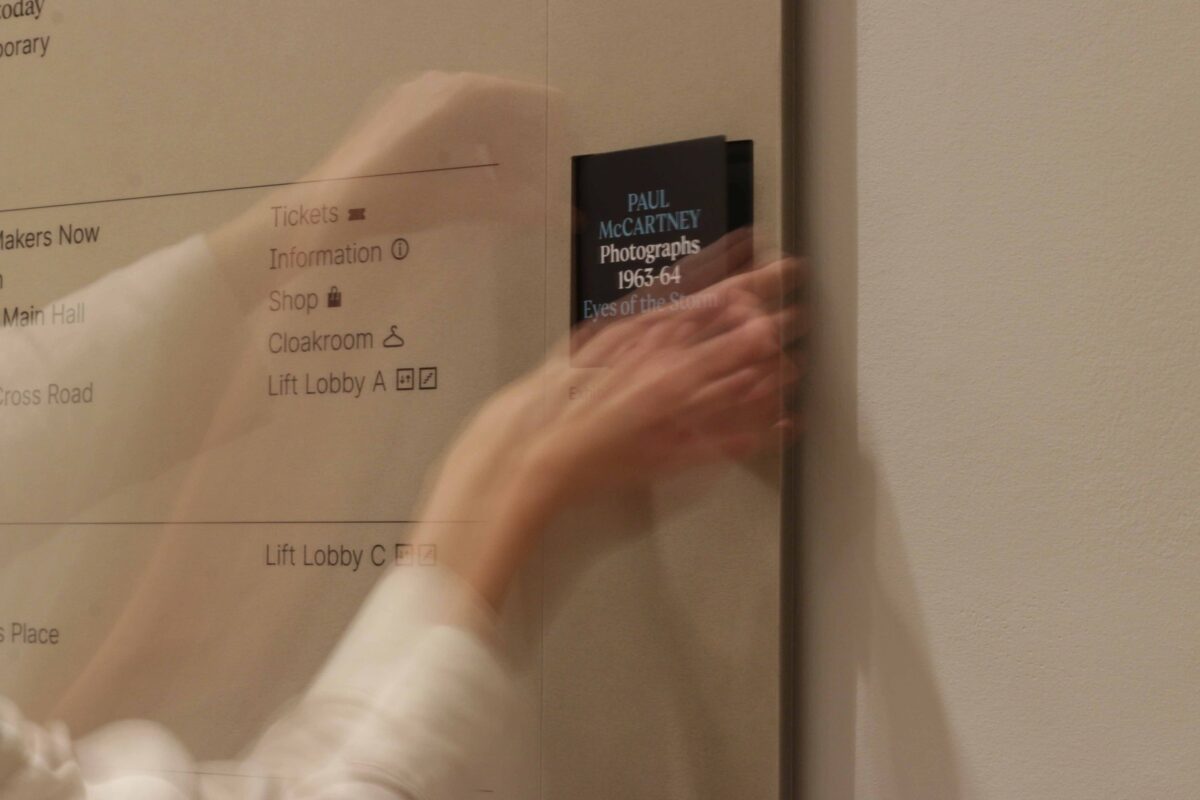
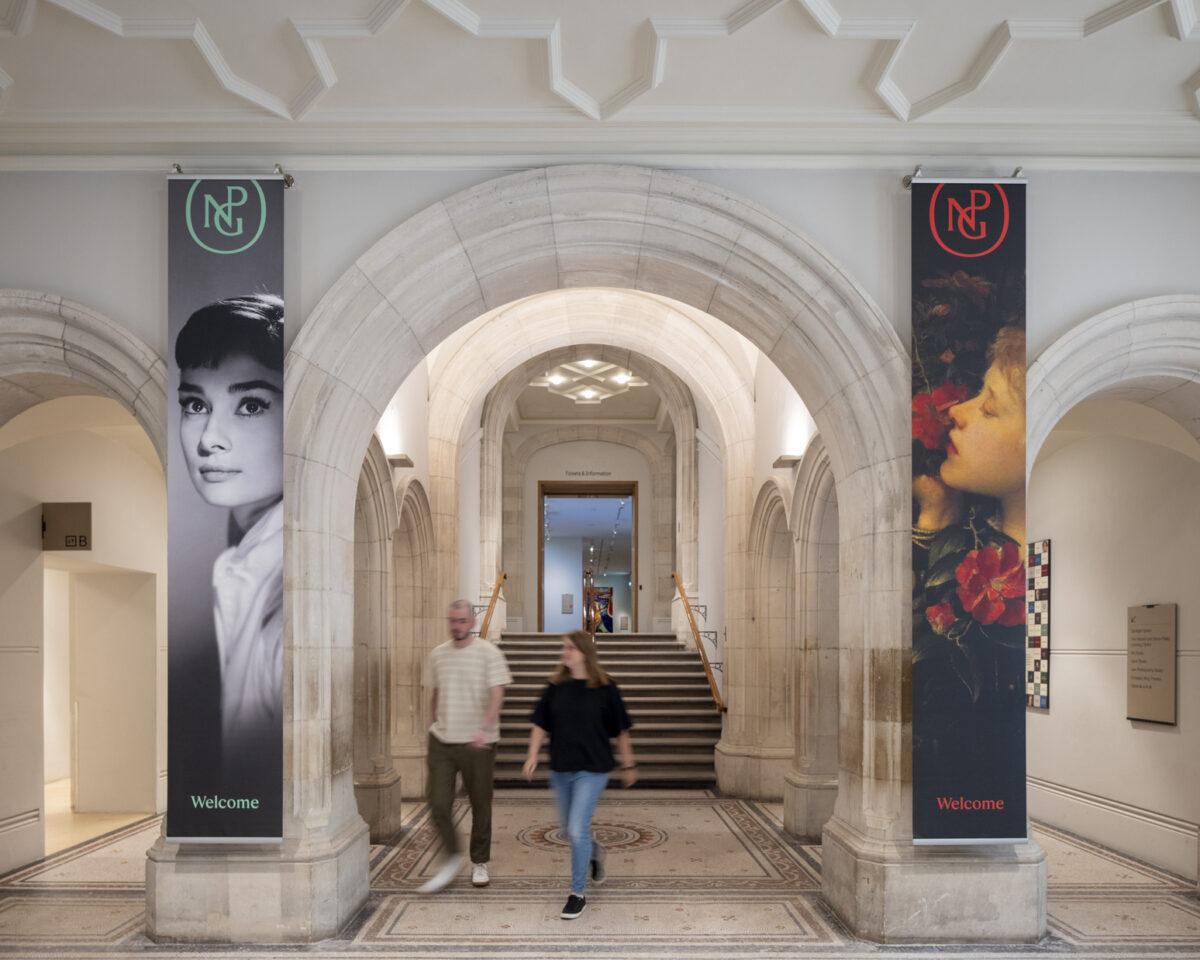
The ability to tune information to your own specific need is only improving. The National Portrait Gallery wayfinding scheme illustrates this well. The gallery sees a really broad range of visitors: people who visit on a regular basis, such as on their lunch break; people who work locally, who know the gallery intimately; tourists who’ve never been before; people who are going to pay to see the exhibitions; and then people who want to see the gallery collection. All these user groups require quite different and specific kinds of information. Often, we’ll look at combining elements such as exhibition trailing within the directional signs, so that you’ll see an advert or a piece of marketing for a specific exhibition on the signs themselves. Wearables such as hearing aids, smart watches and glasses, are all tools which can offer an increasingly personalised experience and could herald a shift away from the phone as an aid to wayfinding. Looking ahead, physical wayfinding still forms the basis of a scheme and then digital infrastructure, and smartphone-based navigation can be layered on top to further enhance it.