Mahshad Alimardani Heravi, Senior Landscape Architect, discusses key design principles for landscape architects to consider and the explores importance of sensory comfort, particularly when designing in hot climates.
Return to Future ThinkingHow movement, memory and the senses shape landscape design

Contact Mahshad Alimardani Heravi, Senior Landscape Architect
Mahshad.Alimardani@benoy.com
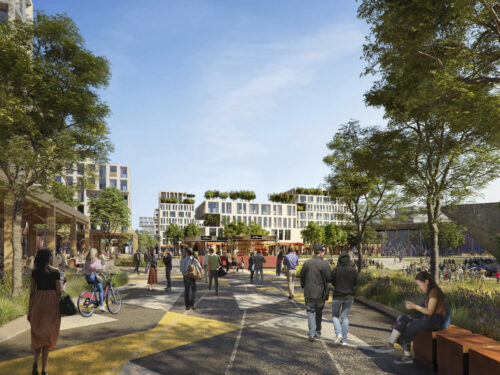
Designing public spaces in extreme climates demonstrates that the nervous system already makes a judgement on a space before it consciously evaluates a landscape and notices the planting palette or paving pattern. Maybe it’s too hot or too exposed? Perhaps there’s nowhere to sit or the route feels unsafe?
Landscape architects are tasked with creating spaces that reduce stress, support public health and foster community, but if we don’t understand how the senses experience outdoor spaces, then we’re designing blindly. Instead, landscape architects need to think like neuroscientists, treating every design element as a signal that either supports or stresses the nervous system.
Tangible design principles
When people enter an unfamiliar plaza, they slow down and their eyes scan for cues, asking, ‘Where is the main path? Where can I sit? Is this route safe? Where does this lead?’
Every outdoor space is a continuous series of mostly unconscious micro-decisions. When these predictions are easy – when the main path is obvious, when edges are clear, when transitions make sense – mental effort drops and people look around instead of just looking ahead. But when a space demands constant active decision-making, fatigue sets in fast.
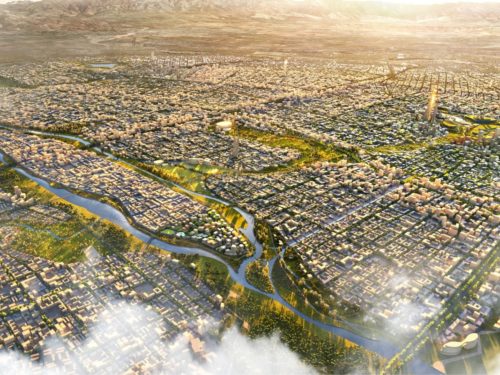
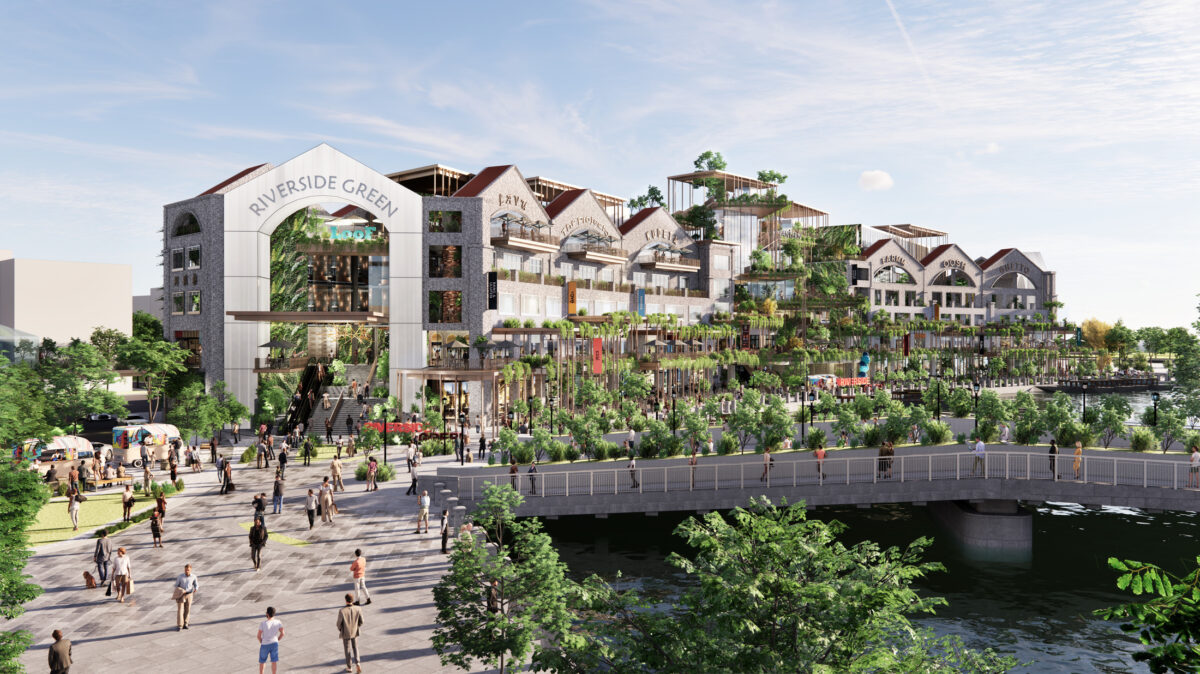
Take, for example, a waterfront project in the Middle East we worked on. Our early designs included an intricate paving pattern with multiple path options weaving through planted zones. It looked elegant in the plan. But when we walked the mock-up, the experience was exhausting. There were too many choices, no clear hierarchy and there was a palpable low-level stress about whether you were ‘supposed’ to be on this path or another one.
In response, we simplified the path options. We designed one clear primary route which was legible through consistent paving width and material. The secondary paths were differentiated by texture and scale, and planting reinforced the hierarchy, instead of competing with it. The result was just as interesting but far less tiring to navigate.
Some design principles to bear in mind as a landscape architect:
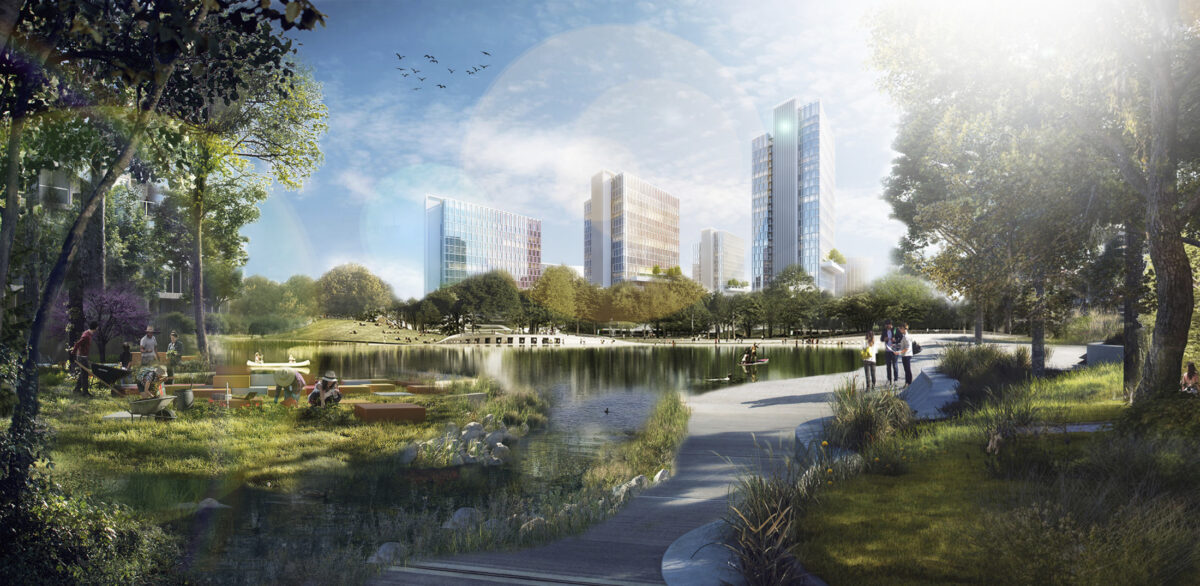
1) Include landmarks scaled to pedestrian perception which are easy to view at a walking speed. For example, a mature tree with a distinctive form, a change in level or a water feature which you can hear before you see it, all anchor memory and reduce the cognitive work of orientation.
2) Balance long views with places to pause. The brain needs both openness and sightlines that help predict what’s coming, and places to stop, recalibrate and breathe.
3) Edges should be informative. They tell you where the path is, where it isn’t, and where you can walk or sit.
4) Lighting is not an afterthought. It reinforces hierarchy, enables confident navigation after dark and signals safety.
Sensory comfort
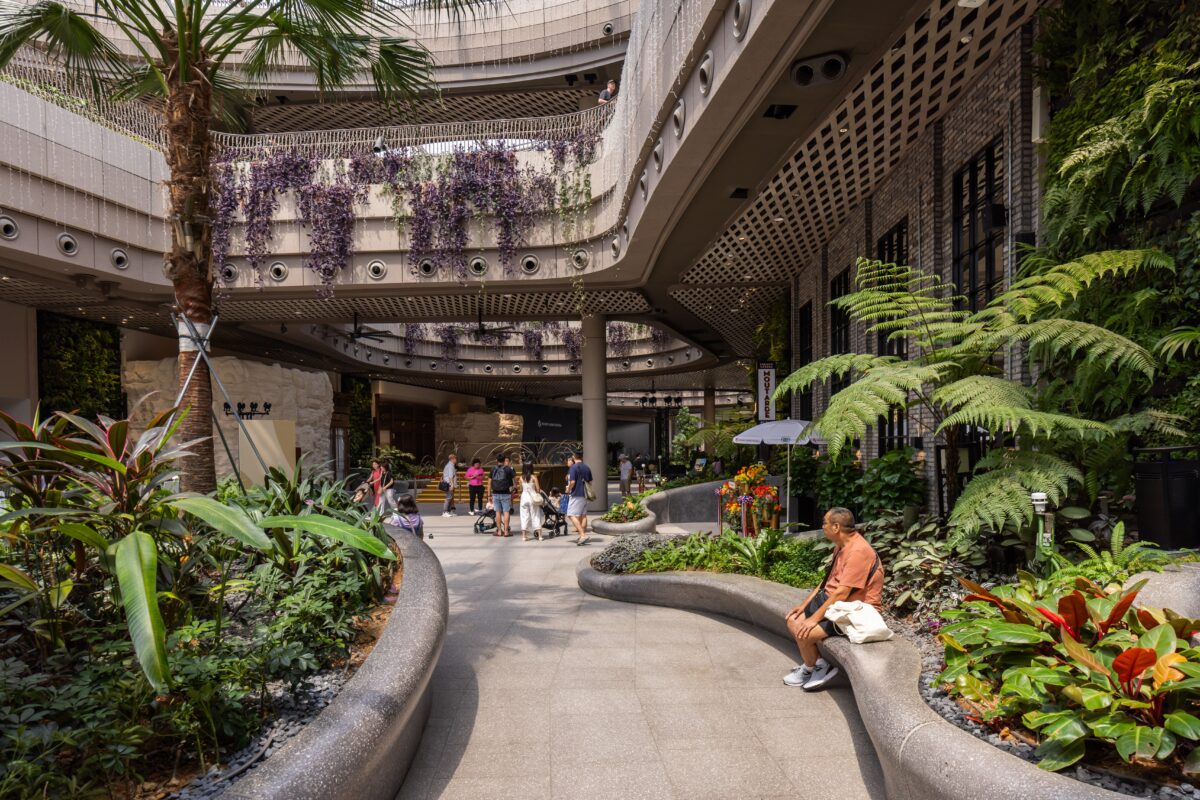
Temperature, wind, glare, sound and the feel of materials underfoot all shape whether a space is habitable long before anyone evaluates its aesthetic quality.
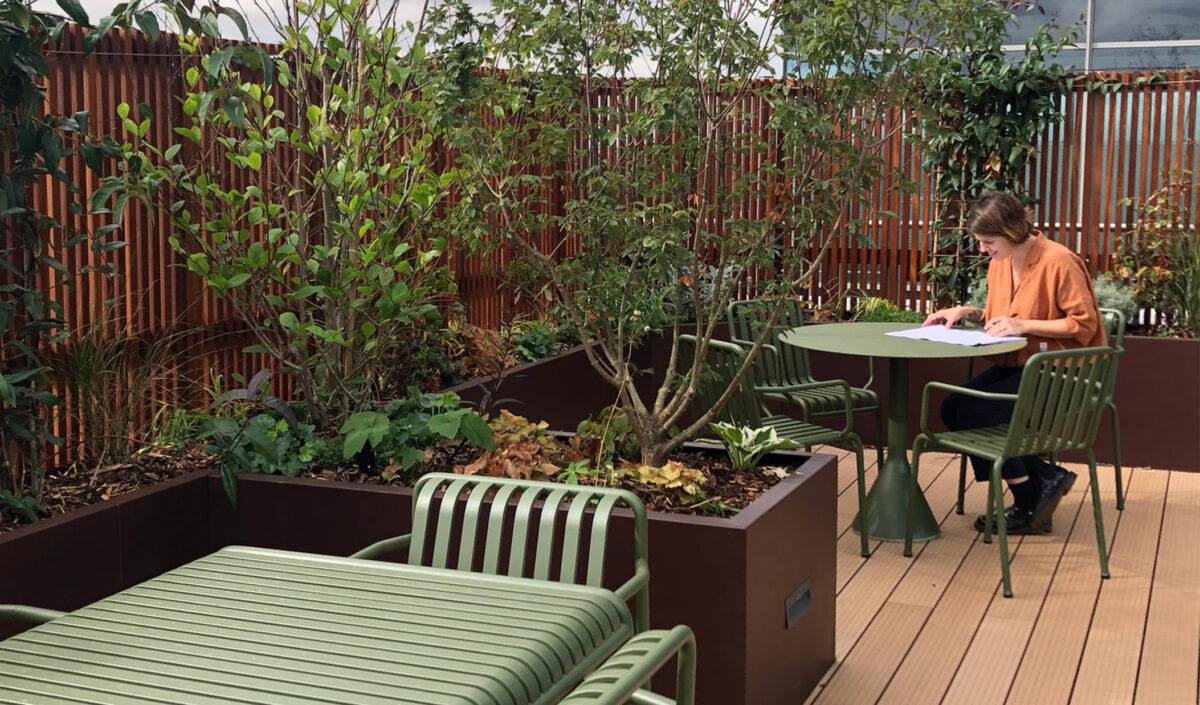
In moderate climates, designers often treat shade as occasional relief, maybe a few trees scattered for visual interest, but in extreme heat, shade becomes infrastructure. Shade informs movement with people navigating between shaded zones like stepping stones.
The same logic applies to paving. Light-coloured stone that looks beautiful in renderings can become blinding and heat-retaining in practice. Instead, we started specifying based on albedo and thermal mass, not just appearance, to create surfaces that people can actually walk on at midday without discomfort.
Wind is trickier. Although we can’t control it, we can work with it, using planting and built forms to channel breezes where they’re welcome and buffer them where they create discomfort.
Sensory comfort matters regardless of how extreme the climate is because sensory discomfort creates stress. Contemporary urban life already pushes people into constant low-level stress thanks to noise, crowding and over-stimulation. A well-designed landscape has the opportunity to interrupt that.
What can public spaces actually do?
Well-designed outdoor space can offer something valuable and specific: brief moments of recovery in the middle of otherwise demanding days. This isn’t revolutionary, but neither is it automatic. It requires conscious design decisions about how elements are arranged, what behaviours are supported and where conflicts are eliminated or managed. The outcome is a landscape that doesn’t actively exhaust people, and in dense urban environments, that’s worth pursuing.
Landscape architecture is being asked to solve increasingly complex problems: climate adaptation, biodiversity, social equity, public health and urban heat. These are real and urgent. If we treat landscape as just a visual composition, we’ll keep producing spaces that photograph beautifully and function poorly. However, if we understand landscape as an interface with the human nervous system, a sensory environment that either supports or taxes the body, then we start designing differently and addressing more complex problems.
Related articles