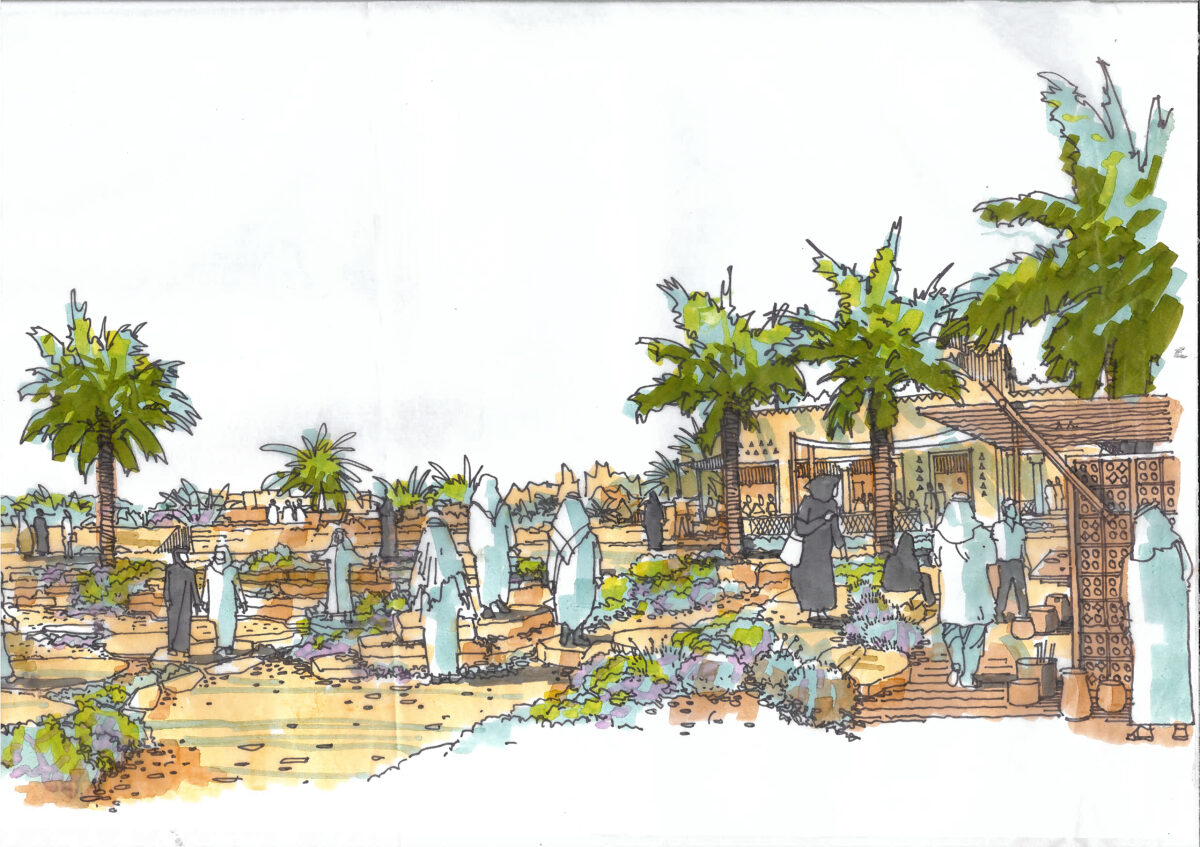
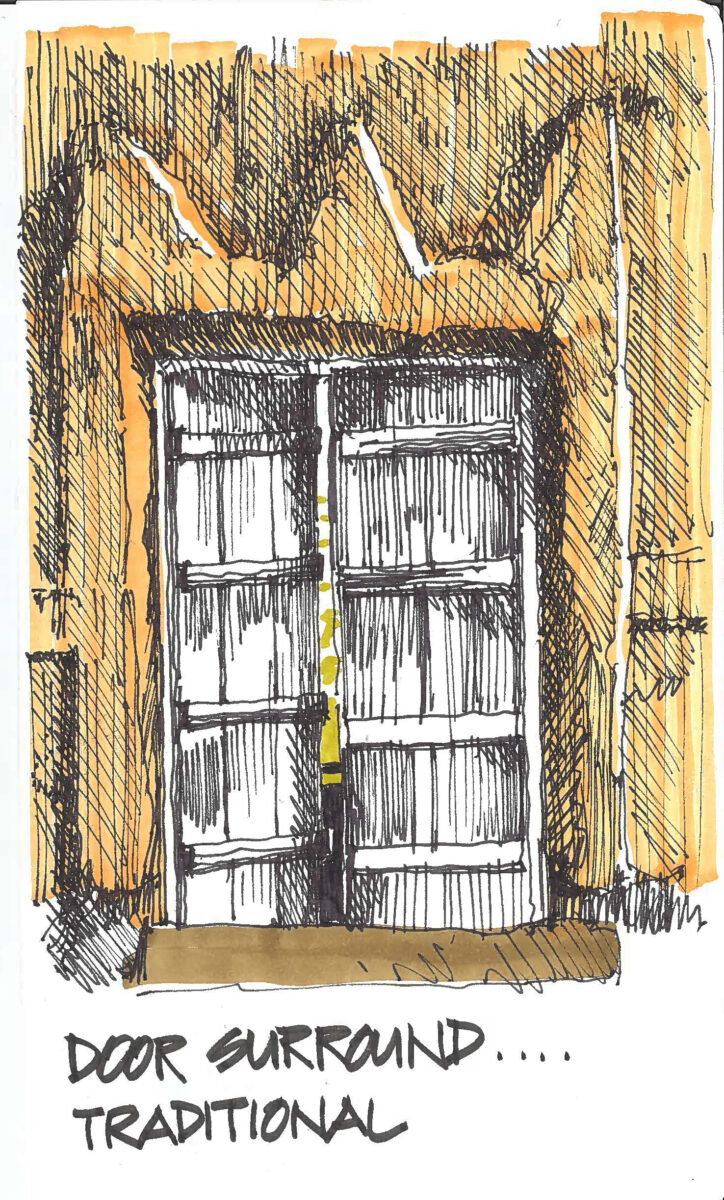
In his current role as Design Consultant, Simon reflects on his process at the start of a project, what he suggests when faced with a brief, a blank page and a waiting client. As a former Design Director of Benoy, Simon Bee has been one of the company’s most senior and well-travelled creatives with over 30 years of experience as an architect. He has seen and tackled thousands of briefs in this time.
Return to Future ThinkingConceptualising projects at an early stage

Contact Simon Bee, Design Consultant
simon.bee@benoy.com
When presented with a brief, the first thing to do is to interrogate it. This is the most exciting step in the process when everything feels charged with potential.
I try to get a sense of the client’s ambitions and their corporate values, and I quickly run through a mental checklist, asking myself if I need more research and analysis.
I think about the site and try to go for an initial visit, also considering its surroundings, as well as using detailed desk studies. Boundaries, levels, neighbours, special landmarks nearby or exploitable level changes are all valuable connections to and sources of inspiration. In my experience, additional opportunities and constraints are easily identified by being physically on site.
Once I have all the information, I tend towards rapid ideation. Capturing every thought, comment, response and idea at this stage can be beneficial, and this extends to sketching, note-taking and photography. I try to cast the net wide and encompass ideas about design, colour, materiality, placemaking, commercial strategy, phasing or buildability.
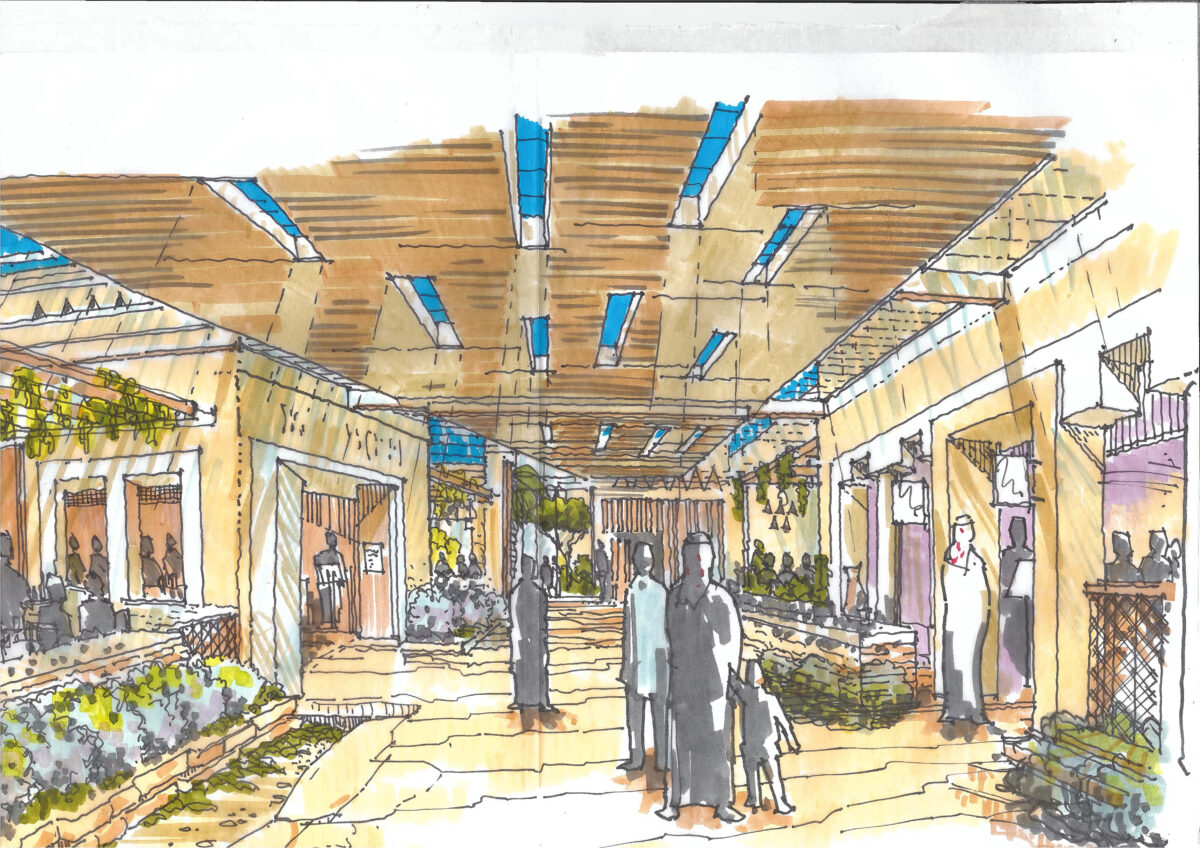
Many people who have worked with me know how much I favour marker pens, both for writing things down and sketching. I always advocate for pinning images up on the wall. This can make the design process much more collaborative as colleagues can follow along the story. I sketch quickly as I find it helps to build a feeling and an atmosphere.
The drawings I do at this early stage are incomplete and I often fill in the gaps with words to complete the picture.
I try to cast the net wide and encompass ideas about design, colour, materiality, placemaking, commercial strategy, phasing or buildability.
Ideas begin to take shape
Often the first ideas in the design process are the most powerful. The process of testing multiple options can be quite time-consuming, but it’s important to keep an open mind and to be diligent when exploring all avenues. This step tends to be a shared process where the entire team comes together to explore alternative design directions and it’s one of the most rewarding stages of any project.
It’s difficult to isolate which emerges first because concept, narrative and ideas often develop in parallel. Even the first conversation with a client might generate a vision in your mind that is so strong, you need to hold onto it. More often than not a core early idea drives the entire narrative.
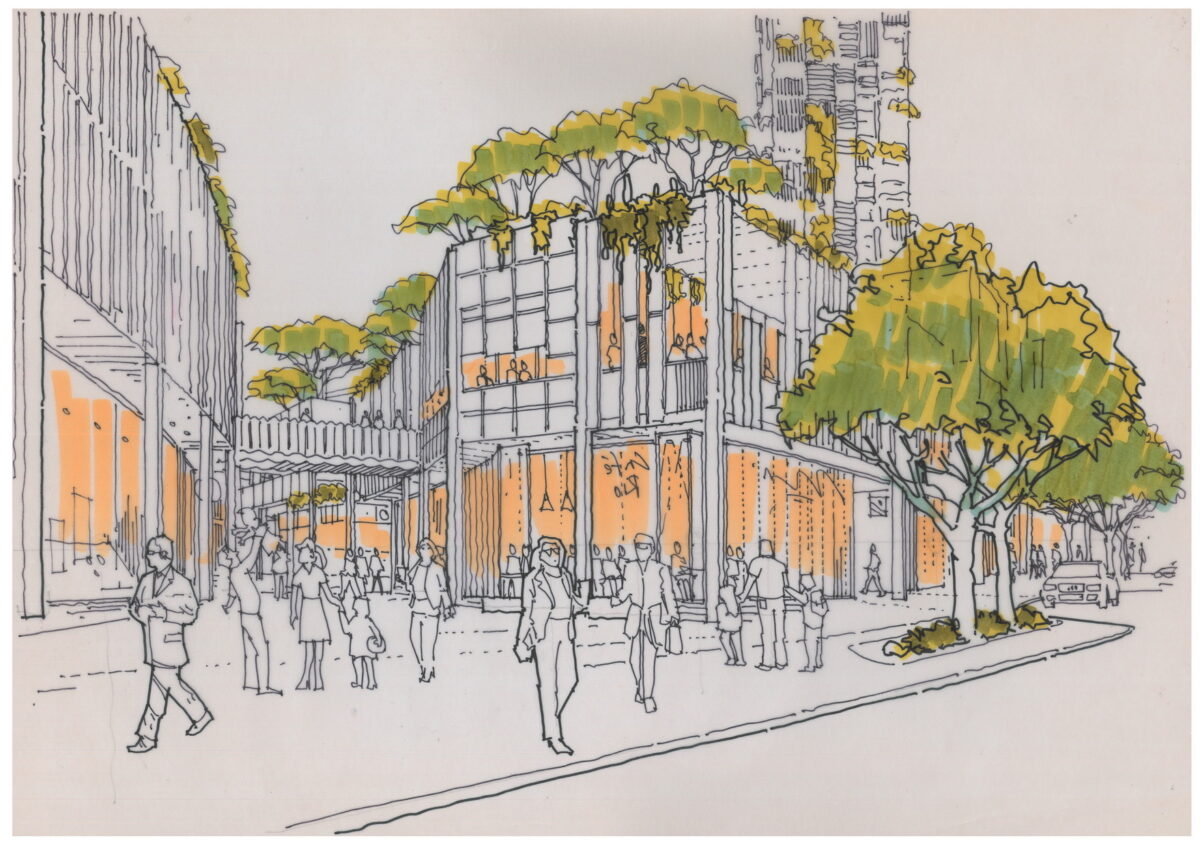
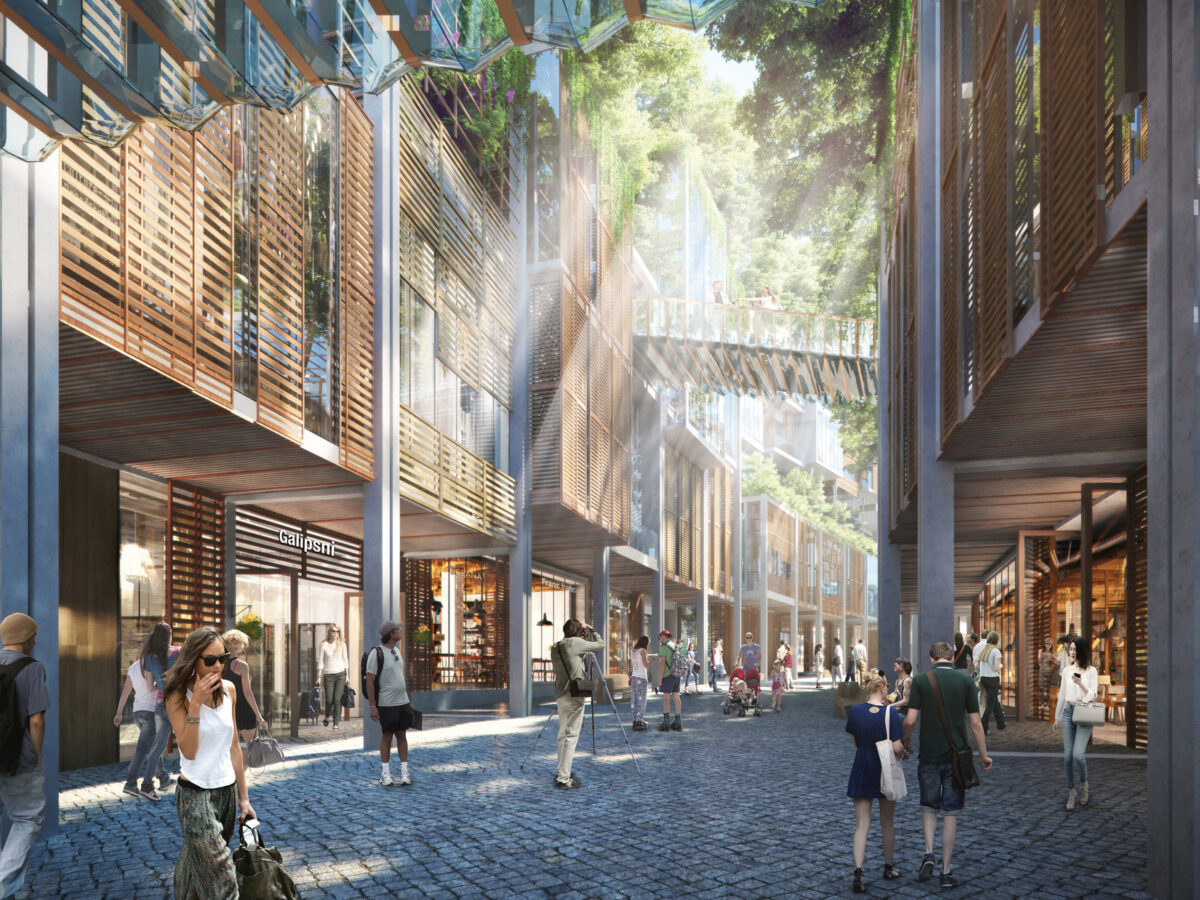
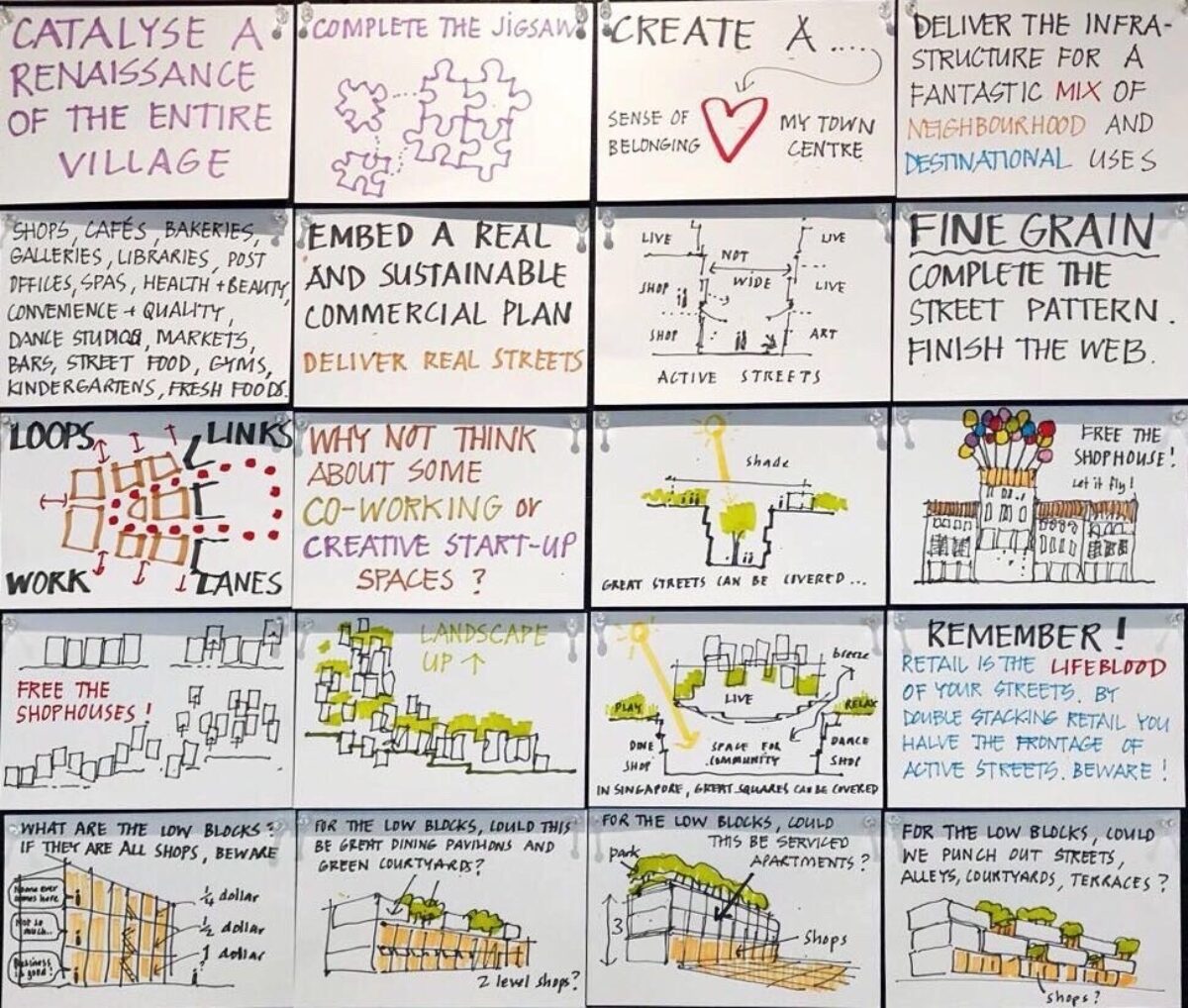
I often start with a single thought or idea, just something to get the process moving. Then I might develop that into 15 – 20 mini concepts to form a narrative. The concepts could be about geometry or capturing a view or sculpting a skyline, a bubble diagram or simply relevant material. They are quick, fast words and drawings, captured on simple pieces of card.
Once assembled I can prioritise them and assess where the gaps are. Sometimes it’s great to have a sketch session with the client to explore early solutions. We are a partnership, after all, and this can be a great way of answering questions.
It’s important to have a good storyline for the project that the whole team and the client understands and buys into. Narrative unlocks the soul of the project and affirms project direction and focus.
Building a narrative
Every project win will be a synthesis of main ideas, of differing value and importance. It’s important to build a ‘project memory’ of all the concepts that emerge through the process and seek to continually push that key set of ideas along your journey. It’s like a BAO wave of ideas: the more ideas, the bigger the wave.
The first project presentation to a client shouldn’t be about revealing a completed design, it’s more about demonstrating a clear understanding of the brief, and an attitude to unlocking the right answer. Often this first presentation will be structured around an illustrated, prioritised list of ten or twelve of the most important design principles for the project.
This is just the beginning, but now the design process is in motion and it’s a dialogue between team members and client.